


Andaman Travel Tips 2026: What No One Tells You About Ferries & SIMs
Discover the ferry booking tricks, SIM card recommendations, and practical island travel tips that every Andaman traveler should know before visiting.
Experience the magic of bioluminescence in Andaman as glowing waters, mangrove forests, and starlit skies create an unforgettable night kayaking adventure.

When travellers begin mapping out their itinerary for the Andaman and Nicobar Islands, attention naturally focuses on daytime activities. Days are spent sunbathing on wide beaches, exploring coral reefs through a snorkel, scuba diving alongside tropical fish, or taking high-speed boat rides between islands. However, once the sun dips below the horizon and darkness settles over the coast, the islands reveal a completely different side of their personality. Away from the glare of resort lights, the sea takes on a quiet, absorbing quality. Climbing into a small kayak after sunset introduces you to an unusual coastal experience—one where your paddle stirs the dark water and occasionally leaves behind tiny flashes of natural blue-green light. This phenomenon, known as bioluminescence, has steadily drawn curious travellers who want to see the ocean come alive in an unexpected way. Experiencing bioluminescence kayaking in Andaman is less about a high-adrenaline thrill and more about quiet observation, patience, and moving through the dark sea under an open night sky.

To appreciate what happens when you paddle across the water after dark, it helps to understand the natural biology behind the glow. According to guidelines published by the Andaman & Nicobar Tourism Department, bioluminescence is defined as light produced by living organisms through chemical reactions within their bodies. In marine environments, this light is generated primarily by microscopic organisms, including tiny marine plankton and dinoflagellates. When these minuscule creatures experience physical disturbance—such as a paddle blade sweeping through the water, a fish darting past, or small waves breaking against a kayak hull—they emit a brief flash of light. It is an entirely natural biological process driven by the movement of the water, offering a direct window into the micro-ecosystems thriving beneath the surface.
The reason this natural light show becomes visible to human eyes relates directly to contrast and the absence of sunlight. During the day, the bright glare of the sun completely washes out the faint flashes produced by plankton. Once night falls and ambient light levels drop along the coast, the surrounding darkness provides the necessary contrast. When a paddle moves through the water, the physical motion disturbs the organisms, instantly triggering their chemical reaction. From a kayak, travellers see this as small points, sparks, or faint trails of blue-green light swirling around the moving blade or the side of the hull. The glow is typically brief, fading almost as quickly as the water settles back into stillness.
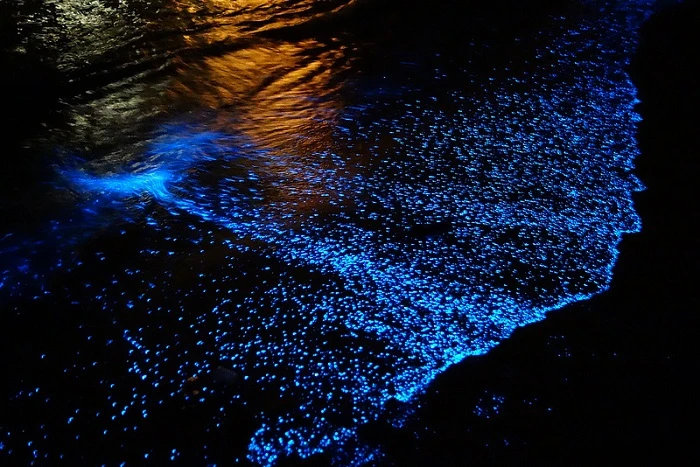
Opportunities to witness this natural phenomenon are concentrated around specific sheltered coastal zones where guided marine activities operate. The primary destination associated with this experience is Swaraj Dweep, historically and commonly searched for as Havelock Island. The island features calm bays and protected coastal waters that create suitable environments for evening water sports. It is important to note that you cannot find bioluminescence at every beach across the island. The activity takes place exclusively within specially designated operating areas managed by authorised local providers who follow strict navigational routes and safety protocols.
While the possibility of seeing glowing water serves as the main draw for many visitors, approaching the activity with an all-or-nothing mindset can lead to disappointment. Night kayaking is rewarding even on evenings when the plankton activity is faint or barely visible. When you join a guided night excursion, you are also signing up for the experience of being on the open sea after dark. You experience absolute quiet, uninterrupted views of the night sky, the gentle sound of water moving against your hull, and a slower, more contemplative view of the island's coastline. Viewing bioluminescence as a wonderful natural bonus rather than a guaranteed performance ensures you appreciate the outing regardless of how brightly the water glows.

Stepping into a kayak after dark begins with a thorough safety briefing from your guide. Once you receive your flotation device and paddle, you ease your watercraft into the shallow water. The first few paddle strokes feel different from daytime kayaking because your visual reference points are largely gone. Your eyes gradually adjust to the starlight, and the group moves out together under the direction of the lead guide. As you settle into a steady paddling rhythm, you watch the water around your blade for the sudden appearance of tiny blue-green sparks. The combination of cool night air, the physical movement of paddling, and the vast dark sea creates an atmospheric, immersive journey.
First-time paddlers can comfortably participate in guided night kayaking experiences, provided they feel reasonably comfortable around water and are willing to listen carefully to instructions. The kayaks used are wide, stable models designed for balance, and the pace of the excursion is kept slow and steady. The current official guidelines from the tourism administration emphasize the importance of trained and certified guides, ensuring that novices receive direct supervision throughout the trip. You do not need advanced paddling skills, but you do need to stay close to your group and follow your guide's directions at all times.
Darkness is the essential ingredient that makes bioluminescence visible to the human eye. However, the exact phase of the moon plays a major role in how well you can spot the glow. Bright moonlight from a full moon or a nearly full moon casts a strong silver reflection across the water surface, brightening the sea enough to wash out the faint, delicate light produced by microscopic plankton. For this reason, many local operators and travellers prefer planning trips around darker nights, such as the new-moon phase. Even so, darkness is only one variable among many, and moon phase alone does not dictate the strength of the bioluminescence.
Addressing expectations honestly means stating clearly that bioluminescence can never be guaranteed. Because it is a completely natural biological phenomenon, its visibility and intensity fluctuate unpredictably based on a complex combination of environmental factors. Water temperature, nutrient levels, plankton concentration, tidal movements, local weather, and cloud cover all influence how brightly the water glows on any given night. Some evenings produce vibrant, sparkling trails, while other nights reveal only faint, scattered flashes. Accepting this natural uncertainty is part of experiencing a real ecosystem rather than a manufactured tourist attraction.
Navigating coastal waters after dark introduces risks that do not exist during daytime excursions. Limited visibility, changing tides, and the challenge of maintaining group cohesion mean that independent night paddling is unsafe. A trained guide provides essential leadership, managing the group's route, monitoring weather shifts, and ensuring everyone stays together within the designated operating zone. The official government guidelines specifically highlight the risks of darkness, separation from the group, and limited access to medical support after dark, reinforcing why staying with an authorised guided tour is mandatory.
Participating in night kayaking safely requires following established operational rules designed to protect you on the water. You must always use an authorised operator, wear required safety gear such as personal flotation devices, stick strictly to the designated paddling route, and stay within the group. The current official guidelines mandate that night kayaking must take place in calm conditions and explicitly prohibit entering narrow mangrove channels, areas with dangerous marine life habitats, or shallow coral reef zones after dark. Respecting these boundaries ensures that your evening adventure remains entirely secure.
Dressing for a night on the water involves choosing comfortable, lightweight clothing that can handle getting wet from paddle splashes. Quick-drying athletic garments work best, keeping you comfortable without retaining heavy moisture. Wear secured footwear suitable for getting wet during launch and landing. Pack minimal personal items in a small bag, including a clean towel and drinking water. Because photography is difficult in the dark and phones can easily be dropped into the sea, it is generally best to leave unsealed electronics behind or follow your operator's specific storage advice.
When researching night kayaking options on Swaraj Dweep (Havelock Island), travellers often notice that departure schedules can vary significantly. While some sessions take place shortly after sunset, many local operators schedule their night kayaking trips for the very early morning hours—often launching around 3 AM or 4 AM and finishing around sunrise. This early schedule is chosen because it provides the longest stretch of uninterrupted darkness before dawn, maximizing the window for dark skies and calm water conditions. Always confirm the exact departure time with your authorised operator so you can plan your rest and evening schedule accordingly.
The microscopic organisms that create bioluminescence are an integral part of the local marine ecosystem, and visiting them carries an environmental responsibility. Travellers must never throw rubbish, plastic wrappers, or debris into the water. Avoid touching or collecting marine organisms, and use bright flashlights or phone lights only when necessary so you do not disturb nocturnal marine life. Respecting the marine environment ensures that the coastal waters remain healthy and vibrant for future visitors.
Coordinating multi-island transport, resort accommodation, ferry bookings, and specialized water activities requires careful logistical planning. At Andaman Bliss, our local team helps travellers design seamless, customized holiday itineraries that cover every corner of the archipelago. Whether you want to book dedicated Andaman tour packages, arrange exciting Havelock Island packages, or secure a fully customised Andaman itinerary, our local team handles your arrangements reliably. To explore fully coordinated travel options, you can also review our complete collection of Andaman adventure activities and let us help you design your ideal island getaway.
Discover the ferry booking tricks, SIM card recommendations, and practical island travel tips that every Andaman traveler should know before visiting.
Visit Cellular Jail and Ross Island to uncover the remarkable history of Kala Pani, India's freedom movement, and Andaman's colonial heritage.
Discover the natural wonders of Baratang Island, from mangrove creeks and limestone caves to the fascinating journey through the Jarawa Reserve.

