


Andaman Travel Tips 2026: What No One Tells You About Ferries & SIMs
Discover the ferry booking tricks, SIM card recommendations, and practical island travel tips that every Andaman traveler should know before visiting.
Discover the thrill of sea walking in Andaman, where you can explore colorful coral reefs and marine life while walking safely on the ocean floor.

Imagine standing upright on the soft sand of the ocean floor, looking across the underwater landscape instead of looking down at it from the surface. Small, colourful reef fish dart past your shoulders, light filters down through the blue water above, and you take a steady breath of air while moving forward at a normal walking pace. This unusual concept is the core of sea walking in Andaman, a specialized marine activity that allows travellers to explore the seabed without learning the technical skills required for scuba diving or wearing restrictive snorkeling gear. For visitors who want a close-up encounter with underwater marine life but feel hesitant about traditional diving equipment, sea walking offers an approachable middle ground. The official Andaman & Nicobar Tourism Department currently identifies North Bay Island and Elephant Beach as primary locations for sea walking, introducing this water-based experience as an accessible way to observe coral reefs and tropical fish while walking directly on the ocean floor.
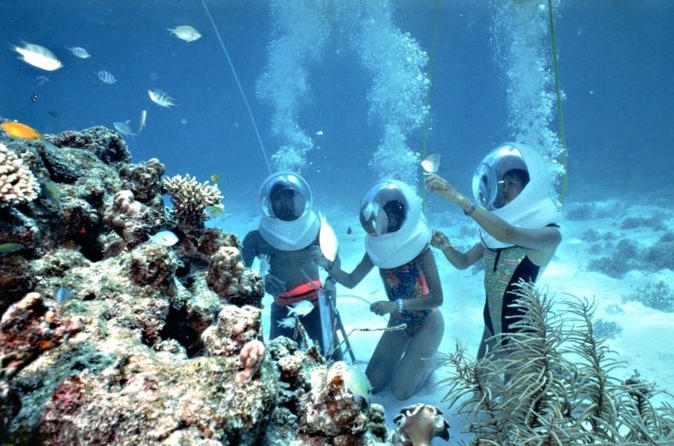
Sea walking is a supervised underwater activity where participants are fitted with a specially designed helmet and led down a ladder onto the ocean seabed. Once your feet touch the sand, you walk slowly along a designated underwater route accompanied by trained guides. Unlike conventional swimming, where you must continuously kick your legs and manage your buoyancy, sea walking feels physically grounded because your boots remain in contact with the ocean floor. The experience is structured around slow movement, giving you the opportunity to observe marine life and coral formations at eye level without the physical strain of treading water or managing complex breathing apparatuses.
The key to the entire experience is the specially engineered underwater helmet, which supplies a continuous flow of breathing gas from the surface. The helmet rests comfortably on your shoulders, and because air is constantly pumped inside under positive pressure, water is prevented from rising up into the interior space. This design means your head remains completely dry inside the helmet, allowing you to breathe normally through your nose or mouth just as you would on land. You do not need to bite down on a rubber mouthpiece or worry about clearing water from a mask. The equipment is managed entirely by the activity crew on the surface and underwater, allowing you to focus completely on your surroundings.
One of the most common questions first-time participants ask is whether you actually walk along the ocean floor. The answer is yes, the activity is built entirely around walking underwater. After descending a secure ladder from a platform or boat into shallow coastal water, your feet touch the sandy seabed. From there, you take slow, deliberate steps along a marked path on the ocean floor, guided closely by professional handlers. The water creates a gentle resistance as you move, giving the motion a slow-motion feel, but your feet remain firmly planted on the sand throughout the duration of the walk.
Knowing where to find authorised sea-walking experiences helps keep your holiday planning grounded in reality. Official tourism documentation from the Andaman & Nicobar Tourism Department currently designates two primary locations for sea walking: North Bay Island and Elephant Beach on Swaraj Dweep (Havelock Island). These spots are selected for their sheltered shallow bays, calm conditions, and marine biodiversity. It is important to note that sea walking is not available at every beach across the islands; operations are restricted strictly to these authorised zones where professional supervision and proper equipment support can be maintained.

North Bay Island has long served as a popular destination for visitors staying in the capital city of Sri Vijaya Puram, offering a quick boat excursion across the harbour. Because of its convenient location, North Bay is frequently chosen by travellers who want to add a marine adventure to their capital sightseeing schedule without taking an overnight ferry to the outer islands. Sea walking here takes place in a sheltered marine zone near the island, allowing participants to experience colourful coral patches and schooling reef fish during a well-organised day trip from the mainland.

Elephant Beach on Swaraj Dweep provides a completely different backdrop for the activity, combining a scenic forest-backed shoreline with vibrant coastal waters. As one of the officially recognised locations for sea walking, Elephant Beach lets travellers merge a relaxing beach visit with an active underwater excursion. Whether you arrive by a short speedboat ride from the main jetty or via the jungle trekking route through the mangrove areas, stepping onto the sand at Elephant Beach puts you right in the middle of the island's primary water-sports hub.
Stepping off a ladder into the water with a heavy helmet resting on your shoulders is an unusual sensation that takes a brief moment to process. As the water level rises past your chest and covers your head, you feel the pressure change slightly against your ears, and your breathing changes to match the flow inside the helmet. Once your boots settle onto the sandy seabed, however, the initial unfamiliarity begins to fade. The guides signal to ensure you are comfortable, and as you take your first few slow steps across the ocean floor, the strange reality of walking underwater turns into a fascinating experience. You realize you can look around freely, gesture to your companions, and watch fish swim right past your helmet visor.
While the activity is designed for beginners, walking underwater is still a different physical experience from walking on dry land. The water creates a natural resistance against your body, meaning every step requires a little more intentional effort than a normal stroll. Furthermore, the seabed may consist of shifting sand or uneven patches, so keeping your balance requires steady footing. Participants must listen closely to instructions, move at a calm pace, and avoid rushing. It is not physically exhausting, but it does require mindfulness of your physical movements in an aquatic environment.
For travellers who love the idea of seeing marine life up close but have never learned how to swim, sea walking offers an accessible alternative. Official Andaman Tourism adventure-sports material explicitly describes sea walking as suitable for non-swimmers. Because you are breathing through a continuous surface-supplied helmet and walking upright on the seabed rather than swimming freely in deep water, swimming proficiency is not a mandatory requirement. Even so, participants must still feel reasonably comfortable around water and follow all safety instructions provided by the activity handlers.
Comparing sea walking with scuba diving highlights two distinct ways to explore the underwater world. Scuba diving requires learning how to use a regulator, mastering buoyancy control, and swimming horizontally through the water column, often involving more formal instruction when moving beyond introductory sessions. Sea walking, on the other hand, keeps you vertical and grounded on the seabed, requiring no swimming or complex equipment management. While scuba diving offers greater freedom of movement across deeper reefs, sea walking provides a simpler, more direct introduction to marine life for travellers who prefer a guided walk over swimming with diving gear.
The primary difference between snorkelling and sea walking comes down to your physical position relative to the water's surface. Snorkelling keeps you floating at the top, looking down through a mask and breathing tube at the marine life below. Sea walking takes you past the surface entirely, placing you right down on the ocean floor. While snorkelling gives you the freedom to paddle across large surface areas quickly, sea walking creates a more immersive, close-range experience where you are completely surrounded by the underwater environment.
The underwater scenery encountered during a sea walk showcases the rich coastal biodiversity of the Andaman Sea. Official tourism material highlights that participants can frequently observe hard and soft coral formations, sea anemones, and schools of colourful reef fish moving through the shallow waters. Because the marine environment is entirely natural, wildlife sightings vary from day to day and cannot be guaranteed. The experience offers a charming window into shallow reef ecosystems without requiring advanced diving skills.
Looking around from the seabed offers a perspective that is completely different from viewing the ocean from a boat or a beach. You look across the underwater floor rather than down upon it, noticing the texture of the sandy bottom, scattered rock formations, and the way coral colonies rise up around your walking path. The changing light dancing across the seabed creates a dynamic visual backdrop as you move slowly along the designated route under the watchful eyes of your guides.
Capturing memories of your underwater walk is often possible, as official tourism material for locations like North Bay mentions underwater photography as an available option. However, photography services are typically managed by the activity operators using professional underwater cameras to ensure safety and quality. Participants should never attempt to hold personal cameras or mobile phones while walking on the seabed, as managing equipment while wearing a heavy helmet and walking underwater creates unnecessary hazards.
Preparing your wardrobe for a sea walk involves choosing garments that handle water comfortably. Wear comfortable swimwear or light clothing that can get wet without restricting your movement. Because you will be stepping onto sandy beaches and boat platforms, wear secure sandals or water shoes that are easy to remove or manage. Apply sunscreen before your session begins, keeping in mind that your head and shoulders will remain protected inside the helmet during the underwater portion of the activity.
Keep your personal belongings simple and practical when heading out for a water activity. Bring a clean towel, a dry change of clothes for after the excursion, a bottle of drinking water to stay hydrated under the tropical sun, and any personal medications you might need. Leave valuable jewellery, designer accessories, and unsealed electronics back at your hotel room, as storage lockers at remote beach locations can sometimes be limited or subject to availability.
Safety during a sea walk relies heavily on following the structured rules established by the activity providers. Official guidelines published by the Andaman & Nicobar Administration emphasize that participants must follow all instructions given by the underwater guides, stay within the marked walking lanes, and use the equipment strictly as demonstrated during the briefing. Never attempt to remove your helmet underwater, wander away from the group, or ignore hand signals from the safety staff. Respecting these boundaries ensures a secure environment for everyone on the seabed.
Because sea walking involves entering the marine environment and wearing a specialised underwater helmet, participants must be honest about their physical health. Official administrative guidelines include a participant declaration concerning physical fitness and medical restrictions. If you suffer from severe respiratory issues, cardiovascular conditions, extreme claustrophobia, or ear problems, you should disclose these concerns during the operator's screening process and seek appropriate professional medical advice before booking. Never participate in any water activity if you or a medical professional believe it could compromise your health.
Feeling a temporary flutter of nervousness when the heavy helmet is first lowered over your shoulders is entirely normal. If you experience anxiety once you reach the seabed, remember that your guides are stationed right beside you at all times. Signal your guide immediately using the pre-arranged hand signals if you feel uncomfortable, and they can assist you or guide you calmly back up the ladder to the platform. Never try to push through severe panic or discomfort; open communication with your safety team is always the best course of action.
Sea walking is operated as a supervised recreational activity backed by structured safety protocols and equipment maintenance standards. However, no water-based adventure can be described as completely risk-free. The official tourism framework and administrative guidelines provide the necessary safety parameters to minimize risk. Choosing properly authorised operators and following every instruction ensures your underwater walk remains as secure as possible.
Planning your sea-walking excursion is most dependable during the dry months spanning from November through May, when stable weather, calm surface waters, and clear visibility create optimal conditions for coastal activities. The monsoon months bring heavy rainfall and rough sea swells that can interrupt boat operations and reduce underwater visibility, frequently leading to temporary activity cancellations. Confirming seasonal operating dates with your tour provider before setting out ensures your plans align with favourable weather windows.
Protecting the delicate coral reefs and marine life encountered during a sea walk is a mandatory responsibility for every visitor. Participants must never touch, lean on, or kick coral formations, nor should they feed fish or attempt to collect shells and marine specimens from the seabed. Maintaining a respectful distance ensures that human presence leaves zero negative impact on the underwater ecosystem, preserving the natural beauty of the reefs for future travellers.
Families looking for water-based adventures often consider sea walking because it accommodates non-swimmers and provides an accessible way to see marine life. However, family participation depends entirely on the operator's current age requirements and safety rules. Parents must ensure their children are emotionally mature enough to wear the helmet and follow strict instructions underwater. Always confirm age limits and participation prerequisites with the activity provider before finalising your booking.
Sharing an unusual experience like walking across the ocean floor together gives couples a fun, memorable talking point for the rest of their holiday. Seeing each other walking upright in diving helmets underwater provides a lighthearted shared adventure that contrasts nicely with standard sightseeing tours, adding variety to a couple's itinerary.
Older travellers who want to experience the marine environment without the physical exertion of swimming or the technical equipment of scuba diving often find sea walking to be an appealing alternative. Nevertheless, stepping off a boat ladder and walking across an uneven seabed still requires steady balance and mobility. Travellers should assess their physical comfort and check operator requirements before committing to the activity.
Budgeting your time for a sea-walking excursion requires looking beyond the actual minutes spent underwater. The complete experience includes travelling to the departure jetty, receiving your safety briefing, boarding the boat or platform, waiting for your turn, descending to the seabed, completing the walk, and returning to the shore. Set aside a half-day for the entire outing to ensure you never feel rushed.
Integrating sea walking into your broader holiday involves scheduling it around your main destination stays. A morning sea walk at North Bay Island fits naturally into a capital sightseeing day, while a session at Elephant Beach can be combined with a wider day of water sports on Swaraj Dweep. Always keep a buffer day in your schedule to accommodate any weather-related adjustments.
Giving an honest assessment of whether sea walking deserves a place on your itinerary depends on your personal curiosity. If you want a guided, accessible way to walk along the ocean floor and see coral reefs without learning to swim or scuba dive, sea walking is well worth considering. However, if you are looking for advanced underwater exploration or heavy adrenaline sports, you might prefer traditional diving. For most curious travellers, its unique perspective makes it a memorable holiday highlight.
Coordinating multi-island transport, resort accommodation, ferry bookings, and specialized water sports requires careful logistical planning. At Andaman Bliss, we help travellers design seamless, customized holiday itineraries that cover every corner of the archipelago. Whether you want to book dedicated Andaman tour packages, arrange exciting Havelock Island packages, or secure a fully customised Andaman itinerary, our local team handles your arrangements reliably. Explore our official website to discover travel solutions designed for your next island getaway.
Discover the ferry booking tricks, SIM card recommendations, and practical island travel tips that every Andaman traveler should know before visiting.
Visit Cellular Jail and Ross Island to uncover the remarkable history of Kala Pani, India's freedom movement, and Andaman's colonial heritage.
Discover the natural wonders of Baratang Island, from mangrove creeks and limestone caves to the fascinating journey through the Jarawa Reserve.

