


Andaman Travel Tips 2026: What No One Tells You About Ferries & SIMs
Discover the ferry booking tricks, SIM card recommendations, and practical island travel tips that every Andaman traveler should know before visiting.
Discover the history, architecture, and significance of the Cellular Jail in Port Blair, a landmark that tells the story of India's freedom struggle.

When most travellers plan an island holiday, their minds immediately turn to sunlit shores, blue horizons, and quiet coastal paths. Yet, an exploration of the Andaman and Nicobar Islands remains incomplete without stepping beyond the beaches to understand the profound human history written into the region. Standing tall in Sri Vijaya Puram, commonly known as Port Blair, the Cellular Jail serves as much more than a standard tourist stop. As one of the most significant national memorials in the country, the building stands as a solemn reminder of India's freedom struggle and the deep sacrifices made by freedom fighters who were exiled and imprisoned there during British colonial rule. Walking through its corridors offers an eye-opening encounter with a critical chapter of the past, transforming a typical island vacation into an educational and deeply moving journey.
The establishment of the penal settlement in the Andaman Islands dates back to the aftermath of the Indian Rebellion of 1857. Following the uprising, the British colonial administration faced the challenge of containing large numbers of political prisoners, freedom fighters, and rebels who opposed imperial authority. Seeking an isolated location that made escape virtually impossible, the administration turned to the remote Andaman archipelago. Prisoners were initially brought to Viper Island before plans were laid for a massive, permanent prison structure that could enforce strict isolation. Construction of the complex began in the late nineteenth century and concluded around 1906. The name Cellular Jail originated from its unique architectural concept, which consisted entirely of individual prison cells designed specifically to prevent any form of communication or companionship among inmates, breaking their morale through total solitary confinement.
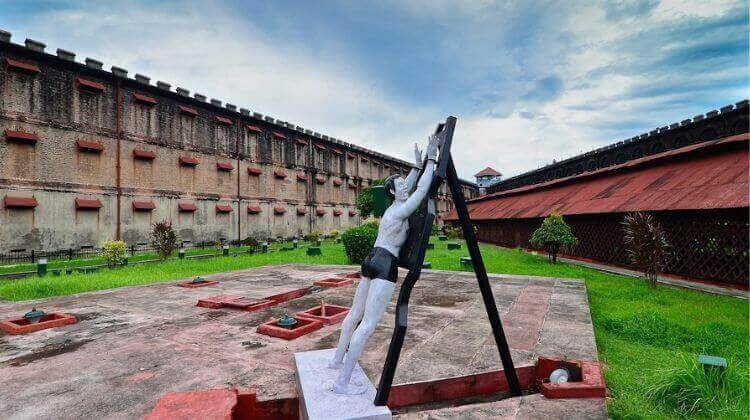
During the colonial period, exile to the Andaman Islands carried a terrifying cultural and geographical stigma captured by the term Kala Pani, which translates literally to black waters. Crossing the open ocean was traditionally regarded in many parts of India as a breach of social and religious boundaries, effectively cutting a person off from their homeland, family, and community forever. Beyond the symbolism, the geographical isolation of the islands in the middle of the Bay of Bengal meant that escape was entirely out of the question. Surrounded by thousands of kilometres of open sea and dense tropical rainforests, prisoners sent to the penal settlement knew they were entirely cut off from the Indian mainland, reinforcing the sense of permanent exile and hopelessness that the colonial authorities intended to create.

The original design of the Cellular Jail was an imposing architectural feat engineered to maintain absolute control over its inmates. The structure featured a radial layout composed of multiple multi-storey wings radiating outwards from a central watchtower. From this central post, a single guard could monitor all the corridors simultaneously. Each wing contained rows of small, individual cells measuring roughly compact dimensions, featuring heavy iron doors and high ventilator windows placed deliberately out of reach to block interaction between neighbours. Over the decades following independence, parts of the original seven-winged complex sustained damage or were demolished during various phases of re-development, meaning visitors today see a preserved portion of the historic layout. Official documentation regarding the exact structural dimensions and preservation milestones can be referenced through heritage records maintained by the Archaeological Survey of India.
The stone walls of the prison hold the memories of countless freedom fighters who hailed from diverse regions, linguistic backgrounds, and political movements across India. Among the most notable figures associated with the penal settlement is Vinayak Damodar Savarkar, who spent years incarcerated within the walls and wrote extensive memoirs documenting the harsh realities of prison life. Another prominent revolutionary was Batukeshwar Dutt, who stood alongside Bhagat Singh in the Central Legislative Assembly protest and was later sentenced to transportation for life in the islands. The roster of inmates included brave individuals from the 1857 uprising, the Wahabi movement, terrorist-conspiracy cases, and later waves of the civil disobedience and freedom movements. Their collective presence transformed the prison from an instrument of colonial oppression into a legendary symbol of national resistance.
Life for the inmates within the Cellular Jail was marked by unrelenting physical labour, strict discipline, and severe punishments. Prisoners were subjected to backbreaking routines such as extracting coconut oil using crude manual mills, clearing dense jungles, and constructing administrative buildings under punishing tropical weather. Solitary confinement was routinely enforced for minor infractions, and rations were sparse and unnutritious. Despite the brutal conditions, the prisoners maintained remarkable solidarity, staging hunger strikes and acts of defiance to demand basic human rights. Understanding these hardships provides essential context for why the site evolved into a powerful monument of courage, sacrifice, and the unbreakable spirit of independence.

Exploring the museum complex offers visitors a structured look into the documented history of the penal settlement. The galleries display authentic photographs, old prison registers, convict records, execution equipment, and personal belongings that paint a vivid picture of daily existence during the colonial era. Preserved cells and exhibits guide you through the chronology of the independence movement and highlight the stories of individual freedom fighters. Because museum curation, gallery layouts, and visitor pathways undergo periodic maintenance, travellers are encouraged to review current operational updates on the Official Portal of Andaman and Nicobar Tourism before planning their walk through the exhibits.
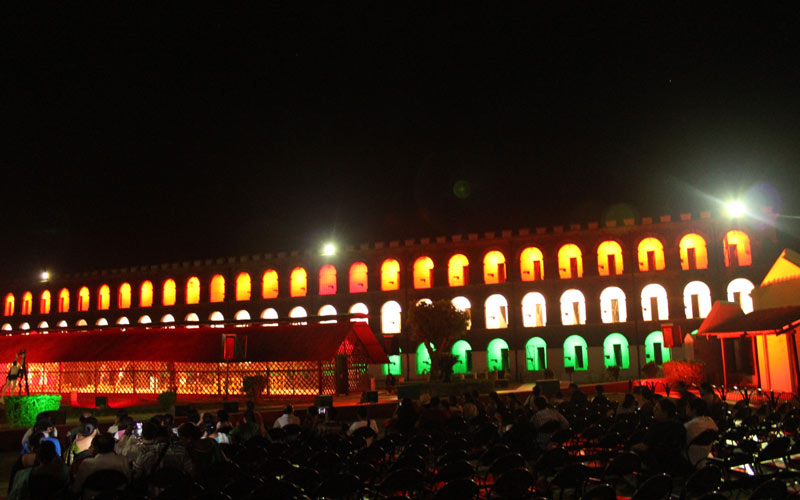
One of the most evocative experiences at the national memorial is the evening Sound and Light Show, known locally as Aazadi ke Rang. The programme utilizes dramatic lighting, narrative voiceovers, and soundscapes to recount the harrowing history of the prison and the immense sacrifices made by the freedom fighters. Set against the illuminated brick backdrop of the historic wings, the storytelling brings the silent corridors to life. Because show schedules, ticket availability, and language slots can vary depending on tourist seasons and administrative updates, visitors should verify current operational timings and book their passes in advance through authorized booking counters or the official tourism portal.
Walking through the corridors of the Cellular Jail today is a sobering experience that invites quiet reflection rather than casual sightseeing. Standing inside a small individual cell, looking out through the iron bars toward the open courtyard, and reading the names inscribed on the memorial plaques creates a strong personal connection to the past. The atmosphere inside the brick wings is respectful and contemplative, allowing every visitor to pause and appreciate the heavy cost at which freedom was won. It serves as an essential anchor for any comprehensive Andaman travel guide, grounding the natural beauty of the surrounding tropical islands in a profound sense of national heritage.
Located centrally in Sri Vijaya Puram, getting to the Cellular Jail is straightforward for travellers staying in the city. Depending on where your accommodation is situated, you can easily take a local auto-rickshaw, hire a cab, or use local transport options to reach the memorial gates. Because the site sits within the capital, visiting the jail is easily combined with other local sights, such as the Anthropological Museum or Aberdeen Bazaar, as part of a well-rounded Port Blair itinerary. For travellers looking for seamless planning, bundling historical sightseeing into structured Andaman tour packages ensures smooth road transfers between your hotel, the museum, and the local ferry terminals.
Planning your visit during the cooler morning hours or the late afternoon allows you to explore the museum galleries and outdoor courtyards comfortably before attending the evening sound and light show. The dry months between November and April offer the most predictable weather conditions for walking around the historical complex without being interrupted by tropical downpours. Regardless of the month you choose, checking official opening hours ahead of your arrival prevents any schedule conflicts with weekly closing days or national holidays.
When visiting the memorial, keeping practical guidelines in mind ensures a smooth and respectful experience. Entry tickets for the museum and passes for the evening sound and light show can be obtained at the ticket counter or booked online through authorized government channels. Photography inside certain galleries may be restricted to preserve fragile archival materials, so always look for signage regarding camera rules. Visitors are expected to maintain a respectful and quiet demeanour throughout the premises, as the site functions as a solemn national monument. Rules, ticketing fees, and visitor timings are subject to change by the local administration, making it wise to confirm details beforehand.
Following India's independence, the significance of the Cellular Jail was officially recognised by national leaders, leading to its declaration as a National Memorial in 1969. Preserving the remaining wings and establishing the museum ensured that future generations would have a physical space to connect with the struggles of the freedom movement. The memorial stands not merely as a relic of colonial suffering, but as a testament to human endurance, unity, and the triumph of liberty over oppression. Its continued preservation plays an educational role for students, historians, and travellers from across the globe.
A visit to the Cellular Jail fits naturally into the opening or closing days of an Andaman holiday. Because most travellers fly into Sri Vijaya Puram before catching inter-island catamarans to Swaraj Dweep (Havelock Island) or Shaheed Dweep (Neil Island), scheduling your jail visit during your initial days in the capital provides historical context that enriches the rest of your island exploration. You can pair your afternoon at the memorial with a relaxing evening walk at Marina Park or a dinner featuring local coastal cuisine. To explore verified island itineraries that include historical landmarks alongside beach activities, you can browse complete holiday options on the official Andaman Bliss website.
When planning your trip to the memorial, allocate at least two to three hours for a thorough walkthrough of the museum galleries, photo exhibitions, and prison wings. Arriving early helps you avoid the midday heat and gives you ample time to read through the historical plaques without rushing. Always wear comfortable walking shoes, as the complex involves stone pathways and multi-level staircases. Most importantly, approach the site with an open and respectful mindset, allowing yourself to absorb the gravity of the history preserved within these brick walls.
Discover the ferry booking tricks, SIM card recommendations, and practical island travel tips that every Andaman traveler should know before visiting.
Visit Cellular Jail and Ross Island to uncover the remarkable history of Kala Pani, India's freedom movement, and Andaman's colonial heritage.
Discover the natural wonders of Baratang Island, from mangrove creeks and limestone caves to the fascinating journey through the Jarawa Reserve.

