


Andaman Travel Tips 2026: What No One Tells You About Ferries & SIMs
Discover the ferry booking tricks, SIM card recommendations, and practical island travel tips that every Andaman traveler should know before visiting.
Discover the magical phenomenon of bioluminescence in Havelock Island and experience glowing waters on an unforgettable night kayaking adventure.

Step away from the sun-bleached shores of Swaraj Dweep after the sun has set, and you encounter a coastline that feels entirely transformed. The daytime crowds have long since dispersed, the hum of beachside activities has faded, and the water resting against the dark sand takes on a quiet, absorbing quality. Climbing into a small, stable watercraft in the evening introduces you to a form of coastal exploration that relies as much on darkness as it does on the water beneath you. As your paddle dips into the sea, a small swirl of pale light flares against the dark blade, turning a simple stroke into a moment of unexpected discovery. This phenomenon—naturally occurring bioluminescence in Havelock—has steadily drawn travellers seeking a quiet, immersive counterpoint to the busy daytime schedules of island tourism. While stories of glowing water often carry a sense of mystery or wonder, experiencing it firsthand requires understanding the natural science behind the glow, the structured framework of guided night kayaking, and the realistic expectations every visitor should keep in mind.

To appreciate what happens when you paddle across the water after dark, it helps to understand what bioluminescence actually is in biological terms. Official documentation published by the Andaman & Nicobar Tourism Department defines bioluminescence as light produced by living organisms through chemical reactions within their bodies. In the marine environment around the islands, this process is driven primarily by microscopic marine organisms, including specific species of dinoflagellates and plankton. When these tiny organisms experience physical disturbance—such as the motion of a paddle moving through the water, a fish darting past, or the gentle lap of small waves against a kayak hull—they emit a brief flash of blue-green light. It is entirely a natural biological process rather than any form of artificial illumination or chemical pollution, offering a window into the complex micro-ecosystems thriving beneath the surface of the sea.
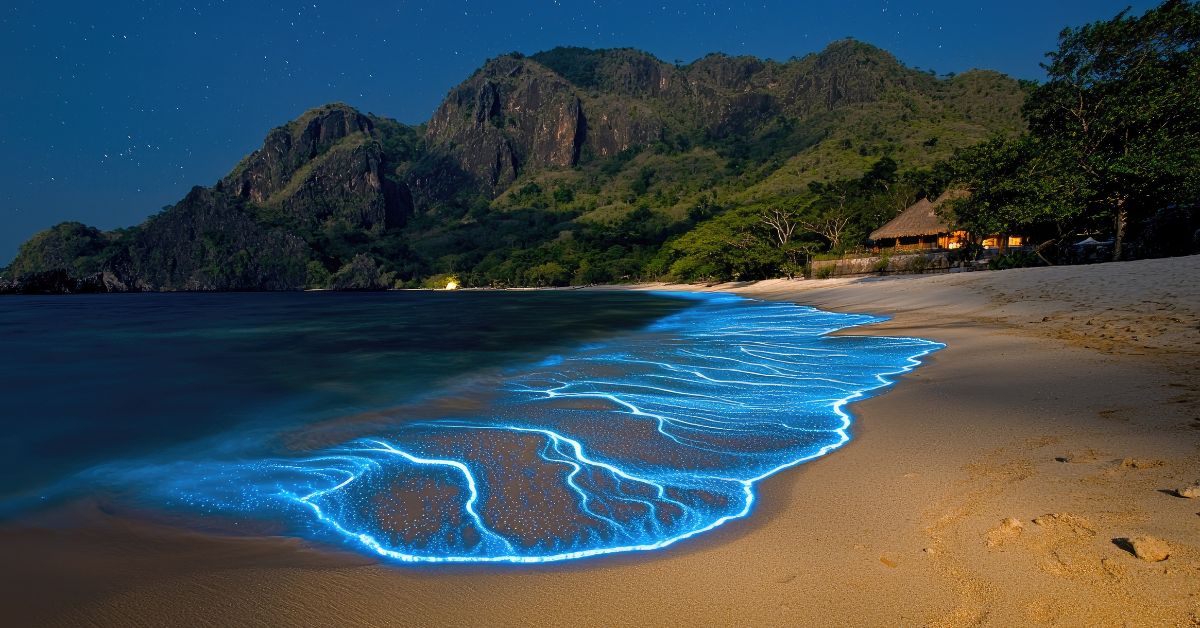
The reason this natural light show becomes visible only after dark relates directly to contrast and human vision. During daylight hours, the overwhelming brightness of the sun completely washes out the faint blue-green flashes produced by microscopic marine life. Once night falls and ambient light levels drop near the shore, the darkness creates a dark canvas that makes even small points of light much easier to perceive. When movement stirs the water, the chemical reaction inside the plankton is triggered instantly, releasing a brief spark of light that fades away almost as quickly as it appears. This means that stationary water may look completely dark, but the moment a paddle or a hand disturbs the surface, the glowing reaction flickers into view.

Swaraj Dweep, historically and commonly searched for as Havelock Island, has long established itself as the adventure and marine activity capital of the Andaman archipelago. The island features protected bays, sheltered coastal zones, and extensive mangrove ecosystems that create ideal environments for recreational water sports. Official tourism information highlights kayaking and marine exploration as core elements of the island's appeal. Because the local tourism infrastructure supports structured water activities with trained personnel and proper equipment, visitors have safe, authorized avenues to experience coastal environments after sunset that would otherwise remain inaccessible or unsafe for independent travellers.
Participating in night sea kayaking is a specialized activity that differs significantly from a casual afternoon paddle across a sunny lagoon. According to the comprehensive Guidelines for Operations of Night Sea Kayaking (Basic) published by the tourism administration, night sea kayaking is strictly defined as a guided paddling excursion conducted after sunset in calm sea waters. Because visibility is limited and the marine environment changes character after dark, the activity operates under strict safety protocols. Unlike daytime outings where you can easily spot your surroundings, night kayaking relies entirely on designated routes, specialized safety equipment, group discipline, and the expert navigation of trained local guides who know the coastal waters intimately.
Drifting across the sea in a kayak after dark offers a sensory experience unlike almost any other coastal activity. Once you move away from the shoreline lights, your eyes gradually adjust to the starlight overhead. The world narrows to the gentle slap of water against the hull, the rhythmic dip of your paddle, and the deep, encompassing quiet of the open sea. When bioluminescence is active, every movement of your paddle creates trailing sparks of pale light in the water, resembling tiny stars trapped beneath the surface. Looking up, you might catch the faint glow of the Milky Way arching across the clear night sky, creating a striking mirror effect where the starry expanse above matches the shimmering sparks in the water below.
Managing your expectations is crucial for anyone hoping to witness glowing water during an evening on the island. Bioluminescence is an entirely natural biological phenomenon, which means its visibility and intensity fluctuate unpredictably. Factors such as water temperature, nutrient levels, plankton concentration, tidal movements, local weather, and cloud cover all influence whether the organisms produce a strong glow. Furthermore, excessive moonlight from a bright, full moon can brighten the water surface enough to make the faint plankton light difficult to see. Travellers should view bioluminescence as a wonderful natural possibility rather than a guaranteed tourist attraction, appreciating the serene night paddle regardless of how bright the water glows on any given evening.
A common piece of advice shared among travellers and local guides is that darker nights—particularly around the phase of the new moon—offer the most favourable conditions for spotting natural light in the water. The absence of a bright moon removes competing ambient light from the sky, plunging the coastal waters into deep darkness and maximizing the visual contrast of the microscopic flashes. However, darkness alone does not ensure a strong display. Even on a pitch-black new moon night, if the local concentration of plankton is low or water currents have dispersed the organisms, the glow may remain faint or absent. Understanding that darkness is simply one variable among many helps keep your anticipation grounded in ecological reality.
It is important to clarify what "night kayaking" means in terms of scheduling, as it does not imply staying out on the water until the middle of the night. Authorized night kayaking sessions typically begin shortly after sunset once complete darkness has settled over the coast. The entire excursion usually spans a couple of hours, covering a carefully planned route before bringing participants safely back to shore well before late evening. Operating within these sensible hours ensures that guides and participants remain alert, weather conditions stay manageable, and activities conclude smoothly within municipal safety guidelines.

Conducting water activities after dark requires operating out of carefully vetted locations rather than random coastal stretches. The official night sea kayaking guidelines mandate that the activity must take place exclusively within specially designated areas, determined and demarcated in close coordination with authorized local agencies and tourism authorities. These designated zones are chosen for their calm waters, absence of heavy boat traffic, and safety from strong offshore currents. Travellers should always confirm the exact operating location with their authorized tour provider, ensuring their excursion follows official zoning rules.
Paddling through coastal waters during daylight offers a completely different set of visual cues compared to an evening excursion. During the day, you rely on your eyes to navigate around coral heads, spot other boats, read the shoreline, and anticipate weather shifts. At night, your visual reference points vanish into shadow, shifting your reliance entirely onto your guide, your hearing, and your immediate surroundings. This reduction in visibility requires absolute adherence to group discipline, steady pacing, and strict compliance with leader instructions to ensure everyone stays together safely along the designated route.
Because the operating environment after dark introduces unique hazards, safety regulations are enforced rigorously across all authorized sessions. Current official guidelines highlight the risks of disorientation, panic in the dark, separation from the group, and unexpected marine interactions. To mitigate these risks, participants must remain with the guided group at all times, follow the predetermined route, wear mandatory personal flotation devices, and maintain steady, calm paddling habits. Wandering off independently, attempting to race other kayakers, or participating under the influence of alcohol or substances is strictly prohibited. Treating the outing as a structured adventure rather than a casual playground ensures everyone returns safely.
Monitoring the weather is even more critical for evening water sports than it is for daytime excursions. The official tourism framework specifies that night kayaking must be restricted to calm water conditions and requires immediate cancellation or postponement if wind speeds, wave heights, or coastal currents exceed safe operational limits. If sudden tropical squalls develop, or if the water becomes uncomfortably choppy, operators will call off the session without hesitation. Trusting the judgment of your guides when they make weather-related adjustments is an essential part of responsible adventure travel.
A common misconception among visitors is that night kayaking involves paddling deep into narrow, twisting mangrove creeks in total darkness. In reality, the official guidelines specifically prohibit entering mangrove creeks or channels narrower than eight feet during hours of darkness. Navigating tight, root-lined forest channels without adequate light creates severe collision hazards, risks boat damage, and increases the likelihood of disturbing sensitive wildlife habitats. Authorised night kayaking routes stay out in open, calm coastal bays where navigation is wide, clear, and safe.
While the primary focus of an evening paddle is the quiet sea and the potential for bioluminescence, coastal and marine ecosystems remain active after dark. Paddlers might spot small fish darting away from the disturbance of the kayak, crabs moving along shallow sandbanks, or shorebirds resting quietly near the water's edge. However, nighttime wildlife viewing is generally secondary compared to daytime snorkelling or diving. Authorised routes are purposely mapped out to avoid sensitive habitats, ensuring minimal interaction with nocturnal marine creatures.
Seeing faint sparks of light in the water naturally tempts some travellers to jump out of their kayaks for a closer look. However, swimming during a night kayaking session is generally not permitted unless explicitly stated as part of a heavily supervised, specialized swimming excursion run by a certified operator. Unsupervised swimming in the dark introduces severe risks, including disorientation, difficulty locating your watercraft, and accidental encounters with marine life. Staying seated securely inside your stable kayak is the safest way to enjoy the phenomenon.
Families planning an evening adventure often inquire whether young children can join a night kayaking group. Suitability depends entirely on the child's age, swimming confidence, emotional maturity in dark environments, and the strict safety policies set by the tour operator. Because night activities require sustained focus and adherence to safety rules, operators frequently enforce minimum age restrictions or recommend daytime kayaking for very young children. Parents should consult directly with their provider before booking to ensure the outing matches their family's comfort level.
First-time paddlers can comfortably participate in guided night kayaking trips, provided they are comfortable around water and willing to listen carefully to instructions. The kayaks utilized are wide, stable tandem or single models that require very little previous experience to propel forward. Because the pace is kept slow and steady, and a trained guide leads the flotilla the entire way, beginners do not need advanced paddling skills to enjoy the evening on the water.
Dressing properly for an evening on the sea ensures your physical comfort throughout the outing. Choose lightweight, quick-drying athletic clothing that can handle a few stray splashes from your paddle. Wear secure water shoes or strapped sandals rather than loose flip-flops. Bring a bottle of drinking water, and if you are prone to mosquito bites near the coastal launch points, apply an eco-friendly insect repellent before stepping onto the beach. Leave all unnecessary valuables and unsealed electronics back at your resort.
Operating watercraft after dark requires specialised safety gear that goes beyond standard daytime requirements. The current operating guidelines mandate that authorised night kayaking groups must utilize bright emergency flashlights or spotlights managed by the guides, along with high-visibility reflective strips attached to the hulls of every kayak. Additionally, designated coastal routes may utilize illuminated buoys or shore beacons to help the group maintain constant orientation with the coastline. Always utilize the safety gear provided by your operator without modification.
An evening kayaking excursion follows a predictable, well-managed operational sequence. You arrive at the designated coastal meeting point after sunset, where your guides check your bookings and distribute required safety gear and life jackets. After receiving a thorough briefing on paddling techniques, group positioning, and emergency signals, you help carry your stable kayak down to the water's edge. Once afloat, the group moves out together along the authorised shallow bay route, pausing at calm intervals to look down into the dark water for flashes of bioluminescence. After completing the loop, you return to the launch point, pack up the equipment, and conclude a peaceful evening on the coast.
The emotional high point of the evening occurs during those quiet moments when the group pauses paddling to let the ripples settle. When you dip your blade back into the water with a gentle, sweeping stroke, the disturbed plankton respond with delicate, sparkling flashes of blue-green light. Trailing your hand through the warm surface water can produce a similar effect, leaving a momentary shimmering wake behind your fingers. It is a quiet, understated spectacle that rewards patience and stillness, offering a direct, tactile connection to the natural biology of the sea.
Attempting to photograph natural bioluminescence with a standard smartphone camera is notoriously difficult. The microscopic light emitted by plankton is simply too faint for ordinary consumer lenses to register without specialized, long-exposure camera setups mounted on stable tripods. Trying to fiddle with camera settings while balancing in a floating kayak in the dark usually results in blurry images and distracts you from actually experiencing the moment. Instead of viewing the outing through a camera viewfinder, travellers are encouraged to put their phones away and experience the glow directly with their own eyes.
One of the unexpected bonuses of heading out onto the calm sea after dark is the unobstructed view of the night sky. Away from urban light pollution, the coastal atmosphere above Swaraj Dweep reveals a brilliant canopy of stars, constellations, and the faint dusting of the Milky Way. Official tourism literature highlighting evening activities in the islands frequently pairs bioluminescence with stargazing, noting that the combination of sparkling water below and an open starry sky above creates a deeply relaxing and memorable nighttime atmosphere.
Evaluating whether the activity deserves a spot on your itinerary depends on your personal interests. If you enjoy quiet outdoor adventures, peaceful water sports, and unconventional ways to experience nature after dark, night kayaking is well worth considering. However, if you are looking for high-energy entertainment or expect guaranteed, movie-style glowing waves on command, you might find the subtle, natural reality of plankton flashes understated. Approaching the experience as a guided night-water adventure where bioluminescence acts as a wonderful natural bonus ensures your expectations remain perfectly aligned with reality.
Comparing daytime paddling with an evening excursion highlights two completely different ways to utilize a kayak. Day kayaking offers wide visibility, allowing you to explore mangrove roots, spot coastal birds, and admire coral reefs in clear sunlight. Night kayaking trades panoramic visibility for darkness, absolute quiet, stargazing, and the unique chance to witness biological light in the water. Travellers with sufficient time on their holiday schedule can easily enjoy both, as they provide entirely contrasting perspectives of the island's coastal ecosystem.
The most reliable window for planning evening water sports aligns with the dry season spanning from November through April. During these months, sea conditions remain calm, rainfall is minimal, and clear skies ensure unobstructed stargazing overhead. The monsoon months bring heavy rains and choppy evening waters that frequently force the cancellation of night outings for safety reasons. Checking local weather forecasts and confirming seasonal operating dates with your tour provider ensures your plans proceed smoothly.
Because nature operates on its own terms, there will be evenings when plankton activity is low and the water does not show visible glowing sparks. Authorised operators are upfront about this natural variability, and trips are never refunded or treated as failures based solely on biological activity. A night kayaking session remains a peaceful, guided water adventure under the stars, offering a refreshing way to experience the coast after dark regardless of whether the plankton decides to put on a brilliant display.
Protecting the fragile marine environment that generates these natural phenomena is a mandatory responsibility for every visitor. Never throw plastic rubbish, food wrappers, or debris into the water. Avoid touching, harassing, or capturing marine life, and never attempt to collect water samples containing plankton. Staying strictly within the designated kayaking route and following every instruction issued by your local guide ensures that human presence leaves zero negative impact on the coastal ecosystem.
Selecting a reliable provider for evening water sports requires verifying that the company operates strictly within official guidelines. Ensure the operator utilizes certified guides, maintains high-visibility safety gear and proper lighting on all kayaks, adheres to designated operating zones, and demonstrates a transparent weather cancellation policy. The official Tourism Department maintains active directories of authorised water sports operators. Checking current authorisations guarantees your outing meets every local safety standard.
Coordinating evening water activities alongside daytime sightseeing, resort stays, and inter-island ferry transfers requires seamless logistical planning. At Andaman Bliss, we help travellers design comprehensive, customized holiday itineraries that cover every corner of the archipelago. Whether you want to book dedicated night kayaking in Andaman, arrange exciting Havelock Island activities, or secure a fully customised Andaman itinerary, our local team handles your arrangements reliably. To explore fully coordinated travel options, you can review our complete collection of Andaman water activities and let us help you design your ideal island getaway.
Discover the ferry booking tricks, SIM card recommendations, and practical island travel tips that every Andaman traveler should know before visiting.
Visit Cellular Jail and Ross Island to uncover the remarkable history of Kala Pani, India's freedom movement, and Andaman's colonial heritage.
Discover the natural wonders of Baratang Island, from mangrove creeks and limestone caves to the fascinating journey through the Jarawa Reserve.

