


Andaman Travel Tips 2026: What No One Tells You About Ferries & SIMs
Discover the ferry booking tricks, SIM card recommendations, and practical island travel tips that every Andaman traveler should know before visiting.
Thinking about your first scuba dive? Discover what to expect, safety tips, and why Andaman is the perfect destination for beginner scuba divers.

Imagine sitting at the edge of a dive boat, floating quietly on the warm turquoise surface of the Andaman Sea, or standing near the calm shore of a sheltered coastal bay. You have your mask strapped securely across your face, and a heavy air cylinder rests comfortably against your back. Your instructor gives you a final, reassuring smile, reminds you of a few basic hand signals, and places the black rubber regulator into your mouth. You bite down gently on the mouthpiece, take a deliberate inhalation through your mouth, and submerge beneath the surface. That very first breath underwater always feels a little strange. The sound of your own breathing echoes loudly inside your ears, the rubber mask feels firm against your skin, and the cool water surrounds you completely. For a few seconds, your brain tries to process the unnatural reality of breathing while submerged. But then, as you take a second and third breath, the rhythm settles. The initial hesitation melts away, and you realize that the equipment is doing its job perfectly. Your first scuba dive in Andaman is less about being an expert swimmer and more about learning to stay calm, following your instructor closely, and opening your eyes to a quiet underwater world that most people only ever see in television documentaries.

One of the most common worries among first-time travellers is that scuba diving must be intensely complicated, requiring a high level of athletic skill or advanced underwater experience. In reality, a beginner scuba-diving experience—often called an introductory dive or a Discover Scuba Diving session—is specifically designed for people who have never set foot underwater with diving gear before. You do not need to be a certified diver, nor do you need to own any equipment. The entire experience revolves around your instructor, who remains right by your side, holding onto your equipment harness and guiding your movement from the moment you leave the surface until you return. However, this does not mean scuba diving requires zero effort. New divers need to listen carefully during the briefing, remain calm when things feel unfamiliar, and follow every instruction given by the professional leading the dive.
Before you enter the water, it helps to understand what the equipment around you is actually doing. The word scuba stands for Self-Contained Underwater Breathing Apparatus, meaning you carry your own supply of breathing gas on your back rather than relying on a long hose connected to the surface. The main piece of equipment is the compressed air cylinder, which feeds air into a regulator that reduces high-pressure air down to a comfortable breathing level when you inhale. You also wear a buoyancy control device, which is an inflatable vest connected to your tank that allows your instructor to manage your floating posture at different depths. A tight-fitting silicone mask keeps the water away from your eyes so you can see clearly, rubber fins on your feet provide gentle propulsion through the water, and weights help offset the natural buoyancy of your wetsuit so you can sink comfortably beneath the surface.
Every authorised diving centre follows a structured format for beginners, though the exact sequence can vary depending on the operator and the chosen dive site. Your experience generally begins at the dive shop or on a dedicated dive boat, where you complete registration paperwork, health declarations, and equipment sizing. Next comes the surface briefing, where your instructor explains how to breathe, how to equalise your ears, and what hand signals to use underwater. Following the briefing, you transition into shallow water or a protected lagoon area to practise basic breathing and equipment familiarity before moving out toward the main dive area under direct, one-on-one professional supervision.
A frequent question asked by nervous travellers is whether they need to be strong swimmers before trying scuba diving. Swimming and scuba diving are distinct activities that utilize different skills. Some introductory programmes may have their own water-comfort or basic swimming prerequisites, while others are structured to accommodate non-swimmers who feel comfortable around water and are willing to follow instructions closely. Because your instructor controls your buoyancy and guides your movement throughout the dive, advanced swimming mastery is not mandatory for a shallow introductory dive. Nevertheless, participation requirements vary depending on the programme and the operator, so you should always check the specific rules of the diving provider before booking.
The surface briefing is arguably the most important part of your entire diving experience. During this pre-dive lesson, your instructor breaks down the core mechanics of being underwater into simple, manageable steps. You learn how to breathe slowly and deeply through your regulator, how to clear your mask if a little water sneaks inside, and how to communicate underwater using simple hand signals since talking is impossible with a mouthpiece. You also review how to equalise the pressure in your ears as you descend. The key takeaway from this lesson is simple: pay close attention to your instructor, ask questions if anything feels unclear, and remember that the basics are designed to keep you safe and comfortable.
Breathing through a mechanical regulator for the very first time can feel undeniably unusual. Humans are naturally conditioned to inhale and exhale through the nose, so forcing yourself to breathe exclusively through your mouth while biting down on a rubber mouthpiece takes a moment of conscious adjustment. The sound of your own exhaled bubbles rushing past your ears sounds remarkably loud underwater. Furthermore, the silicone mask presses snugly against your face, changing your normal field of vision. When you take those first few breaths, it is completely normal to feel a mild flutter of hesitation. If that happens, pause, look at your instructor, take slow breaths, and remember that your body is receiving all the air it needs.
As you begin your descent beneath the surface, you will quickly notice a familiar pressure building up inside your ears, similar to the sensation you feel when an aeroplane descends during a flight. This happens because the water pressure increases the deeper you go. To prevent discomfort or injury, divers must equalise their ears early and regularly during descent, using the gentle techniques taught by their instructor during the surface briefing. If you ever feel sharp pressure or pain in your ears that does not clear when you equalise, you must signal your instructor immediately so you can pause your descent rather than diving through the pain.
Once you have mastered your breathing, equalised your ears, and relaxed into the experience, the true feeling of scuba diving begins to take over. Moving underwater feels remarkably similar to floating in zero gravity. You no longer feel the heavy pull of gravity on your limbs; instead, a slow, gentle kick of your fins sends you gliding smoothly through the water column. The ambient noise of the surface world disappears, replaced by the quiet, meditative sound of your own regulated breathing. Looking around in three dimensions—with sunlight filtering down from the surface through the blue water—creates a calming sensation that is difficult to find anywhere else.
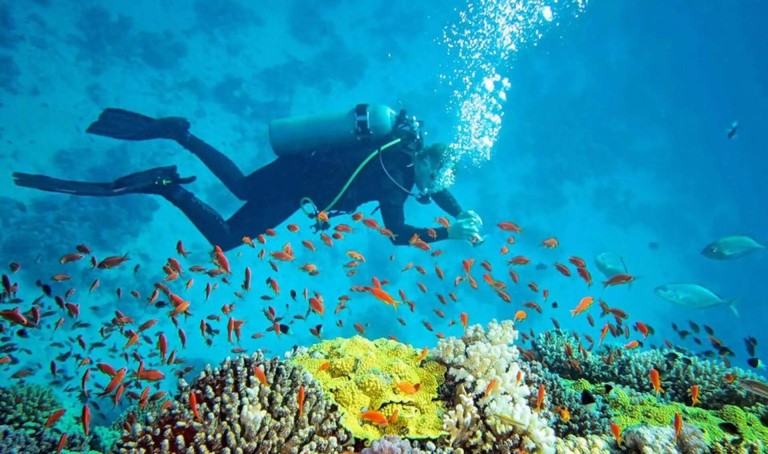
The underwater environment around the Andaman Islands offers a vibrant introduction to tropical marine life and coral ecosystems. Official tourism administration literature highlights the region's rich marine biodiversity, featuring fringing coral reefs, branching staghorn corals, and colourful reef fish darting among the rocks. Depending on the specific dive site, weather conditions, and seasonal timing, beginners may spot schools of parrotfish, butterflyfish, blue-spotted stingrays resting on the sand, or inquisitive marine organisms hiding in coral crevices. Wildlife movements are entirely natural and unpredictable, so specific animal sightings are never guaranteed on any given dive, but the sheer variety of colourful reef life makes every underwater excursion visually engaging.
Recreational diving is organized across select tourism zones in the territory, with Swaraj Dweep (Havelock Island) serving as the primary hub for diving infrastructure. Additional dive operations can be found around Shaheed Dweep (Neil Island) and selective coastal areas near Sri Vijaya Puram (Port Blair). The exact dive location chosen for your excursion depends heavily on daily weather shifts, sea currents, tidal movements, your experience level, and current marine permissions managed by the District South Andaman Administration. Authorised dive centres carefully assess these variables every morning before deciding where to take their guests.
Swaraj Dweep (Havelock Island) has earned its reputation as the premier diving destination in the archipelago due to its extensive tourism infrastructure, professional dive operations, and sheltered coastal bays. Protected shallow areas around the island provide calm, predictable conditions that make them well-suited for introductory programmes and training dives. Official tourism directories list numerous authorised dive centres operating across the island, ensuring that travellers have access to structured, professional guidance when taking their very first breath underwater.
Introductory scuba diving programmes are designed to introduce beginners to shallow reef environments where permitted by the site and current sea conditions. However, interacting with coral requires a high degree of environmental mindfulness. Coral reefs are fragile, living organisms that grow very slowly over centuries. Beginners must maintain good buoyancy control and keep their distance, ensuring their fins and hands never touch, stand on, or damage the delicate coral formations below.
Choosing between snorkelling and scuba diving comes down to how deep you want to go and how you want to interact with the water. Snorkelling keeps you right at the surface, allowing you to observe shallow reefs from above using a mask and a breathing tube without wearing heavy scuba gear. Scuba diving, on the other hand, equips you with an air tank and regulator, allowing you to submerge entirely and move weightlessly alongside marine life at depth. Snorkelling is casual and easy to pick up independently, whereas scuba diving requires professional instruction, equipment familiarisation, and direct supervision.
Feeling a sense of nervousness or apprehension about entering deep water for the first time is completely natural. Many first-time divers experience a flutter of anxiety on the boat or at the shore. The healthiest approach is not to pretend the fear does not exist, but to communicate it openly with your instructor before you get into the water. Professional instructors are trained to work with nervous beginners, taking extra time to explain every step, holding your hand or equipment harness securely, and ensuring you never feel rushed beyond your comfort level.
Panic is one of the primary reasons professional supervision is mandatory for beginner divers. If you ever feel overwhelmed or anxious while submerged, the most important rule is to stop, focus on your breathing, and communicate immediately with your instructor using the hand signals you were taught during your briefing. Never attempt to handle underwater distress alone or bolt toward the surface in a panic. Stay close to your instructor, signal for assistance, and let them help you sort out your equipment or guide you calmly back to the shallow water or surface.

Participating in a recreational dive requires wearing appropriate exposure protection and supportive gear. Depending on the water temperature and operator setup, you may be fitted with a shorty wetsuit or full exposure suit to keep you comfortable and protect your skin against accidental scrapes. The dive centre provides all specialised scuba equipment, including the mask, fins, BCD, regulator, and air tank. You should wear comfortable swimwear underneath your wetsuit and bring clothes that are easy to change into after your session concludes.
Keeping your packing list simple ensures a stress-free dive day. Bring your swimwear, a clean towel, a dry change of clothes, reliable sun protection, and a bottle of drinking water to stay hydrated in the tropical heat. If you rely on personal prescription medications, make sure you have them on hand. Avoid bringing expensive jewellery, unsealed electronics, or unnecessary valuables to the dive site, as secure storage can vary between operators.
Proper personal preparation helps ensure your underwater experience remains comfortable and calm. Ensure you get a restful night of sleep before your dive day and maintain good hydration by drinking plenty of water. Heavy meals and alcohol consumption should be strictly avoided immediately prior to putting on diving gear. Pay close attention during your instructor's briefing, and disclose any medical history or personal concerns honestly during the initial screening process.
Emerging from the water after your first successful scuba dive usually brings a rush of excitement and amazement. Once you are back on the boat or shore, remove your heavy gear, rinse off with fresh water, and relax while your instructor shares observations about the marine life you encountered. Furthermore, because scuba diving involves pressure changes, travellers must follow recognised diving safety guidance concerning subsequent travel, particularly avoiding flying immediately after diving to allow your body adequate time to off-gas safely.
Scuba diving is a highly structured, regulated activity governed by strict international safety standards, making it safe for millions of participants worldwide every year. However, it involves real physical variables like pressure changes, which is why proper training, equipment maintenance, professional supervision, weather assessment, and strict adherence to rules are essential. Beginners should always choose a properly authorised and reputable diving provider and follow every instruction given by their dive professionals.
Selecting the right dive operator is the most important decision you will make when planning an underwater adventure. Look for established dive centres that employ certified instructors, maintain modern and well-serviced equipment, and display transparent safety protocols. Reviewing customer feedback regarding instructor patience and small group sizes helps ensure a reassuring experience. Official tourism guidelines published by the Andaman & Nicobar Tourism Department provide directories of registered water-sport operators to help travellers verify local credentials.
Environmental conditions play a vital role in determining the quality and safety of recreational diving. The optimal window for scuba diving in the Andaman Islands generally runs from October through May, during the dry season when surface winds are minimal and underwater visibility is at its highest. During the monsoon months, increased rainfall, stronger winds, and turbulent seas can significantly reduce visibility and lead to temporary cancellations of dive operations. Safety must always take absolute precedence over maintaining a rigid holiday schedule.
Protecting the fragile marine ecosystem relies heavily on the responsible behaviour of every diver in the water. Coral reefs are living, delicate organisms that grow very slowly over centuries, meaning even a minor accidental touch from a fin or hand can cause permanent damage. Divers must master good buoyancy control to remain suspended clear of the reef substrate at all times. Feeding fish or disturbing bottom-dwelling creatures disrupts natural marine behaviour and is strictly prohibited by conservation guidelines.
Capturing memories of your underwater encounter adds a wonderful dimension to any diving trip, but beginners should prioritize learning the basics. Maintaining calm breathing, following your instructor, and protecting the coral reef matter far more than trying to operate a camera on your first dive. Many dive operators offer professional underwater photography or video packages as an optional extra, allowing you to focus entirely on enjoying your underwater tour while a professional captures the moment.
For travellers who love the sea, enjoy exploring nature, and feel curious about what lies beneath the surface, trying scuba diving in Andaman can be one of the most rewarding highlights of an island holiday. While the first few breaths underwater may feel unusual, the feeling of weightless movement across a coral reef provides a perspective that no land-based sightseeing can replicate. Approaching the experience with realistic expectations, patience, and a willingness to learn ensures your first breath underwater becomes a cherished memory.
Coordinating multi-island transport, resort accommodation, ferry bookings, and specialized water sports requires careful logistical planning. At Andaman Bliss, we help travellers design seamless, customized holiday itineraries that cover every aspect of their Andaman adventure. Whether you want to book dedicated Andaman tour packages, arrange exciting Havelock Island packages, or secure a fully customised Andaman itinerary, our local team handles every detail reliably. Explore our official website to discover travel solutions designed for your next island getaway.
Discover the ferry booking tricks, SIM card recommendations, and practical island travel tips that every Andaman traveler should know before visiting.
Visit Cellular Jail and Ross Island to uncover the remarkable history of Kala Pani, India's freedom movement, and Andaman's colonial heritage.
Discover the natural wonders of Baratang Island, from mangrove creeks and limestone caves to the fascinating journey through the Jarawa Reserve.

