


Andaman Travel Tips 2026: What No One Tells You About Ferries & SIMs
Discover the ferry booking tricks, SIM card recommendations, and practical island travel tips that every Andaman traveler should know before visiting.
Visit Radhanagar Beach at sunset and witness why this stunning shoreline on Havelock Island is consistently ranked among Asia’s finest beaches.

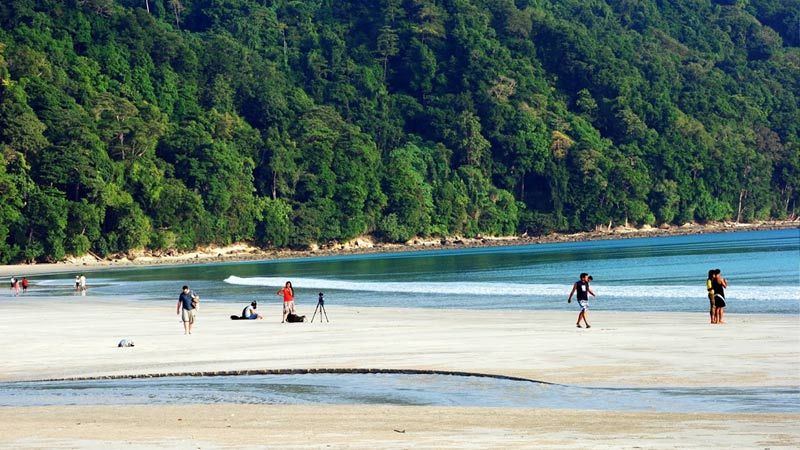
Imagine stepping out of the shaded jungle path onto a wide, powdery expanse of pale sand that seems to stretch further than your eyes can easily follow. To your left and right, an unbroken wall of tropical green forest frames the shoreline, while ahead of you, the shallow Bay of Bengal rolls in with gentle, rolling waves. This is Radhanagar Beach on Swaraj Dweep, a destination that many travellers plan their entire Andaman holiday around. Yet, while the shoreline is striking at any hour of the day, there is a distinct transformation that takes place during the late afternoon. As the sun begins its slow descent toward the western horizon, the entire atmosphere shifts. The harsh midday glare softens into a warm, golden glow, the sand takes on a burnished copper hue, and travellers naturally pause to watch the sky change colour. Often referred to locally by its administrative designation Beach No. 7, Radhanagar Beach has earned a lasting reputation that extends far beyond casual holiday snapshots. Long before social media travel feeds made island shores famous, this specific stretch of sand received international acclaim when Time magazine named Radhanagar Beach the Best Beach in Asia in 2004. Understanding why it earned that recognition, and why experiencing it around sunset remains a memorable part of any island itinerary, helps you plan a visit that moves beyond the typical tourist checklist.

Radhanagar Beach is situated on the western coast of Swaraj Dweep, the official administrative name for the island historically and commonly searched by travellers as Havelock Island. Its western orientation is the primary reason why it serves as such a magnificent venue for evening viewings. According to official beach management documentation provided by the Andaman & Nicobar Tourism Department, Radhanagar Beach is located approximately 12 km from the main Swaraj Dweep Jetty. The drive across the island takes you through winding interior roads flanked by tall trees and small village settlements, providing a pleasant transition from the busy ferry terminal to the quiet isolation of the western coast.
For visitors navigating local transport or reading regional maps, you will frequently encounter the administrative name Beach No. 7 used interchangeably with Radhanagar Beach. This numbering system was originally implemented by the local administration to index the various coastal stretches along the island's coastline during early infrastructure planning. Over the years, while other numbered beaches faded into common descriptive terms, Beach No. 7 stuck firmly to Radhanagar, becoming a familiar reference point for auto drivers, tour operators, and island maps alike.
The international recognition that put Radhanagar on the global travel map came in 2004, when Time magazine evaluated coastlines across the continent and formally designated Radhanagar Beach the Best Beach in Asia. Official government records, including historical documentation maintained by the Ministry of Tourism, continue to reference this milestone as a defining moment for regional tourism. The qualities that justified this high praise remain entirely intact today. Unlike heavily commercialized shores lined with concrete hotels and noisy entertainment venues, Radhanagar offers a rare combination of physical space, clean water, thick forest framing, and an open western horizon. The absence of heavy construction along the immediate shoreline preserves its raw, natural integrity, allowing visitors to experience an expansive tropical beach environment largely as nature intended.
The distinct character of Radhanagar Beach stems from how its natural elements balance one another. The sand is remarkably fine and pale, running cool underfoot even when the sun has been beating down for hours. The water shifts gradually from a clear, transparent turquoise near the shore into deep sapphire blue further out. Behind the sand, the thick tropical forest acts as an unyielding green barrier that shuts out the modern world. Official tourism administration guidelines emphasize that the beach is maintained with a strict focus on low-impact recreation, meaning you will not find commercial jet skis, banana boats, or loud beach shacks disrupting the peace. This deliberate choice to prioritize natural preservation over commercial entertainment gives the beach its distinct, unhurried atmosphere.

Because Radhanagar Beach faces almost directly west, it is naturally optimized for evening sky viewing. As the afternoon progresses toward late day, the angle of the sunlight alters the entire visual landscape. The broad expanse of sand acts as a natural reflector, catching the fading amber light, while the receding tide leaves behind wet, glassy patches of sand that mirror the dramatic cloud formations above. Watching the sun slip slowly below the ocean horizon provides a quiet, unifying ritual for everyone on the shore. While weather and seasonal cloud cover can occasionally soften the display, clear evenings offer an unforgettable coastal spectacle that rewards travellers who time their afternoon arrival properly.
A common mistake made by first-time visitors is arriving at the beach only five minutes before the scheduled sunset time. Official visitor guidance recommends arriving around 4 PM to truly experience the location properly. Arriving early gives you ample time to walk through the security and ticketing checkpoint, stroll down the shaded pathway, find a comfortable patch of sand, and take a leisurely walk along the shoreline before the main evening event begins. Because actual sunset times shift subtly throughout the year based on seasonal positioning, checking the exact local sunset time for your specific travel date ensures you do not miss the gradual transformation of the afternoon light.
Experiencing an evening at Radhanagar involves engaging all your senses. As the sun moves lower, the oppressive daytime heat begins to lift, replaced by a cool, refreshing sea breeze rolling in from the open Bay of Bengal. You hear the rhythmic, low-frequency sound of steady waves meeting the shore, punctuated by the quiet chatter of families and couples walking along the damp sand. Long shadows stretch out toward the forest edge, and swimmers slowly make their way out of the water as the evening chill sets in. The entire beach seems to exhale, adopting a relaxed, contemplative quiet that makes it easy to understand why travellers linger long after the sun has dipped below the horizon.
Unlike many rugged coastal spots where swimming is strictly prohibited due to dangerous undertows, Radhanagar Beach permits swimming in designated, supervised areas. According to official beach management guidelines provided by the District South Andaman Administration, designated swimming zones are monitored closely by trained lifeguards during operating hours. The seabed features a gradual, gentle slope without sudden drop-offs or hidden coral hazards, making it comfortable for a casual dip. However, sea conditions can experience sudden shifts based on wind direction and offshore currents. Swimmers must always respect local safety flags and remain strictly within the marked swimming zones.
It is important for travellers to understand that Radhanagar is strictly a daytime and sunset destination. Official beach administration rules dictate that public access to the shoreline is regulated between sunrise and sunset. Once the sun has fully dipped below the horizon and twilight fades, security personnel begin asking visitors to make their way back toward the main exit pathway. There is no late-night beach partying, bonfire culture, or moonlight swimming permitted here. Respecting these closing times is part of protecting the local environment and ensuring the coastal wildlife remains undisturbed after dark.
Reaching the beach requires an initial journey to Swaraj Dweep from the capital city of Sri Vijaya Puram via private catamaran or government passenger vessel. Once you arrive at the Havelock Island jetty, Radhanagar Beach sits approximately 12 km away across the western interior road network. Visitors can easily arrange local transport, including pre-booked tourist cabs, auto-rickshaws, public buses, or rented two-wheelers, to complete the cross-island drive. For a fully coordinated travel experience that seamlessly links your ferry transfers with local island transport, you can explore structured Andaman tour packages designed to handle all transit logistics reliably.
Treating Radhanagar Beach as a hurried, thirty-minute photo stop does a major disservice to the destination. To truly appreciate its scale and atmosphere, you should allocate at least three to four hours for your visit. Arriving mid-afternoon gives you time to walk the length of the bay, swim in the designated zone, relax on the sand, and remain comfortably through the entire sunset sequence without feeling rushed to catch a return vehicle.
Activities at Radhanagar Beach are wonderfully simple and revolve entirely around the natural environment. You can take long, uninterrupted walks along the shore where the sand is packed firm by the receding tide. Swimming in the supervised zone offers a refreshing way to cool off under the tropical sun. Photographers will find endless framing opportunities using the forest backdrop, fallen driftwood, and open reflections on the wet sand. Alternatively, finding a quiet spot to sit, read a book, and listen to the rhythm of the waves provides a restorative break from busy sightseeing itineraries.
Travellers searching for high-energy motorized water sports—such as jet skiing, banana boat rides, or parasailing—will not find them at Radhanagar Beach. Those activities are intentionally concentrated at alternative locations like Elephant Beach to protect the ecological integrity and peaceful atmosphere of Beach No. 7. Radhanagar remains strictly dedicated to swimming, shoreline walking, and natural relaxation, making it a sanctuary for visitors who prefer quiet coastal scenery over commercial entertainment.
The expansive shoreline, dramatic evening sunsets, and quiet forest framing make Radhanagar Beach a natural favorite for couples and honeymooners. Walking hand-in-hand along the water's edge as the sky turns gold offers a memorable shared experience during a romantic holiday. For couples looking to combine romantic beach days with comfortable resort stays, exploring specialized Andaman honeymoon packages ensures your entire itinerary is tailored for a smooth, stress-free couple's trip.
Families travelling with children find the beach appealing because of its wide-open spaces, gentle surf, and clean environment. Children can safely build sandcastles and paddle in the shallows under careful parental supervision. The presence of essential public amenities nearby adds a layer of practical convenience for family groups. Parents must ensure younger children stay within the shallow, lifeguarded swimming zones at all times. To incorporate family-friendly beach visits into a broader trip, you can review structured Andaman family tour packages that prioritize comfortable pacing for all ages.
To maintain high environmental and hygiene standards, the beach is equipped with functional public facilities near the main entrance plaza. Visitors have access to clean changing rooms, restrooms, fresh-water shower areas, and secure locker facilities for storing personal belongings. Small local vendors near the parking area offer fresh tender coconut water and light refreshments, but visitors planning an extended afternoon stay should carry their own drinking water.
While the islands remain accessible throughout the year, official tourism guidance notes that the dry period spanning from October through May offers the most reliable weather conditions for beach visits and stunning sunsets. During these months, skies are generally clear, sea swells are minimal, and ferry travel from the capital is smooth. The monsoon season from June through September brings frequent rainfall and overcast skies, which can occasionally obscure the sunset, though the beach remains open for quiet walks when weather permits.
Preparing properly for an afternoon at the beach involves keeping your packing list light and practical. Wear comfortable, breathable clothing and footwear that is easy to slip off when walking on the sand. Carry a bottle of drinking water, reliable sun protection for the afternoon hours, a light cover-up or jacket for the cooler evening breeze on the return drive, and a waterproof pouch to shield your phone and camera from sand and sea spray.
The exceptional scale and clean composition of Radhanagar Beach make it a dream location for landscape and portrait photography. The wide horizon provides clean lines for sunset silhouettes, while the wet sand creates mirror reflections of the changing sky. Photographers should arrive early to scout out interesting pieces of driftwood or framing angles along the forest edge. Protecting your camera gear from blowing sand near the surf is essential to prevent damage to sensitive lenses.
The immense popularity of Radhanagar Beach places a heavy responsibility on every visitor to help protect its delicate ecosystem. Under strict environmental guidelines enforced by the Andaman & Nicobar Administration, littering is strictly prohibited, and visitors must never leave plastic bottles, wrappers, or trash on the sand. Collecting natural souvenirs such as shells, sand, or coral pieces is illegal. Respecting these boundaries ensures that Beach No. 7 remains clean, beautiful, and ecologically sound for everyone who follows in your footsteps.
Because Radhanagar is internationally famous, you should not expect to have the entire beach to yourself. Official beach management documentation highlights that visitor volume and parking congestion can peak during afternoon hours, particularly in the peak winter tourist season and on public holidays. However, the sheer length and width of the shoreline absorb crowds remarkably well; walking just a few hundred metres away from the main entrance path quickly brings you to quieter, less populated stretches of sand.
Comparing Radhanagar with other regional shores highlights its unique strengths. While Elephant Beach is ideal for snorkeling and water sports, and Kalapathar Beach offers rugged rock formations and quiet sunrises, Radhanagar stands alone as the premier destination for classic tropical scenery, open-water swimming, and spectacular evening sunsets. Most itineraries include multiple beaches, ensuring you experience the diverse coastal character of Swaraj Dweep.
Integrating Radhanagar into your holiday requires a well-paced Swaraj Dweep stay. Rather than squeezing a sunset visit between tight ferry transfers, dedicate an entire afternoon exclusively to the beach. Arrive early, enjoy a swim, walk the shoreline, and stay through the final glow of twilight before heading back to your resort. To ensure your accommodation and transport are perfectly aligned with your sightseeing goals, you can explore fully customised Andaman itineraries tailored to your personal travel style.
Coordinating multi-modal transit, resort accommodation, ferry bookings, and guided beach excursions requires seamless logistical planning. At Andaman Bliss, we help travellers design comprehensive, customized holiday itineraries that cover every corner of the archipelago. Whether you want to book a dedicated Havelock Island itinerary, arrange comprehensive Andaman tour packages, or secure a peaceful beach holiday, our local team handles every detail reliably. Explore our official website to discover travel solutions designed for your next island getaway.
Discover the ferry booking tricks, SIM card recommendations, and practical island travel tips that every Andaman traveler should know before visiting.
Visit Cellular Jail and Ross Island to uncover the remarkable history of Kala Pani, India's freedom movement, and Andaman's colonial heritage.
Discover the natural wonders of Baratang Island, from mangrove creeks and limestone caves to the fascinating journey through the Jarawa Reserve.

