


Andaman Travel Tips 2026: What No One Tells You About Ferries & SIMs
Discover the ferry booking tricks, SIM card recommendations, and practical island travel tips that every Andaman traveler should know before visiting.
Discover the magic of midnight kayaking through Andaman’s mangrove forests, where moonlit waters, wildlife, and peaceful surroundings create an unforgettable adventure.

Step away from the open expanses of white sand and turquoise surf, and you will find an entirely different dimension of the Andaman Islands waiting quietly along the coast. Shifting from an open beach into a narrow, sheltered water channel by kayak brings an immediate change in sensory perception. The boisterous sound of breaking waves fades away, replaced by the soft drip of water from your paddle and the deep stillness of the surrounding forest. The concept behind a title like "Midnight Mystery" plays on that familiar curiosity—the quiet human wonder of not knowing precisely what lies around the next shadowed bend of a winding waterway. However, actual exploration of this environment requires keeping feet firmly planted in reality. Midnight kayaking tours or unsupervised midnight paddles through Andaman mangrove creeks are not standard, permitted tourism activities. Instead, the true mystery of these coastal waterways lies in the shifting light, the changing tides, and the rich biological activity of an ancient ecosystem that can be experienced safely during authorised daytime and evening hours.

Engaging in mangrove kayaking is a completely different experience from paddling across open coastal seas or around sandy shorelines. When you enter a mangrove creek, the landscape narrows dramatically. You find yourself navigating shallow channels where the exposed, arching root systems of the trees rise like gnarled wooden cages out of the water. Because these waterways are sheltered from heavy open-sea winds, the water surface in certain sections can feel remarkably calm, yet it is constantly dictated by invisible tidal currents. Moving through these corridors requires a slower, more deliberate paddling technique. A lightweight kayak lets you glide silently through tight turns that larger motorised boats can never reach, offering an intimate perspective of a coastal habitat that remains entirely hidden from standard tourist roads.
The mangrove forests of the Andaman and Nicobar Islands represent a vital ecological buffer connecting terrestrial land with the marine environment. These specialized coastal trees thrive in saline tidal waters that would kill ordinary vegetation. Their intricate networks of prop roots and pneumatophores serve multiple essential functions, acting as natural breakwaters that protect island shorelines from severe coastal erosion during storms. Furthermore, official environmental guidelines from the Ministry of Environment, Forest and Climate Change highlight that mangroves serve as critical nursery grounds for a vast array of marine life, providing shelter and nutrients for juvenile fish, crabs, molluscs, and coastal birds. When you paddle through these channels, you are moving directly through the biological heart of the territory's coastal health.
Opportunities for experiencing mangrove kayaking are concentrated around specific, sheltered aquatic zones across the archipelago. The most prominent locations are found on Swaraj Dweep, commonly known as Havelock Island, where calm mangrove creeks wind inland away from the main resort beaches. Other selective eco-tourism zones in the territory also offer authorized paddling routes managed by certified local operators. It is important to recognize that these activities take place exclusively in designated, permitted channels. You cannot simply rent a kayak independently and wander into random forest creeks, as doing so risks environmental damage and personal safety hazards. For travellers planning to include aquatic sports in their itinerary, exploring verified Andaman water activities ensures you are booking through safe, legal channels.
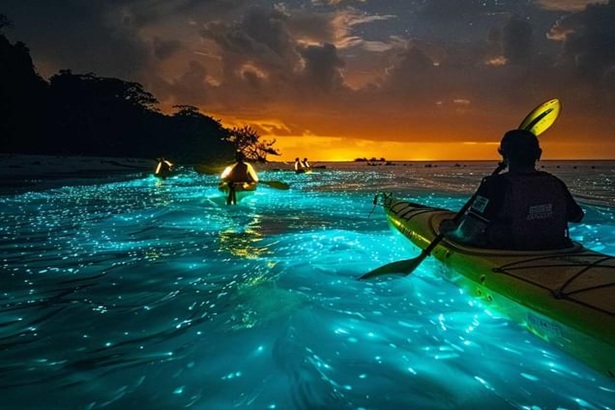
Addressing the dramatic tone of the blog title requires clarifying a critical operational reality: tourists cannot legally or practically participate in midnight kayaking tours in the Andaman Islands. Authorized tourism operations and local forest department regulations do not permit unsupervised night navigation through mangrove creeks. Kayaking after dark introduces severe safety hazards, including total lack of visibility, unpredictable tidal shifts, strong unseen currents, complex underwater root snags, and the complete absence of emergency response infrastructure in remote forest areas. Official maritime rules prioritize visitor safety above all else, keeping all recreational kayaking strictly restricted to daylight or supervised late-afternoon hours when visibility is clear and professional guides can maintain direct oversight.
Choosing the ideal time of day to paddle through the mangroves depends on local operator schedules, weather patterns, and shifting tide tables. Early morning outings offer a cool, crisp atmosphere when the air is still and forest birdlife is at its most active. The low morning light filters softly through the canopy, illuminating the water surface and creating peaceful conditions for paddling. Evening sessions, timed carefully before sunset, present a different mood as the fading light casts long shadows across the twisting root systems and the temperature begins to drop. Both times offer distinct atmospheric rewards, provided your excursion operates within authorized daylight hours.
Drifting down a narrow mangrove channel places you inside a living, breathing green tunnel. The air feels heavy, humid, and rich with the earthy scent of wet mud and decaying organic matter that nourishes the entire forest food web. As your kayak moves forward, the gentle dip of your blade is often the loudest sound in the vicinity, punctuated only by the sudden splash of a jumping fish or the rustle of leaves as a bird shifts branches overhead. The walls of tangled roots stretch up on either side, creating a sense of isolation from the modern world. This deep quiet is precisely what draws travellers away from crowded beaches into the interior waterways.
The dense tangle of mangrove roots supports a diverse array of coastal creatures that have adapted specifically to tidal environments. Observant kayakers frequently spot small mudskippers skipping across exposed banks, brightly coloured crabs scuttling among the roots, and various species of wading birds like egrets and kingfishers hunting along the water's edge. Because these are wild animal populations operating in their natural habitat, sightings are entirely unpredictable and never guaranteed. Wildlife here should be observed quietly from a respectful distance. Feeding, touching, or chasing animals is strictly prohibited under local conservation guidelines, as human interference disrupts fragile natural behaviours.
Navigating mangrove creeks requires a strong working understanding of tidal movements. Unlike open ocean beaches where tides primarily affect swimming zones, narrow mangrove channels can transform dramatically between high and low water. During a falling tide, shallow sections can become completely unnavigable, leaving kayaks stranded in deep mud, while a rising tide pushes strong saltwater currents inland against your paddling direction. Local guides carefully monitor official tide charts for every excursion, timing the departure so that paddlers ride natural water movements safely without fighting harsh opposing currents.
The tropical maritime climate of the Andaman Islands dictates that weather conditions can shift quickly across the region. While sheltered mangrove channels are generally protected from the violent wave action found on open beaches, heavy tropical downpours and strong wind gusts can still impact safety. Sudden rain squalls reduce visibility and turn calm waters choppy. Professional tour operators monitor regional meteorological updates closely and will readily postpone or cancel kayaking excursions if weather parameters cross safe operating limits. Flexibility in your holiday schedule ensures you can reschedule your paddle if the weather turns uncooperative.
Recreational mangrove kayaking is generally designed to be accessible for beginners and families, provided participants possess basic water comfort and a moderate level of physical mobility. Before launching, guides conduct a thorough safety briefing, demonstrating proper paddle control, steering techniques, and the correct usage of flotation vests. The kayaks used are wide, stable sit-on-top models rather than narrow, tippy racing boats, minimizing the risk of capsizing. Even so, it remains a physical activity that requires continuous upper-body movement, so travellers should assess their own comfort levels before booking.
Families travelling with children often wonder if mangrove kayaking is appropriate for younger participants. Suitability depends entirely on the child's age, swimming ability, individual confidence around water, and the specific rules enforced by the tour operator. Many operators permit children to share a double kayak with an adult, allowing parents to manage the primary steering and propulsion while the child enjoys the scenery. Parents must confirm exact age limitations and safety requirements directly with their provider beforehand, ensuring the experience matches the child's comfort level.
Dressing appropriately for a kayaking excursion ensures your physical comfort on the water. Opt for lightweight, quick-drying clothing that can handle getting wet from paddle drips or mud splashes. Sturdy water shoes or secured sandals are essential for protecting your feet during launch and landing. Because you will be exposed to the tropical sun during sections of the trip, apply reliable sunscreen, wear a hat, and bring a bottle of drinking water. Protect your mobile phone or camera in a certified waterproof dry bag, as electronic devices do not survive accidental dunks in saltwater.
As natural sunlight begins to recede from the forest canopy, the character of the mangrove channels shifts noticeably. Without direct sunlight, the dense vegetation casts deep, complex shadows across the water, and visual navigation relies entirely on twilight fading from the sky above. Because night navigation is legally restricted for safety, authorized tours wrap up well before complete darkness descends. The fading evening light offers a moody, atmospheric conclusion to your paddle, emphasizing the raw, untamed nature of the coastal forest without crossing into unsafe after-dark navigation.
The strict prohibition against unsupervised night kayaking stems from clear, practical safety hazards. Without proper illumination, submerged root snags can pierce hulls or capsize boats, changing tidal currents can sweep paddlers off course into dense mangrove thickets, and the absence of light makes visual rescue virtually impossible in an emergency. Respecting these boundaries ensures that your interaction with the natural world remains safe, controlled, and entirely positive.
Protecting the ecological integrity of the mangrove wetlands is a shared responsibility between local authorities, tour operators, and every individual visitor. The Andaman & Nicobar Tourism Department emphasizes strict environmental rules across all eco-tourism zones. Travellers must stay strictly within authorized paddling channels, avoid grabbing or breaking fragile mangrove roots, and ensure zero waste is left behind in the water or along the banks. Keeping the ecosystem pristine guarantees that the coastal forests remain healthy and intact for future generations.
The health of mangrove forests is directly linked to the broader marine environment of the Andaman Islands, influencing nearby coral reefs, seagrass beds, and coastal fisheries. Nutrients washed out from the mangrove leaf litter feed the entire coastal food chain, supporting the vibrant marine life that snorkelers and divers admire out on the reefs. Recognizing this interconnectedness adds profound context to your time on the water, showing that protecting a muddy mangrove creek is just as important as saving a white-sand beach.
Choosing between exploring mangroves in a silent kayak versus riding in a motorized boat depends on your personal travel style. A motorboat covers greater distances quickly and suits travellers with limited mobility or fitness concerns. However, a kayak offers an immersive, zero-emission experience that lets you move in absolute silence, sliding right up to root systems without disturbing wildlife or polluting the quiet air with engine exhaust.
Planning your kayaking excursion is most reliable during the dry season spanning from November through April, when calm weather, minimal rainfall, and stable sea swells create comfortable outdoor conditions. While the rainy monsoon months bring lush green foliage, they also introduce unpredictable storms and swift currents that can make paddling hazardous. Aligning your activity with a stable weather window ensures a smooth and enjoyable outing.
Integrating a kayaking session into your wider holiday requires thoughtful scheduling. Pair your active morning on the water with a relaxed afternoon at your resort, avoiding tightly packed schedules that combine multiple strenuous activities on the same day. To explore fully coordinated holiday itineraries that blend eco-tourism activities with seamless island logistics, you can review comprehensive Andaman adventure packages designed to balance excitement and relaxation.
Organizing outdoor excursions, ferry transfers, hotel bookings, and local sightseeing requires dependable logistical support. At Andaman Bliss, we help travellers design seamless, customized itineraries that cover every corner of the archipelago. Whether you want to add eco-paddling sessions to your trip, arrange a complete Havelock Island tour, or secure a fully customized Andaman itinerary, our local team handles your arrangements reliably. Explore our official website to discover travel solutions tailored for your next island getaway.
Discover the ferry booking tricks, SIM card recommendations, and practical island travel tips that every Andaman traveler should know before visiting.
Visit Cellular Jail and Ross Island to uncover the remarkable history of Kala Pani, India's freedom movement, and Andaman's colonial heritage.
Discover the natural wonders of Baratang Island, from mangrove creeks and limestone caves to the fascinating journey through the Jarawa Reserve.

