


Andaman Travel Tips 2026: What No One Tells You About Ferries & SIMs
Discover the ferry booking tricks, SIM card recommendations, and practical island travel tips that every Andaman traveler should know before visiting.
Trek through tropical forests, race across the sea by speedboat, or explore the ocean floor with sea walking—find the best Elephant Beach experience for your Andaman trip.

When travellers start planning their island itinerary around Swaraj Dweep, historically and commonly searched for as Havelock Island, Elephant Beach almost always appears near the top of the list. Most people picture the destination purely as a coastal reward—a wide curve of white sand, turquoise water, and coral reefs waiting at the end of the journey. However, focusing solely on the beach means overlooking half the experience. Reaching Elephant Beach can and should be part of the actual adventure. Depending on how you choose to travel, your day can begin with a quiet walk beneath a forest canopy or a fast, spray-filled boat ride across the waves. Once you arrive, a third experience awaits beneath the surface in the form of sea walking. These three elements—the forest trek, the speedboat ride, and the underwater walk—do not compete with one another. Instead, they create three distinct ways to experience what makes this corner of the Andaman Islands so popular. The trek lets you experience the land, the boat lets you experience the sea, and sea walking lets you experience the underwater world, turning a simple beach visit into a well-rounded island excursion.

Elephant Beach is situated on the north-western coast of Swaraj Dweep (Havelock Island) in the Andaman and Nicobar archipelago. Official information published by the Andaman & Nicobar Tourism Department describes the location as an adventure-oriented coastal destination known for its shallow, coral-rich waters and a wide selection of water-based activities. It has grown into one of the most visited spots on the island because it combines natural beauty with active marine recreation. Understanding where it sits on the map helps you visualize the two primary access routes: travelling overland through the island's forested interior or taking a marine route directly across the coastal waters.
Traditionally, travellers have two primary choices when it comes to getting to Elephant Beach from the main populated areas of Swaraj Dweep (Havelock Island). Official tourism information currently lists access either by trekking through the jungle or by taking a boat from the island's main jetty. The choice between the two routes changes the character of your entire morning. The forest trek is for travellers who want a slower, nature-focused journey where the physical effort of walking makes the final arrival at the shore feel earned. The boat ride is for those who prefer convenience, speed, and open-sea views. Deciding between them depends entirely on your energy levels, your interests, and what kind of morning you want to build.
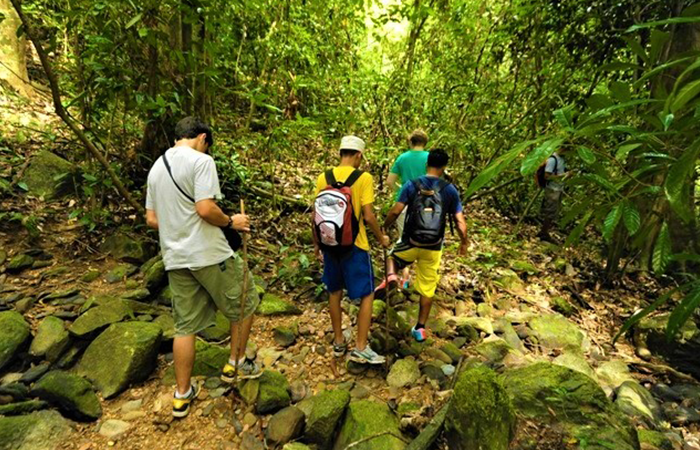
If you choose the overland route, your day begins at the designated forest-trail entry point on the island. Official tourism guidelines currently estimate that the trek takes approximately 45 minutes to complete under normal trail conditions. As you step away from the gravel road and onto the path, the modern world fades quickly. The trail winds through shaded jungle sections, passing beneath thick tropical canopies and over natural ground featuring exposed tree roots and organic soil. You might hear forest birds calling from the branches above or notice small crabs moving near the damper wetland sections closer to the coast. It is an immersive way to experience the island's interior flora without the noise of vehicle engines.
It is important for first-time visitors to understand that this is not a strenuous, multi-day mountain expedition, but neither is it a paved city park walk. The Elephant Beach trek is a relatively short forest walk, yet the natural path can still require steady footing and concentration. Natural terrain means you will encounter uneven ground, muddy patches after recent rainfall, and occasional obstacles across the path. Travellers should not expect a smooth concrete walkway all the way to the sand. If you have mobility difficulties, low physical stamina, or young children who tire easily, you should carefully weigh the practical demands of walking on unpaved ground before committing to the hike.
Choosing to walk rather than ride offers several distinct advantages for the right type of traveller. The trek is ideal for visitors who genuinely enjoy hiking, want to immerse themselves in tropical vegetation, and prefer making the journey itself an active part of the day. It offers a wonderful way to stretch your legs after hours spent sitting on inter-island ferries. Furthermore, walking through the forest gives you a deeper appreciation of the island's diverse geography, showing you that Swaraj Dweep (Havelock Island) is just as much about dense green jungles as it is about coastal sand.
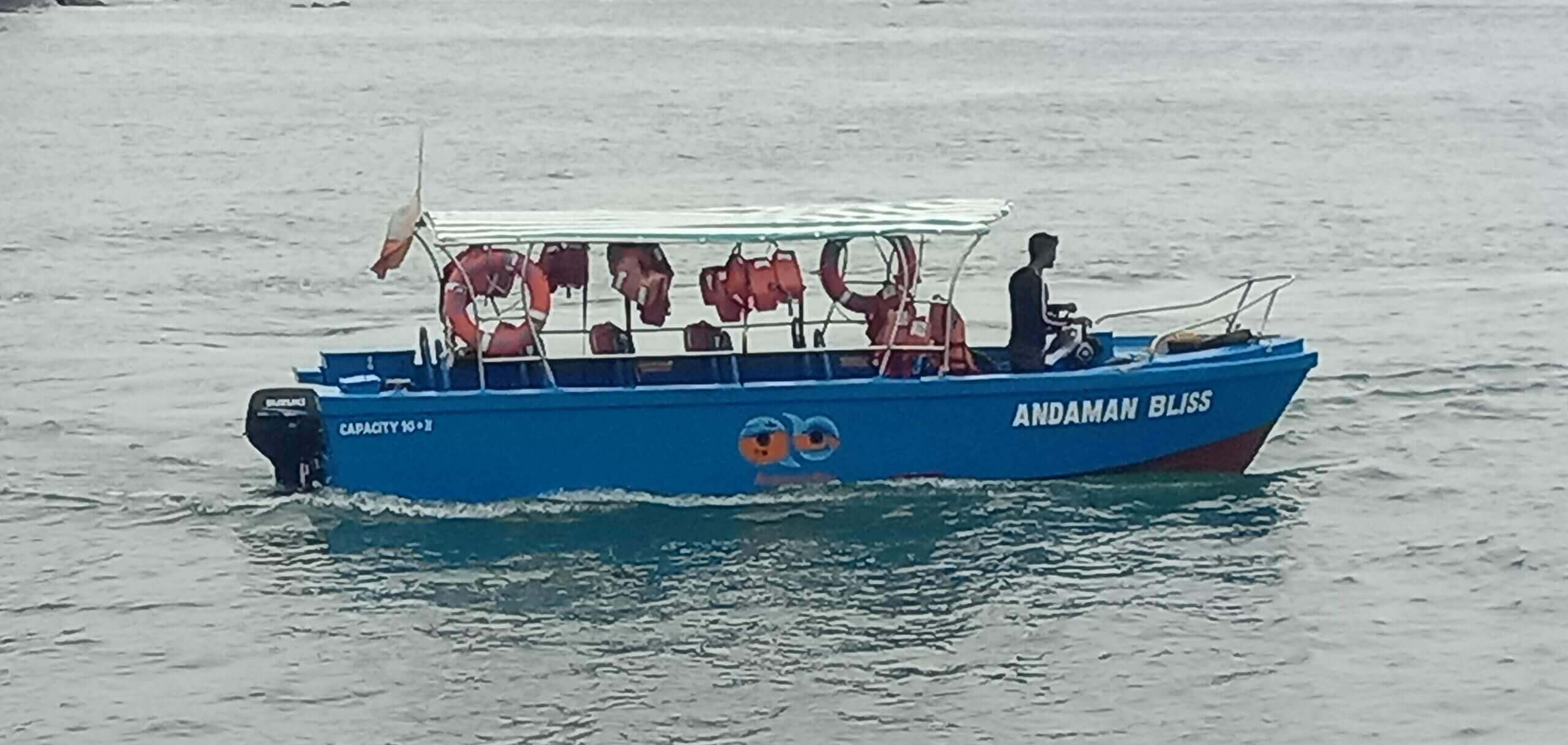
If walking through a humid forest trail does not sound like your preferred morning activity, the maritime route offers a straightforward alternative. Official tourism information currently lists an approximate travel time of 20 to 30 minutes for the speedboat journey from the Swaraj Dweep (Havelock Island) jetty directly to Elephant Beach. Arriving at the jetty, boarding a motorized fiberglass reinforced plastic boat, and heading out across the water provides a completely different rhythm to the day. You bypass the jungle mud completely and instead enjoy the open-sea breeze, salt spray, and panoramic coastal views as the boat cuts across the waves.
The boat ride is rarely viewed by travellers as a mere transit step; for many, it functions as an exciting prelude to the beach visit. As the driver powers away from the jetty, the vessel accelerates across the open water, lifting slightly over coastal swells. The wind rushes past your face, and the dense green coastline of Swaraj Dweep (Havelock Island) rolls past on one side while the open expanse of the Bay of Bengal stretches out on the other. It is fast, breezy, and exhilarating, delivering a quick maritime transfer that deposits you directly onto the soft sand of Elephant Beach in a matter of minutes.
Comparing the two access methods highlights a classic travel dilemma: convenience versus exploration. There is no single correct choice that works for every visitor. If your primary goal is saving your energy for water activities once you reach the sand, or if you are travelling with family members who prefer a smooth ride, the speedboat is the logical choice. On the other hand, if you view travel as an opportunity for light adventure and want to experience the island's interior forests on foot, the trek adds a memorable layer of discovery to your day. Many travellers find that the best approach is to pick the option that matches their mood, weather conditions, and physical comfort on the morning of the trip.
For travellers who find themselves torn between the two choices, there is often a flexible middle ground. Official tourism guidelines recognize both land and sea access to Elephant Beach, and many visitors arrange to trek through the forest in the morning when energy levels are high, and return to the main jetty by speedboat in the afternoon when they are tired from swimming and sunbathing. While you must confirm the availability of return boat seats and local arrangements before starting your hike, this one-way combination offers a balanced compromise, letting you experience both the quiet green interior and the open coastal water during a single day out.

Once you arrive at Elephant Beach—regardless of whether you walked through the jungle or arrived by speedboat—you have the opportunity to transition from surface recreation to underwater exploration. Official Andaman tourism material identifies Elephant Beach as a primary location for sea walking. Unlike traditional scuba diving or casual snorkelling, sea walking involves descending a ladder onto the ocean seabed while wearing a specialized helmet supplied with continuous air from the surface. You walk upright along the ocean floor, surrounded by shallow coral reefs and marine life, enjoying a fully immersed perspective of the underwater world without needing to know how to swim or manage complex diving gear.
Stepping off the platform ladder and feeling your boots touch the sandy seabed while wearing an underwater helmet is an unusual, fascinating sensation. The water pressure surrounds you, but your head remains completely dry inside the continuous airflow of the helmet. As you take your first slow steps along the marked underwater path, the natural resistance of the sea creates a gentle, slow-motion feel. Schools of small reef fish swim right past your clear visor, and coral heads rise up around your walking lane. It provides an approachable, highly guided introduction to the marine environment for visitors who want to see what lies beneath the surface without taking a traditional scuba diving course.
A common question among nervous visitors is whether non-swimmers are permitted to participate in sea walking. Official Andaman tourism literature explicitly describes sea walking as suitable for non-swimmers. The reason it works for those who cannot swim is simple: you are breathing normally through a surface-supplied helmet and walking upright on the ocean floor, rather than treading water or swimming freely in deep areas. However, participation is always subject to the activity provider's current safety rules, equipment checks, and individual health declarations. Always verify your eligibility with the local staff before booking your session.
The underwater ecosystem around Elephant Beach supports a vibrant mix of shallow-water marine life. When natural conditions cooperate and visibility is clear, sea walkers frequently observe branching coral formations, sea anemones, and schools of colourful reef fish darting across the sand. Because the ocean is a completely wild environment, exact visibility and marine sightings fluctuate daily based on weather, tides, and seasonal currents. Approaching the experience with curiosity rather than fixed expectations ensures you appreciate whatever underwater scenery the bay presents on your specific day.
Enjoying your day at Elephant Beach safely involves respecting local maritime rules and environmental guidelines. Always follow instructions given by boat drivers, jungle guides, and sea-walk handlers. The optimal window for visiting the beach and participating in its water activities generally runs from October through May, during the dry season when sea conditions are calmer and weather is predictable. Monsoon rains can occasionally disrupt boat schedules and make jungle trails muddy, so checking current forecasts is essential. Pack light with drinking water, sunscreen, and a change of clothes, and always practise responsible tourism by keeping the beach free of plastic waste and protecting fragile coral reefs from accidental contact.
Coordinating inter-island ferries, jungle treks, boat transfers, and specialized water sports requires careful logistical planning. At Andaman Bliss, we help travellers design seamless, customized holiday itineraries that cover every corner of the archipelago. Whether you want to book dedicated Elephant Beach trekking, arrange exciting Elephant Beach boat trips, or secure a fully customised Andaman itinerary, our local team handles your arrangements reliably. Explore our official website to discover travel solutions designed for your next island getaway.
Discover the ferry booking tricks, SIM card recommendations, and practical island travel tips that every Andaman traveler should know before visiting.
Visit Cellular Jail and Ross Island to uncover the remarkable history of Kala Pani, India's freedom movement, and Andaman's colonial heritage.
Discover the natural wonders of Baratang Island, from mangrove creeks and limestone caves to the fascinating journey through the Jarawa Reserve.

