


Andaman Travel Tips 2026: What No One Tells You About Ferries & SIMs
Discover the ferry booking tricks, SIM card recommendations, and practical island travel tips that every Andaman traveler should know before visiting.
Discover the natural wonders of Baratang Island, from stunning limestone caves and mangrove boat rides to India’s rare mud volcanoes.

When most travellers think about an Andaman holiday, their minds immediately picture white-sand shores, translucent turquoise water, colourful coral reefs, scuba diving, and relaxing evening sunsets. These destinations form the comfortable core of regional tourism for good reason, offering world-class beach experiences. However, if you look beyond the classic southern circuit, the archipelago reveals a very different geographical personality. Venturing north toward Baratang Island introduces you to a landscape shaped by dense tropical forests, winding mangrove waterways, rare geological formations, and overland exploration. Here, the holiday shifts away from lounging on sunlit sand and moves toward discovering natural wonders hidden deep within the island's interior. The journey to Baratang offers an opportunity to explore a side of the Andaman Islands that many beach-focused visitors miss entirely, making it an intriguing option for anyone looking to add variety to their itinerary.
Baratang Island occupies a strategic central position within the Andaman and Nicobar archipelago, acting as a geographic bridge between the southern districts around Sri Vijaya Puram and the remote northern territories of Middle and North Andaman. Because it sits nestled between dense forest reserves and coastal marine inlets, reaching it involves a combination of road travel across regional highways and brief boat crossings through sheltered channels. The very nature of this journey makes it feel like an expedition rather than a simple sightseeing trip, requiring travellers to plan their transit hours carefully in coordination with local transport operations and changing weather conditions.
Comparing Baratang to popular tourist hubs like Swaraj Dweep (Havelock Island) or Shaheed Dweep (Neil Island) highlights the vast diversity found across the island chain. Havelock is celebrated worldwide for its expansive beach resorts, water sports, and vibrant scuba diving centres, while Neil Island provides a quiet, flat agricultural landscape dominated by rural roads and gentle coastal lagoons. Baratang, by contrast, offers an entirely different style of travel. Its primary attractions do not revolve around swimming beaches or commercial entertainment. Instead, the island draws its appeal from natural geological formations, mangrove-lined boat passages, remote forest roads, and an offbeat charm that rewards travellers who appreciate raw nature and earth science over resort comforts.
Reaching Baratang Island is an experience in itself, beginning with an early road departure from Sri Vijaya Puram. The overland route winds northward through forested terrain, river bridges, and coastal stretches, offering a window into the everyday geography of the territory. Because infrastructure in certain rural sections is straightforward, transport arrangements can be affected by weather shifts, road maintenance, or administrative rules governing regional movement. Travellers must confirm their transportation logistics through authorised local channels well in advance, treating the transit hours not as a chore, but as an experiential part of exploring the middle reaches of the Andaman archipelago.

The road journey toward Baratang passes through sensitive territorial zones associated with the Jarawa Tribal Reserve. Official administrative guidelines published by the Andaman & Nicobar Administration establish strict protocols to protect the privacy, health, dignity, and cultural autonomy of the indigenous Jarawa community. This region is strictly a protected indigenous zone, not a tourist safari park. Travellers must follow all government regulations, vehicle movement rules, and security instructions without exception. It is illegal to attempt to photograph, film, interact with, feed, or approach tribal members along the road. Respecting these boundaries is a legal and ethical requirement for every visitor passing through the region.
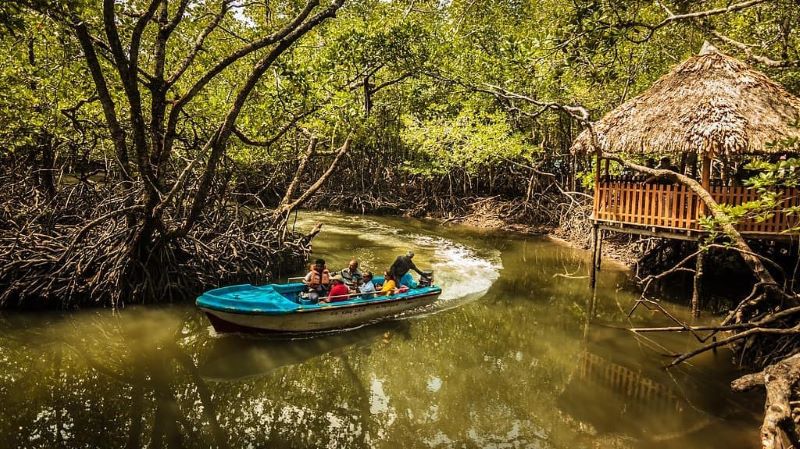
As you approach the water crossing that leads deeper into Baratang, the surrounding environment transforms into a dense, silent world of mangrove forests. These coastal trees, supported by complex networks of arching prop roots, line the water's edge, creating sheltered aquatic tunnels where the boat must navigate with care. The boat journey through these narrow mangrove channels feels calm and deliberate. The motor hums quietly as you move past dark, tangled root systems and over smooth, dark water, offering a peaceful transition from the dusty highway road into the protected interior waterways of the island.

The limestone caves stand out as one of the two primary natural highlights that draw visitors to Baratang. Limestone is a sedimentary rock composed primarily of calcium carbonate, formed over immense spans of geologic time from the compacted skeletal fragments of marine organisms. When slightly acidic rainwater and groundwater seep through cracks and fissures in the rock layers over centuries, it slowly dissolves the soluble mineral, carving out hollow chambers, tunnels, and dramatic mineral deposits. Entering these caves reveals a quiet subterranean world sculpted entirely by natural chemical processes and the patient passage of time.
Stepping inside the limestone cave system offers a striking contrast to the bright tropical sunlight of the forest outside. The interior walls feature rugged, uneven textures, damp surfaces, and intricate mineral formations that have built up over long periods. Visitors walk carefully through the dim chambers, observing the natural pillars, stalactites, and rock textures shaped by dripping water. The atmosphere inside is cool, quiet, and resonant with the subtle sounds of dripping moisture, providing an interesting geological contrast to the sunlit beaches found further south in the territory.
Reaching the cave entrance involves a multi-stage excursion. After completing the initial road journey to the departure jetty, visitors board a local boat for a scenic ride through the sheltered mangrove creeks. Once the boat docks at the designated landing point, travellers continue the journey on foot along natural pathways and wooden walkways leading toward the cave opening. Because final access arrangements can shift based on local weather, tidal conditions, and forest department regulations, visitors should rely on the guidance of authorized local operators to navigate the route safely.
Exploring the limestone caves involves light trekking across natural dirt paths, uneven ground, and sometimes damp or slippery surfaces near the cave entrance. While it is not an extreme mountaineering feat, it does require a reasonable level of physical mobility and steady footing. Visitors should wear sturdy walking shoes with reliable grip rather than smooth sandals. Older travellers, young children, and anyone with specific mobility concerns should evaluate whether walking across unpaved natural terrain suits their comfort level before starting the excursion.

The second major natural attraction on Baratang Island is its fascinating cluster of mud volcanoes. In simple geological terms, a mud volcano is a landform created by the emission of pressurized mud, slurries, gases, and water from deep beneath the earth's crust. Unlike dramatic mountain volcanoes that erupt with molten lava, ash, and fire, mud volcanoes operate through a much cooler, slower process driven by tectonic pressure and trapped underground gases pushing fine sediment upward toward the surface.
The scientific mechanism behind the mud volcanoes involves layers of underground silt and clay subjected to intense pressure from overlying geological strata. When underground water becomes heated and mixed with natural gases like methane, it liquefies the deep sediment and forces the slurry upward through vertical fissures and faults in the earth's crust. When this pressurized mud finally breaches the surface, it forms small bubbling pools and conical mounds, releasing gas bubbles and discharging soft sediment that slowly builds up the surrounding volcanic structure over time.
First-time visitors should adjust their expectations, as the mud volcanoes do not resemble fiery, smoke-spewing Hollywood mountains. Instead, you encounter a quiet, barren clearing featuring small, grey mud mounds and shallow pools where tiny bubbles continuously rise and pop on the surface. The attraction lies in observing an active geological phenomenon close up, witnessing the slow, steady breathing of the earth as cool mud oozes outward from underground chambers. It serves as an educational and unusual stop for anyone interested in earth science and natural topography.
Visiting the mud volcanoes typically involves a short drive from the main island road followed by a brief walk along designated pathways leading to the viewing area. Official management rules established by the Forest Department require visitors to remain strictly on the marked boardwalks and viewing platforms. Stepping off the paths onto the surrounding mud is dangerous, as the soft, uncompacted sediment can easily trap a person like quicksand. Respecting these boundaries ensures you can observe the bubbling pools safely without risking injury.
Comparing the two primary attractions reveals how effectively Baratang showcases different aspects of earth science. The limestone caves illustrate the destructive and creative power of water moving through solid rock over millennia, carving out subterranean chambers hidden away from the surface. The mud volcanoes, by contrast, demonstrate active geological forces pushing material upward from deep underground right before your eyes. Together, they provide a well-rounded natural excursion that bridges underground rock sculpting with surface tectonic activity.
Visiting Baratang is almost universally planned as an intensive day trip from Sri Vijaya Puram. Because the total journey requires hours of combined road driving and boat transfers, it consumes a large portion of the daylight hours. Travellers must start early in the morning to complete the transit, tour both the limestone caves and the mud volcanoes, and return safely before evening road restrictions or darkness set in. Trying to cram additional sightseeing activities into the same day is discouraged, as the journey itself demands a major energy commitment.
Families considering a trip to Baratang should weigh the long travel hours against their children's stamina. While older children who love science, nature, and boat rides often find the caves and bubbling mud fascinating, the extended time spent inside vehicles and walking across uneven terrain can prove exhausting for toddlers or very young kids. Parents must evaluate their children's patience with long transit days before booking the excursion.
Older travellers or visitors with back issues and joint sensitivities should carefully consider the physical demands of a Baratang day trip. The itinerary involves several hours of sitting in vehicles across varying road conditions, stepping in and out of small boats, and walking along unpaved forest tracks. Assessing your personal physical comfort and consulting your travel companions ensures you choose an itinerary that remains relaxing rather than fatiguing.
Planning your trip is heavily influenced by regional weather patterns. Official tourism guidance indicates that the dry months spanning from November through May offer the most reliable conditions for road travel, boat transfers through mangrove creeks, and outdoor walking. The monsoon season brings heavy rainfall that can make forest tracks slippery, cause travel delays on the highway, and occasionally prompt temporary restrictions on boat operations. Checking current weather forecasts before setting out is essential for a smooth trip.
Dressing appropriately for a full-day forest and cave excursion prioritizes practical comfort. Wear lightweight, breathable, and loose-fitting clothing made from quick-drying fabrics to handle the humid jungle environment. Sturdy walking shoes or hiking sandals with deep treads are mandatory for navigating uneven limestone paths and muddy ground safely. Avoid wearing delicate fabrics or light-coloured shoes that could get stained by natural mud or cave moisture.
Packing smartly for a long day away from major town amenities keeps you comfortable. Bring a reusable bottle of drinking water to stay hydrated, effective sun protection including a hat and sunglasses, insect repellent for the forested trails, personal medications, and a light change of clothes in case you get caught in a sudden shower. Keep your electronics protected in a waterproof pouch during the mangrove boat crossings, and carry a reasonable amount of cash for minor local expenses.
The unique topography of Baratang offers wonderful, unconventional photographic subjects that contrast sharply with standard beach pictures. You can capture the winding, dark green tunnels of the mangrove creeks, the rugged textures of the limestone stalactites, and the grey, bubbling pools of the mud volcanoes. However, remember to respect local photography restrictions, especially along the road passing through the tribal reserve, where cameras must be put away entirely to protect local privacy.
The dense rainforests and mangrove networks supporting Baratang are home to a diverse array of birdlife, insects, and coastal creatures. While moving through the mangrove creeks by boat, quiet observation may reveal wading birds or small marine organisms along the banks. However, wildlife sightings are secondary to the geological attractions, and visitors should never expect guaranteed animal encounters. Maintaining quiet decorum helps protect the natural habitat for its resident species.
Preserving the delicate ecological balance of Baratang requires a strict commitment to responsible behavior. Visitors must never leave plastic waste, wrappers, or water bottles behind in the forests, caves, or boat areas. Avoid touching fragile limestone formations, stay strictly on designated walking paths, and never attempt to collect rocks, cave minerals, or mud samples as souvenirs. Following every instruction given by your guides ensures the natural integrity of these geological sites remains intact.
Safety during an offbeat nature excursion relies on common sense and obedience to local rules. Always stay with your authorized guide, remain on marked pathways inside the cave chambers, and keep a safe distance from unstable mud pools. Never attempt to explore unlit cave tunnels independently or wander off into dense forest tracks. Respecting these boundaries guarantees a safe, memorable adventure.
Giving an honest answer about whether Baratang is worth the effort depends entirely on your travel preferences. If you have a deep interest in earth science, unusual landscapes, mangrove boat rides, and getting off the beaten tourist path, the long day trip is profoundly rewarding. If your ideal holiday consists entirely of relaxing on white-sand resort beaches, sipping drinks by the pool, and enjoying effortless short commutes, the demanding road travel to Baratang may feel unnecessary. Weighing your personal interests helps ensure your itinerary hits the right notes.
Incorporating Baratang into a wider holiday requires careful scheduling. Most visitors allocate a dedicated day for the trip while staying in Sri Vijaya Puram, before heading out to relax on the beaches of Havelock or Neil Island. Trying to squeeze Baratang between tight inter-island ferry transfers or right before a departure flight is a recipe for stress. Give yourself enough buffer days to absorb the long transit hours comfortably.
Coordinating complex road transfers, boat hires, weather monitoring, and regional sightseeing requires professional logistical support. At Andaman Bliss, we help travellers design seamless, customized holiday itineraries that cover every corner of the archipelago. Whether you want to book a dedicated Baratang Island tour, arrange comprehensive Andaman tour packages, or secure a fully customised Andaman itinerary, our local team handles your arrangements reliably. Explore our official website to discover travel solutions designed for your next island getaway.
Discover the ferry booking tricks, SIM card recommendations, and practical island travel tips that every Andaman traveler should know before visiting.
Visit Cellular Jail and Ross Island to uncover the remarkable history of Kala Pani, India's freedom movement, and Andaman's colonial heritage.
Discover the natural wonders of Baratang Island, from mangrove creeks and limestone caves to the fascinating journey through the Jarawa Reserve.

