


Diwali & Dussehra Vacation in Andaman: Ideal 6-Day Family Tour Plan
Planning a Dussehra or Diwali family holiday? Explore this 6-day Andaman itinerary covering beaches, island hopping, family activities, sightseeing, and practical travel tips.
Experience the beauty of Andaman after dark with a thrilling night kayaking tour through peaceful mangrove forests and bioluminescent waters.

When travellers first begin building an itinerary for the Andaman and Nicobar Islands, attention naturally gravitates toward the sunlit hours of the day. The archipelago is globally celebrated for its daytime coastlines, where scuba diving, coral snorkelling, island-hopping catamarans, and lounging on the white sands of Radhanagar Beach form the core of a standard vacation. However, a distinct shift occurs across the islands once the sun sinks beneath the horizon and evening takes hold. While most visitors retreat to resort dining rooms or quiet coastal walks, a growing number of travellers are seeking out a completely different dimension of the island environment. Among the various evening pursuits available, night kayaking in Andaman has quietly emerged as one of the most distinctive and sought-after activities for those looking to experience the archipelago away from conventional sightseeing. The appeal of night kayaking does not stem from high-octane thrills or commercial entertainment; rather, it lies in a rare combination of darkness, absolute quiet, gentle water movement, stargazing, and the possibility of witnessing natural marine bioluminescence.
To understand the fascination with paddling after dark, it helps to compare the sensory experience of a daytime excursion with an evening session on the water. During the day, kayaking in the Andaman Islands serves as an active visual journey. Paddlers glide across daylight-lit water, observing mangrove root systems, coastal vegetation, changing water depths, and passing marine life beneath the surface. The experience is framed by bright surroundings, sunlight, and the expansive scenery of the Bay of dependable Andaman coastlines. Night kayaking alters the sensory landscape entirely by stripping away ordinary visual distractions. Once you step into a kayak after sunset, your relationship with the environment shifts toward sound, touch, and movement. Without the dominant sense of sight, you become acutely aware of the steady dip of your paddle, the subtle ripple of water against the hull, the gentle evening wind, and the vast expanse of the night sky overhead. The guidance of a trained professional becomes your primary anchor, turning a simple water sport into an immersive, meditative journey through sheltered coastal waters or designated mangrove channels where local operators are authorized to conduct tours.
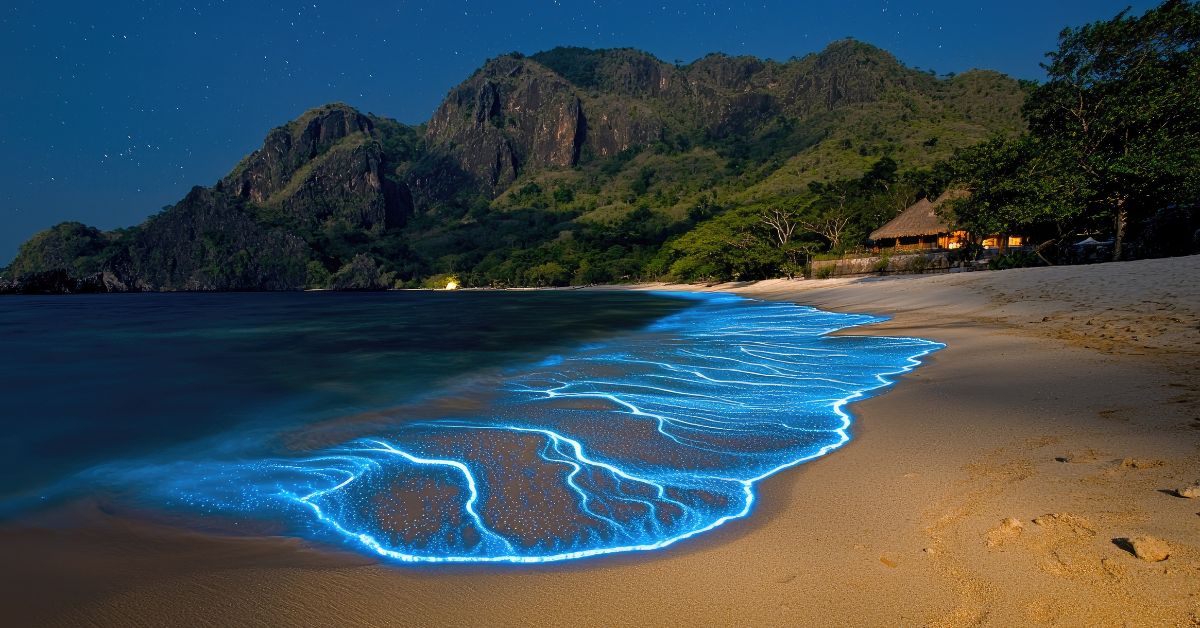
For many travellers, the primary catalyst for booking a night kayaking session is the chance to witness marine bioluminescence. In simple scientific terms, bioluminescence refers to the production and emission of light by a living organism as the result of a chemical reaction. In the coastal waters of the Andaman Sea, this phenomenon is frequently driven by microscopic marine organisms, primarily dinoflagellates and other tiny plankton. When these organisms are mechanically disturbed—such as by the stroke of a paddle, the movement of a kayak hull, or even the motion of passing fish—they emit a brief, radiant flash of blue-green light. As you paddle through the darkness, this reaction can manifest as glowing trails swirling around your paddle blades, luminous ripples spreading outward from the boat, or faint underwater sparks. It creates a surreal visual effect that feels entirely disconnected from ordinary coastal environments. However, understanding this phenomenon requires acknowledging a fundamental rule of nature: bioluminescence is an organic occurrence, meaning its intensity can vary significantly from one night to another depending on environmental factors.
While various coastal pockets across the archipelago offer marine excursions, Swaraj Dweep—commonly known as Havelock Island—has established itself as a primary hub for evening adventure. Havelock fits naturally into an Andaman holiday because of its robust tourism infrastructure, varied accommodation options, and well-established network of water-sport operators. Travellers spending several days on the island often look for activities that extend beyond daytime beach lounging, making an evening paddle an appealing addition to their itinerary. Operators offering bioluminescence night kayaking in Havelock Island provide structured, guided tours that take advantage of calm, sheltered waters away from heavy boat traffic and artificial light pollution. It is important to note, however, that night kayaking cannot take place on just any public beach; tours must be conducted within strictly designated and authorized operating areas where local authorities permit night navigation.
Beyond the captivating glow of marine plankton, night kayaking offers a stargazing experience that differs fundamentally from mainland environments. Because many coastal areas on the outer islands maintain low levels of artificial light pollution compared to mainland urban centres, the night sky opens up in remarkable clarity on clear evenings. Sitting low on the water in a stable kayak, with no buildings or streetlights obstructing your peripheral vision, provides an unobstructed view of constellations, shooting stars, and the subtle band of the Milky Way arching across the tropical sky. Of course, this celestial display remains subject to natural atmospheric variables. Cloud cover, passing weather systems, and the phase of the moon can all influence sky visibility on any given night. Nevertheless, even on nights when cloud cover softens the stars, the overarching sense of floating quietly beneath an immense, dark expanse remains a profound and memorable experience.
For visitors who find themselves fatigued by the fast-paced itinerary of airport transfers, crowded ferry terminals, and tightly packed daytime sightseeing, night kayaking offers a restorative change of pace. The activity operates on island time, encouraging a slower, more deliberate rhythm. There are no engines roaring, no crowds pushing for space, and no urgent schedules to maintain once you are out on the water. The primary sounds are organic: the rhythmic splash of paddles, the distant murmur of nocturnal wildlife along the shoreline, and the gentle lapping of ripples against the kayak. This quietude appeals strongly to travellers seeking genuine disconnection from digital distractions and urban noise, providing a moment of calm reflection amidst an otherwise active holiday schedule.
A standard night kayaking excursion is structured around safety, preparation, and careful timing. The experience typically begins after sunset at a designated meeting point along the coast, where participants gather to meet their certified guides. Before anyone steps onto the water, the operator conducts a thorough safety briefing, outlining the route, reviewing basic paddling techniques, explaining how to stay close to the group, and issuing necessary safety gear such as life jackets and guide-visible lighting. Once equipment is adjusted and guests are comfortable, everyone embarks from the shore into the quiet evening water. The group paddles at a comfortable, manageable pace along a pre-determined, authorized route, pausing periodically in calm zones to watch for bioluminescence and take in the night sky. The session concludes with a smooth return to the departure point, leaving travellers with a completely fresh perspective on the island's coastal geography.
While night kayaking is designed to be a serene and accessible activity, conducting any maritime excursion after dark introduces additional operational variables that require rigorous safety management. According to operational guidelines published by the Andaman & Nicobar Administration for night sea kayaking, organizers must adhere to strict protocols to ensure participant security. These official guidelines emphasize the necessity of operating exclusively within designated and authorized water zones, maintaining continuous weather monitoring, and ensuring that tours are immediately suspended or cancelled if sea conditions exceed safety thresholds. Furthermore, operators are required to employ trained, certified guides who carry reliable emergency communication devices and adequate lighting systems, such as headlamps and reflective markers on kayaks, to maintain visual contact with the group at all times. Travellers should never attempt independent night paddling without an authorized guide, as navigating unfamiliar coastal waters in total darkness carries genuine navigational and safety risks.
Because night kayaking takes place in an open marine environment, the activity is inextricably linked to daily weather and sea states. Factors such as gusty offshore winds, choppy surface waves, unexpected rain showers, or reduced tidal visibility can alter the water environment significantly. Professional operators maintain close vigilance over meteorological forecasts and local sea conditions, prioritizing participant safety above all else. If weather parameters become unfavorable, a responsible operator will postpone or cancel an evening session. Travellers must approach their holiday planning with the understanding that adventure activities on the water are never guaranteed to run on a rigid schedule; flexibility remains an essential companion when travelling through a tropical marine environment.
The rise of digital media has introduced a slight challenge for travellers planning a night kayaking trip: photographs and videos captured using long-exposure camera settings or specialized underwater enhancement can make bioluminescent water appear hyper-vivid, neon, and intense. In reality, bioluminescence is observed with the naked eye as a subtle, natural phenomenon. Its visibility fluctuates based on natural biological cycles, water temperature, salinity, lunar brightness, and the concentration of microorganisms present on any given evening. On some nights, the glow may appear faint and delicate; on other nights, when conditions align perfectly, the trail left by your paddle can be remarkably clear. To enjoy the experience fully, travellers should book a night kayaking session for the joy of nighttime paddling and outdoor adventure, treating bioluminescence as a wonderful natural bonus rather than a guaranteed spectacle.

It is little surprise that evening water excursions have become a favorite choice for couples and honeymooners visiting the islands. Sharing an unlit, quiet sea under a canopy of stars creates an atmosphere of shared adventure that differs entirely from a standard candlelit dinner or a crowded resort lounge. Couples can share a tandem kayak, synchronizing their paddle strokes through the dark water, or paddle side-by-side in single boats while searching for glowing marine trails. It offers a balance of excitement and intimacy that resonates well with visitors looking to create meaningful memories together. To seamlessly integrate such evening adventures into a wider post-wedding itinerary, couples frequently review curated Andaman honeymoon packages that harmonize daytime exploration with specialized evening experiences.
Families travelling with older children and teenagers often look for evening activities that offer a break from traditional sightseeing. However, participation guidelines depend heavily on the specific safety policies, age limits, and physical requirements established by authorized operators. Parents should always confirm age eligibility, tandem seating arrangements, and guide support directly with the provider before booking. For first-time kayakers, the absence of prior paddling experience is rarely a barrier, as guided beginner sessions are structured to accommodate novices. Instructors provide comprehensive shore-based demonstrations and maintain close supervision throughout the route, ensuring that even participants who have never held a paddle before feel secure, confident, and supported on the water.
Preparing for an evening on the water involves keeping your personal provisions practical and minimalist. Because you will be paddling in a marine environment after sunset, dress in comfortable, lightweight, quick-drying clothing that allows freedom of movement through the shoulders and arms. Footwear should be water-friendly, such as secure sandals or reef shoes that can handle getting wet during launch and landing. Depending on the season and coastal humidity, carrying a light layer or windbreaker can be helpful if evening breezes feel brisk on the water. Leave unnecessary valuables, heavy jewelry, and non-waterproof electronics behind in your hotel room. If you choose to bring a smartphone or camera for photography, ensure it is housed inside a reliable, certified waterproof pouch or dry bag, and remember that capturing clear images in total darkness requires specific camera settings that standard pocket auto-modes may struggle to resolve.
Selecting an authorized and safety-conscious operator is the single most important decision a traveller will make regarding this activity. When evaluating providers, look for indications of professional competence: operators who utilize registered equipment, employ certified guides trained in first aid and rescue procedures, conduct thorough safety briefings before departure, and maintain transparent communication regarding weather policies. A responsible operator will never pressure guests to participate when weather conditions are questionable, nor will they overcrowd their paddling groups beyond manageable guide-to-guest ratios. By choosing a reputable provider that operates within official administrative guidelines, you protect your safety while supporting sustainable local tourism.
Engaging with a delicate marine ecosystem after dark places a special responsibility on every participant to practice mindful environmental stewardship. The waters where bioluminescent plankton thrive are living habitats that support intricate coastal food webs. Travellers must adhere strictly to responsible tourism principles: never litter, avoid introducing any waste into the water, refrain from touching or disturbing marine life, and follow every instruction issued by your guide regarding designated routes. Furthermore, because artificial lights can disorient nocturnal marine creatures and dilute the natural viewing experience, participants should minimize unnecessary flashlight use and rely on the specialized lighting provided by the tour leaders. Respecting the silence and cleanliness of the nocturnal environment ensures these fragile coastal areas remain protected for the future.
While daytime activities like scuba diving, coral snorkelling, and glass-bottom boat tours focus primarily on visual discovery beneath the sun, night kayaking occupies a completely different experiential space. It is not designed to replace daytime marine sports; rather, it complements them. Where scuba diving is an immersive technical exploration of underwater coral gardens, night kayaking is an atmospheric journey across the surface of the sea after dark. It requires no heavy tanks, no underwater breathing regulators, and no complex equipment. Instead, it relies on human movement, natural lighting, and peaceful immersion in the coastal night.
Integrating an evening water excursion into a multi-day Andaman itinerary requires thoughtful scheduling. Because night kayaking takes place after sunset, it pairs naturally with a relaxed afternoon at your resort or a gentle day of beach exploration, serving as a peaceful transition into the evening. However, travellers should avoid packing their schedules too tightly. Avoid scheduling a night kayaking session on a day involving complex inter-island ferry transfers or immediately before an early-morning departure flight that requires waking up before dawn. Placing the activity on a stable, middle evening of your stay on Swaraj Dweep allows you to enjoy the experience without rushing your logistics.
In an era where travel decisions are heavily influenced by social media platforms like Instagram and YouTube, setting realistic visual expectations is essential. The glowing blue waves depicted in viral reels are frequently captured using specialized camera sensors, extended shutter speeds, and post-production color grading that amplify natural light far beyond human visual perception. When you experience bioluminescence with your own eyes, the glow appears softer, more delicate, and more fleeting. Understanding this technical reality prevents disappointment and allows you to appreciate the authentic, organic beauty of the phenomenon without measuring it against digital exaggerations.
Curating a seamless Andaman holiday that balances daytime adventure with unique evening pursuits requires careful coordination across accommodation, island transfers, and activity bookings. Partnering with an experienced local travel planner like Andaman Bliss helps ensure your preparations are executed efficiently from arrival to departure. Whether you are looking to arrange comprehensive Andaman tour packages, curate romantic getaways through verified Andaman honeymoon packages, or design exclusive Andaman activities that incorporate unforgettable experiences like bioluminescence night kayaking in Havelock, our team ensures your journey runs smoothly. To explore broader regional planning insights, you can review our detailed destination guides via the best places to visit in Andaman and let Andaman Bliss help you design your ideal island getaway.
Ultimately, the enduring appeal of night kayaking in the Andaman Islands extends far beyond the scientific wonder of glowing plankton. While witnessing bioluminescence provides an unforgettable moment of natural magic, the true value of the experience lies in the emotional transition it offers. It invites travellers to step away from the glare of screens, the noise of mainland cities, and the frantic pace of modern itineraries, offering instead a quiet space to float beneath the stars on a warm tropical sea. By approaching the activity with respect for safety guidelines, realistic expectations regarding natural phenomena, and a spirit of mindful adventure, you unlock a peaceful, deeply poetic side of the Andaman Islands that few daytime visitors ever get to witness.
Planning a Dussehra or Diwali family holiday? Explore this 6-day Andaman itinerary covering beaches, island hopping, family activities, sightseeing, and practical travel tips.
Looking beyond the usual tourist spots? Explore Andaman's best offbeat destinations, hidden beaches, and scenic natural escapes.
Discover night kayaking in Port Blair with practical information on bioluminescence, mangrove routes, safety rules, best season, equipment, and what to expect after sunset.

