


Diwali & Dussehra Vacation in Andaman: Ideal 6-Day Family Tour Plan
Planning a Dussehra or Diwali family holiday? Explore this 6-day Andaman itinerary covering beaches, island hopping, family activities, sightseeing, and practical travel tips.
Discover night kayaking in Port Blair with practical information on bioluminescence, mangrove routes, safety rules, best season, equipment, and what to expect after sunset.

When the sun sets over the Andaman Islands, standard daytime sightseeing transitions into a quiet evening calm. While many visitors spend their evenings dining in Sri Vijaya Puram (Port Blair) or relaxing at their resort, a quieter aquatic experience takes place along the edges of the coastal wetlands. Night kayaking port blair provides an alternative way to experience the local environment after dark. Paddling through sheltered channels allows travellers to observe the coastal ecosystem under a completely different light, offering a calm departure from typical beach-oriented activities. Beyond the quiet atmosphere, the primary appeal for many participants is the possibility of observing natural bioluminescence when environmental conditions align. Understanding how these evening sessions operate, what factors influence visibility, and what safety protocols matter ensures that travellers can approach the activity with realistic expectations and proper preparation.
Night kayaking is a structured, guided water activity conducted after sunset within permitted coastal or estuarine zones. Rather than exploring unmonitored waterways independently, participants join small groups led by trained guides who navigate specific, authorized mangrove channels. The session involves launching stability-focused kayaks into dark water, following close behind a lead instructor, and paddling at a measured pace. Because lighting is restricted to natural starlight and small safety markers, the physical sensation of moving across the water changes significantly compared to daytime paddling. Operators manage these excursions according to strict local safety frameworks, ensuring that every participant is equipped with proper flotation gear and communication safeguards before leaving the shore.

The logistics of mangrove kayaking andaman are tightly bound to geography and official permissions. Authorized night kayaking typically takes place within designated sheltered backwaters, creeks, and estuarine environments around South Andaman where mangrove ecosystems thrive. Operators do not operate randomly across every tidal creek; instead, they utilize specific, regulated launch sites approved by local authorities. These designated locations offer calmer baseline water conditions and minimal boat traffic after dark, protecting recreational paddlers from larger marine vessels. Travellers should never attempt to launch a kayak into unfamiliar mangrove channels independently at night, as changing tides and intricate root networks create serious navigation hazards without local guide support.
The transition from day to night alters almost every sensory aspect of a paddling excursion. Understanding these changes helps participants prepare mentally and physically for the journey.
Without natural sunlight, the surrounding environment contracts into shadow. Navigation relies entirely on close proximity to the group, the guidance of the lead instructor, and personal equipment lights. This reduction in visual scope heightens focus on immediate surroundings and water movement.
The acoustic landscape changes sharply after dark. Daytime boat engines and human noises fade away, leaving only the sound of ripples against the kayak hull, rustling mangrove leaves, and nocturnal wildlife. This quiet environment amplifies the immersive nature of the paddle.
Daytime self-guided kayaking allows for flexible exploration, but night paddling requires absolute adherence to professional leadership. Guides manage the group's route, monitor weather shifts, handle safety spacing, and provide continuous navigation support through twisting estuarine paths.
The most distinct variable of a night excursion is the potential encounter with bioluminescent organisms. Under favorable dark conditions, subtle movements in the water can trigger a brief, natural flash of light, adding an unexpected visual element to the paddle.
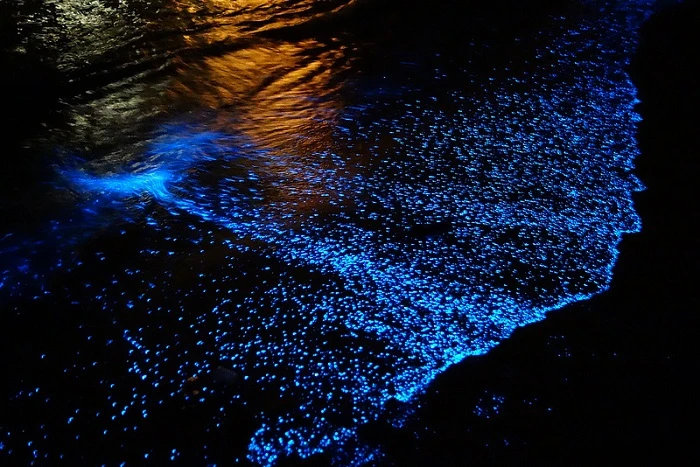
Bioluminescence is a natural biological phenomenon wherein living organisms produce and emit light through chemical reactions within their bodies. In marine and estuarine environments, this capability is frequently found in tiny single-celled organisms, such as certain species of dinoflagellates. When these microscopic plankton experience physical disturbance—such as a paddle slicing through the water, a hand trailing beside the kayak, or a school of fish darting past—they emit a fleeting, glowing flash of blue-green light. This reaction serves as a natural defense mechanism against predators, but to human observers on the water, it manifests as bright trails or sparkling ripples surrounding moving objects.
One of the most important considerations for any traveller booking a night excursion is managing expectations regarding wildlife phenomena. Bioluminescence is entirely organic and subject to natural environmental fluctuations; it is never guaranteed. Several variables influence whether a glow is visible on any given evening.
Complete darkness is essential, meaning bright moonlight or artificial light pollution from nearby shore developments can wash out the subtle glow. Furthermore, water clarity, recent rainfall runoff, tidal movements, and the natural population density of marine microorganisms all dictate the intensity of the display. While operators schedule sessions during optimal dark-sky windows, responsible travel guidance dictates that bioluminescence should be viewed as an exciting natural bonus rather than a contractually promised spectacle.
While commercial marketing often refers to a specific "season" for glowing waters, marine visibility varies across the year rather than adhering to rigid calendar months. Natural conditions that favor clear observation generally coincide with periods of stable weather, minimal rainfall interference, and darker moon phases. Rather than assuming that an entire multi-month window guarantees intense displays every single night, travellers should understand that local water chemistry and daily meteorological shifts play the dominant role. Checking current feedback from local operators upon arrival in Sri Vijaya Puram provides the most accurate assessment of active water conditions.
The timing of an evening paddling session is carefully calculated to maximize darkness. Sessions typically commence after civil twilight has fully faded and night has set in. The phase of the moon is a critical factor; nights near the new moon—when lunar illumination is at its lowest—provide the darkest skies and highest contrast for observing subtle water luminescence. Because moon phases shift daily, departure schedules are adjusted accordingly by operators. Participants should arrive punctually for their designated briefing, as even minor timing variations can impact the overall darkness experienced on the water.
Safety is the foundational pillar of any organized water excursion after dark. When conducted through certified operators adhering to established administrative protocols, night kayaking is a secure and controlled activity. The official safety framework governing water sports in the Andaman and Nicobar Islands mandates specific operational compliance.
According to regional maritime and tourism administration guidelines, operators must deliver comprehensive safety briefings, ensure every participant and guide wears appropriately fitted personal flotation devices (PFDs) while afloat, maintain basic first-aid and rescue capabilities on-site, and restrict departures to specified sea states and wind limits. Basic operating zones require dedicated equipment including waterproof torches, tow lines, and approved communication devices, while larger groups require dedicated safety rescue kayaks managed by experienced instructors.
A responsible operator maintains a rigorous inventory of safety gear for every evening outing. Participants should expect several essential provisions before stepping onto the water:
Personal Flotation Devices (PFDs): High-buoyancy, securely fastened lifejackets sized correctly for each individual participant.
Waterproof Torches: Reliable hand-held or mounted lights used for signaling and emergency navigation.
Safety Illumination: Approved visibility markers attached to kayaks or worn by paddlers to ensure group cohesion in the dark.
First-Aid Provisions: Readily accessible medical supplies managed by the guide team for minor scrapes or emergencies.
Communication Gear: Operational radios or signaling devices maintained by the lead instructor to connect with shore support.
Rescue Support: Dedicated safety watercraft positioned alongside the touring group to provide immediate assistance if required.
Operating watercraft after dark requires a conservative approach to meteorological conditions. Evening excursions are suspended immediately if adverse weather develops. According to standard regional safety thresholds, kayak tours are restricted to calm sea states and light wind velocities.
If high winds, choppy surface swells, heavy rain squalls, or electrical storms emerge, operators will postpone or cancel the session. Travellers should view a weather-related cancellation as a positive indicator of professional safety standards rather than an inconvenience, as navigating estuarine channels in stormy weather introduces unnecessary risks.

Dressing appropriately for an evening on the water ensures physical comfort throughout the session. Participants should wear lightweight, quick-drying athletic clothing that does not restrict arm movement while paddling. Footwear should consist of secure sports sandals or water shoes that can handle getting wet during launch and landing.
Carrying a light outer layer, such as a wind-resistant jacket, can be useful if a breeze picks up on the open estuarine water. Applying insect repellent before launching helps prevent mosquito bites along the mangrove fringe. Bringing excessive items is unnecessary; keep personal belongings minimal to avoid loss.
To ensure a smooth and untroubled paddling session, leave certain items behind on the shore. Avoid carrying expensive jewellery, loose electronics, large daypacks, or cash and credit cards directly onto the water where they risk accidental submersion.
Smartphones should only be brought if secured tightly inside a certified, heavy-duty waterproof pouch, and even then, usage should be minimized to protect your focus and balance. Additionally, single-use plastic bottles should be left behind in compliance with local environmental preservation policies.
Previous paddling experience is generally not required for beginner-friendly guided sessions. Because the excursion takes place in sheltered waters under the direct supervision of trained instructors, first-time paddlers can participate comfortably.
The experience begins with a comprehensive dry-land briefing covering basic paddle strokes, steering techniques, and safety protocols. As long as participants follow instructions, maintain basic balance, and stay close to the guided formation, beginners find the gentle pace entirely manageable.
While daytime kayaking can often accommodate family groups, night kayaking introduces different environmental variables—such as total darkness and longer periods of focused attention—that parents must evaluate carefully. Families considering this activity with older children should verify minimum age policies, the availability of child-sized PFDs, stable tandem kayak setups, and the operator's specific group-to-guide ratio. Younger children or infants are generally not suited for evening water excursions. Parents should ensure their children are comfortable remaining quiet and attentive during night operations before booking.
Couples seeking an alternative to conventional evening dining often choose night kayaking for its shared outdoor setting and tranquil pace. Gliding quietly through dark mangrove waterways offers a shared sensory experience focused on nature rather than commercial entertainment.
Whether sharing a tandem kayak or paddling side-by-side in single watercraft, couples appreciate the peaceful atmosphere of the estuarine environment and the shared anticipation of spotting natural bioluminescence beneath the hull.
Solo travellers find guided night kayaking to be an accessible and secure group activity. Because excursions are conducted in organized formations led by professional instructors, solo participants are fully integrated into the team from the moment of arrival. It provides an engaging evening pursuit that connects independent travellers with nature and fellow outdoor enthusiasts in a structured, safe setting.
Capturing natural bioluminescence using standard consumer cameras or mobile phones presents significant technical challenges. The faint blue-green light emitted by microscopic plankton is rarely bright enough for standard handheld night photography, often resulting in underexposed or blurry frames due to the constant motion of floating on water.
Travellers are generally advised to prioritize experiencing the visual phenomenon with their own eyes rather than attempting to document it through digital screens. If capturing images is important, verify whether your equipment is securely mounted and waterproofed before attempting low-light shots under guide supervision.
Mangrove ecosystems are remarkably delicate ecological buffers that protect coastlines and support rich marine nurseries. Responsible tourism requires absolute adherence to environmental protection standards during night excursions.
Paddlers must never touch, grasp, or snap fragile mangrove prop roots, as damage to these slow-growing trees compromises the bank stability. Wildlife must be observed quietly without flashing powerful lights directly into resting bird nests or animal habitats. Throwing trash into the water is strictly prohibited, and all personal waste must be carried back to shore. Respecting the silence and integrity of the mangrove forest ensures that these fragile habitats remain undisturbed for the future.
Selecting a professional and safety-conscious activity provider is the most critical decision a traveller makes regarding this excursion. Prioritize operators who demonstrate transparency, adhere to official safety guidelines, and maintain well-serviced gear. When inquiring with a provider, confirm several key operational standards:
Official Authorisation: Verify that the operator holds valid local registrations and operates within designated zones.
Safety Briefings: Ensure a comprehensive dry-land instruction session is mandatory before launching.
Equipment Quality: Check that PFDs are certified, properly sized, and accompanied by functioning waterproof torches.
Rescue Capability: Confirm the presence of experienced safety guides and rescue watercraft on the water.
Weather Policies: Understand their clear protocols for postponing or refunding sessions affected by adverse weather.
Pricing for a guided night kayaking session reflects the specialized nature of evening operations, guide-to-participant ratios, and equipment maintenance. Rates vary based on group formatting, duration, and whether land transfers from your hotel are included in the package.
To secure accurate, up-to-date pricing for your specific travel dates, review live rates directly through authorized local booking channels or your travel planner. Always confirm what specific inclusions—such as gear rental, bottled water, and guide fees—are covered within the quoted session price before making final payments.
A complete night kayaking outing involves more than just the time spent on the water. The overall timeline includes hotel pickup and transfer to the launch site, safety equipment fitting and dry-land briefings, a paddling duration typically lasting between 45 minutes to 90 minutes depending on water conditions, post-puddle debriefing, and the return transfer back to your accommodation. Total time commitments generally span roughly 2.5 to 3 hours from hotel departure to return.
Tropical weather patterns can shift rapidly, making weather monitoring an ongoing operational duty. If wind speeds increase, rain squalls develop, or sea states exceed safe paddling limits prior to launch, the operator will delay or cancel the evening session.
In the event of a cancellation, reputable operators will communicate promptly and discuss rescheduling options or refund terms based on their published booking policy. Flexibility in your holiday schedule ensures that weather-related adjustments cause zero frustration.
Integrating an evening activity into your Port Blair stay requires thoughtful daily pacing. Avoid scheduling a night kayaking session on your exact arrival day if your mainland flight lands late, as travel fatigue combined with an evening water excursion can become exhausting.
Instead, place the activity midway through your stay when your travel rhythm is settled. Ensure you do not schedule strenuous water sports or early morning island departures immediately following a late-night kayaking return.
Port Blair offers several diverse evening pursuits, ranging from quiet coastal walks to historical presentations. While attending the Sound & Light Show at the Cellular Jail immerses you in national independence history, night kayaking offers an active, nature-focused encounter with the marine environment.
Choosing between them depends entirely on your daily energy levels and whether you prefer cultural sightseeing or outdoor adventure after the sun goes down.
Coordinating specialized evening activities alongside beachfront resort stays, inter-island ferry bookings, and structured daytime sightseeing becomes effortless when organized through experienced local specialists. Partnering with a dedicated travel planning partner like Andaman Bliss helps ensure your activities are arranged through verified, safety-conscious local providers.
Whether you are looking to arrange comprehensive Andaman tour packages, family getaways through verified Andaman family packages, or romantic getaways via our collection of Andaman honeymoon packages, our team manages the complex arrangements so you can focus entirely on your journey. To explore broader regional planning insights, you can review our detailed destination guides via the best places to visit in Andaman and let Andaman Bliss help you design your ideal island holiday.
Planning a Dussehra or Diwali family holiday? Explore this 6-day Andaman itinerary covering beaches, island hopping, family activities, sightseeing, and practical travel tips.
Looking beyond the usual tourist spots? Explore Andaman's best offbeat destinations, hidden beaches, and scenic natural escapes.
Planning a Barren Island volcano tour? Learn about private boat charters, cruise routes, costs, permits, sailing time, active volcano views, and travel tips.

