


Diwali & Dussehra Vacation in Andaman: Ideal 6-Day Family Tour Plan
Planning a Dussehra or Diwali family holiday? Explore this 6-day Andaman itinerary covering beaches, island hopping, family activities, sightseeing, and practical travel tips.
Discover the best time, locations, and photography tips for capturing breathtaking pre-wedding portraits at Kalapathar Beach.

When planning a pre-wedding photography session, selecting the right location is rarely just about finding a pretty backdrop. The most compelling couple portraits are those where the natural environment actively participates in the visual composition, framing the couple while adding texture, depth, and a distinct sense of place. Across the Andaman and Nicobar Islands, couples have no shortage of coastal scenery to choose from, but Swaraj Dweep—commonly known to travellers as Havelock Island—offers a striking variety of distinct shorelines. Among them, Kalapathar Beach stands out as a unique setting for those who want a natural, grounded beachside pre-wedding shoot rather than a heavily staged, studio-style production. Official destination information from tourism authorities highlights Kalapathar for its distinctive rocky coastal landscape and open ocean views. For couples and photographers willing to work with raw textures, shifting daylight, and an unhurried island atmosphere, Kalapathar provides an inspiring canvas for environmental couple portraits.
Many conventional tropical beaches feature long, uninterrupted stretches of pale sand backed by uniform coconut palms. While undeniably pleasant, this uniform appearance can sometimes result in flat, repetitive photographs that lack visual separation. Kalapathar offers a different compositional challenge and opportunity. Named after the dark, weathered rocks that emerge along its coastline, the beach combines deep charcoal tones with lighter shoreline sand, deep blue water, and vibrant tropical greenery. This natural contrast creates built-in depth. Dark coastal rocks can serve as a dramatic foreground element or a natural framing device, pulling the viewer's eye straight toward the couple. The wide, open horizon provides clean negative space, allowing portraits to breathe without visual clutter. Instead of relying on artificial props or heavy staging, photographers can use the raw textures of the land and sea to create timeless, grounded imagery that feels genuinely connected to the natural world.
Understanding how to photograph Kalapathar successfully requires examining its primary visual elements. The most prominent feature is the presence of dark coastal rocks scattered along the edge of the sand and extending into the shallow water. These formations allow photographers to experiment with layering. By placing the couple mid-ground and using a dark rock formation as a foreground anchor, the image gains immediate three-dimensional depth. Leading lines created by the curve of the shoreline or the edge of the rock shelf naturally draw the viewer through the frame. Beyond the rocks, the expanse of the blue sea offers a tranquil, uninterrupted background that works exceptionally well for wide environmental compositions, walking shots, and silhouette profiles during sunset. Framing the edges of the frame with the natural tropical greenery found just above the high-tide line adds organic colour, softening the contrast between the dark rocks and the bright sky. Working with these elements requires patience and a careful eye for composition, avoiding any awkward positioning on wet, slippery rock surfaces.

The success of any outdoor photography session depends entirely on how the natural light interacts with the subject and the landscape. At Kalapathar, timing is everything. Early morning offers some of the softest, most forgiving light of the day. As the sun rises over the eastern side of Swaraj Dweep, the coastal atmosphere is calm, the temperature is comfortable for the couple, and the directional morning light casts gentle, long shadows across the sand and rocks. This time of day is ideal for soft, romantic portraits and relaxed walking shots without the distraction of intense midday glare. Late afternoon provides an equally compelling lighting window. As the sun begins to lower toward the west, the coastal tones turn warmer, bathing the dark rocks and lighter sand in golden hues. This golden-hour light flatters skin tones and creates natural backlighting that catches a couple's hair and clothing. Midday photography, by contrast, presents significant technical challenges. Strong, overhead sunlight creates harsh shadows beneath the eyes and nose, causes subjects to squint, and pushes the contrast between the bright water and dark rocks to extremes. If a midday shoot is unavoidable due to tight travel itineraries, photographers must seek out natural shade beneath coastal tree lines, use portable reflectors to fill shadows, or rely on careful positioning to manage the high contrast.
Shooting portraits in a coastal environment involves managing bright reflective surfaces. Water and wet sand act like giant mirrors, bouncing sunlight upward and altering traditional exposure metering. Photographers must carefully balance skin tones against a bright marine background to avoid silhouetting the couple unintentionally or blowing out the highlight details in the sky and sea. Utilizing exposure compensation, spot-metering on the couple's faces, or shooting in RAW format to recover shadow and highlight detail later in post-production ensures technical reliability. Backlighting is particularly effective along the shoreline; placing the sun behind the couple creates a luminous rim light around their figures, separating them cleanly from the dark rocks and blue water. When working with direct side lighting, photographers can emphasize the natural textures of the rocks and the subtle movement of fabric in the sea breeze, adding a dynamic, editorial quality to the final image collection.
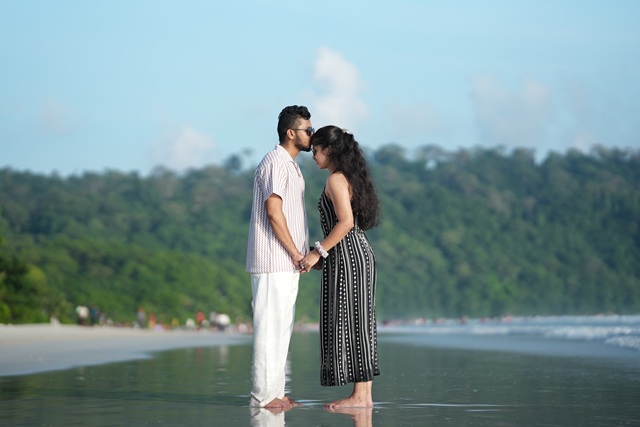
A diverse pre-wedding portfolio should feature a mix of composition styles that tell a complete visual story. Wide environmental portraits are particularly effective at Kalapathar, placing the couple small within the grand scale of the open sea and coastal rocks to emphasize the untouched scale of the island landscape. Walking shots work naturally along the shoreline, using the curve of the sand and the foam line as a natural leading line that guides the eye forward. Close-up portraits allow the background to melt away into a soft, out-of-focus blur of blue and green, keeping the emotional connection between the couple as the primary visual focus. Back-to-camera compositions and clean silhouettes against the evening horizon offer a cinematic quality, while framing the couple through natural gaps in the coastal rocks adds layers and intimacy to the frame.
Stiff, overly theatrical posing often looks out of place against a natural backdrop like Kalapathar. The most successful beach portraits capture genuine interaction and quiet movement rather than static posture. Couples look best when engaged in natural actions—walking hand-in-hand along the wet sand, whispering to each other, laughing naturally at an inside joke, or pausing to look out toward the open horizon. Simple movements, such as a partner adjusting a jacket or hair blown gently by the sea breeze, introduce organic life into the photograph. Photographers should encourage the couple to focus on each other rather than staring fixedly into the camera lens, resulting in candid, emotionally resonant imagery that feels authentic and unforced.
Styling for a coastal shoot requires considering how clothing colours will interact with the specific palette of Kalapathar Beach—namely dark rocks, white-to-golden sand, blue water, and green foliage. Neutral and earthy tones work exceptionally well against this natural backdrop. Outfits in white, cream, beige, soft grey, muted blues, olive, and dusty rose create a harmonious visual balance without competing with the landscape. Lighter clothing also provides a striking contrast against the dark coastal rocks, helping the couple stand out clearly in wide environmental frames. While bold, saturated colours can work if chosen carefully, highly reflective synthetic fabrics or overly bright neon tones often clash with the muted, natural elegance of the coastal environment.
Wardrobe selections can entirely shift the mood of a pre-wedding album. A casual beach look—featuring relaxed linen shirts, lightweight cotton trousers, flowing summer dresses, and simple footwear—complements the laid-back island atmosphere and allows the couple to move comfortably across the sand. For couples leaning toward a more elegant or cinematic aesthetic, flowing maxi dresses with movement, tailored lightweight suits in neutral tones, and minimal accessories create a sophisticated contrast against the rugged shoreline. Traditional Indian attire, such as soft-toned sarees, lightweight lehengas, or classic kurtas, also creates a visually arresting statement against the blue sea and dark rocks. When planning traditional outfits, however, couples must account for practical island realities, such as managing long fabrics in a steady sea breeze and walking across uneven sandy ground.
The tropical climate of the Andaman Islands introduces two dominant environmental factors that hair and makeup artists must anticipate: high humidity and a steady sea breeze. Elaborate hairstyles that rely on precise structure can easily become dishevelled within minutes of stepping onto an open beach. Soft, textured waves, pinned-up styles, or relaxed ponytails that move naturally with the wind often look far more appropriate in coastal photographs than rigid styling. Makeup should focus on a natural, sweat-resistant finish with matte foundations and secure eye makeup that withstands tropical warmth and humidity. Accessories should be kept minimal and secure; delicate earrings, simple bracelets, or classic watches add subtle detail without becoming distracting or vulnerable to loss in the sand or water.
While Kalapathar's dark coastal rocks offer exceptional photographic framing, they also present physical hazards that require caution. Coastal rock shelves can be uneven, sharp, slippery from sea spray, and unstable underfoot, particularly when wearing formal footwear or long, restrictive clothing. Photographers and couples must prioritize personal safety over securing a dramatic photograph. Avoid climbing unstable rock formations, standing too close to unpredictable breaking waves, or venturing into slippery tidal zones where a sudden swell could cause a fall. Sticking to stable, accessible areas near the shoreline ensures the shoot remains safe, comfortable, and free from avoidable injuries.
It is a common misconception that a beach pre-wedding shoot requires the couple to wade deep into the ocean. In reality, some of the most striking coastal portraits are captured entirely from dry ground. Photographers can utilize the wet shoreline, where gentle receding waves leave a reflective mirror of water on the sand, creating stunning reflection portraits without anyone stepping into the surf. Posing along the dry beach edge, near stable rock shelves, or utilizing elevated coastal viewpoints provides all the marine atmosphere necessary without taking unnecessary risks in open water. Safety and comfort should always take priority over attempting dramatic aquatic poses.
The sweeping scale of Kalapathar Beach naturally tempts photographers to capture aerial perspectives using drones. However, aerial photography along the coastline is strictly subject to regulatory compliance. Drone use in the Andaman and Nicobar Islands requires official permits from local aviation and administrative authorities, and flying equipment without clearance is prohibited. Photographers and couples must verify current drone regulations, restricted zones, and local permissions before attempting any aerial documentation. Respecting these airspace rules ensures the shoot proceeds smoothly without administrative interference.
Navigating professional photography requirements in public spaces requires careful awareness of local guidelines. While casual tourist photography is generally unrestricted, structured commercial productions, large-scale pre-wedding film crews, or extensive lighting setups may be subject to specific local authority guidelines depending on the exact location. Photographers and couples should consult relevant local authorities, forest departments, or tourism management boards well in advance to clarify whether any specific permissions are required for their planned production scale, ensuring the session complies fully with regional regulations.
Choosing the right photographer for an Andaman pre-wedding shoot involves looking for specific professional competencies. Couples should seek out photographers who possess demonstrated experience working in outdoor, tropical environments and who understand how to master natural light in changing weather conditions. A strong portfolio should reflect a talent for candid storytelling, environmental portraiture, and thoughtful beach composition rather than relying on heavy digital filters or repetitive posing templates. Furthermore, selecting a professional who respects environmental guidelines and understands local logistics ensures the session runs calmly and efficiently from start to finish.
Technical preparedness is essential when shooting in a demanding coastal environment. Photographers working at Kalapathar typically benefit from a versatile kit that includes a wide-angle lens for grand environmental landscapes, a standard zoom for general walk-around storytelling, and a fast portrait prime lens for compressed background blur and intimate close-ups. Carrying spare camera batteries, extra memory cards, lens cleaning cloths, and basic weather protection is non-negotiable. Because coastal environments expose gear to fine sand and salty sea spray, keeping equipment protected in weather-resistant bags when not actively shooting prevents permanent mechanical damage.
A pre-wedding photography session should never be scheduled as a rushed, isolated activity tacked onto a frantic travel schedule. Attempting to conduct a major photoshoot immediately after a long inter-island ferry transfer or on the exact same day as arrival or departure introduces unnecessary exhaustion. Couples should integrate the photography session comfortably into their broader island holiday—ideally scheduling it midway through a multi-night stay on Swaraj Dweep after they have settled into their resort and adjusted to the tropical climate. Giving yourselves adequate rest, time for professional hair and makeup preparation, and a relaxed travel buffer ensures you arrive at the beach feeling refreshed, radiant, and ready to enjoy the experience.
The final collection of pre-wedding photographs should read like a cohesive visual narrative rather than a disjointed series of unrelated poses. A well-rounded photo story typically begins with environmental framing shots that establish the grand scale of the Kalapathar coastline. As the session progresses, it moves into natural walking sequences, candid interactions, and closer emotional portraits. Concluding the sequence with golden-hour backlighting or silhouette silhouettes against the evening sky provides a natural narrative arc. This thoughtful progression ensures the finished album captures not just how the location looked, but how the couple felt during their time together on the island.
Coordinating a destination pre-wedding shoot while managing accommodation, inter-island ferry transfers, and romantic island itineraries requires careful, experienced organization. Partnering with a dedicated local travel specialist like Andaman Bliss helps streamline your preparations effectively. Whether you are seeking comprehensive Andaman tour packages, romantic getaways through verified Andaman honeymoon packages, or guidance on planning memorable Andaman activities, our team ensures your journey runs smoothly. To explore broader regional planning insights, you can review our detailed guide on the best places to visit in Andaman and let Andaman Bliss help you design your ideal island getaway.
Executing a successful pre-wedding photography session at Kalapathar Beach relies on embracing the raw, natural elegance of the location rather than fighting against it. By timing your shoot to catch the soft light of early morning or golden hour, choosing wardrobe colours that complement the dark coastal rocks and blue sea, prioritizing natural interaction over stiff posing, and respecting local safety and environmental guidelines, you create portraits that feel timeless and authentic. Approach your session with patience, flexibility, and a focus on your relationship, and let the striking coastal landscapes of Swaraj Dweep provide an unforgettable backdrop to your love story.
Planning a Dussehra or Diwali family holiday? Explore this 6-day Andaman itinerary covering beaches, island hopping, family activities, sightseeing, and practical travel tips.
Looking beyond the usual tourist spots? Explore Andaman's best offbeat destinations, hidden beaches, and scenic natural escapes.
Discover night kayaking in Port Blair with practical information on bioluminescence, mangrove routes, safety rules, best season, equipment, and what to expect after sunset.

