


Diwali & Dussehra Vacation in Andaman: Ideal 6-Day Family Tour Plan
Planning a Dussehra or Diwali family holiday? Explore this 6-day Andaman itinerary covering beaches, island hopping, family activities, sightseeing, and practical travel tips.
Planning a Barren Island volcano tour? Learn about private boat charters, cruise routes, costs, permits, sailing time, active volcano views, and travel tips.

When travellers begin exploring unusual sea excursions in the Andaman and Nicobar Islands, attention frequently turns toward Barren Island, the site of India’s only confirmed active volcano. Rising approximately 354 metres above sea level according to current official destination data, the island offers a striking geological spectacle in the middle of the Bay of Bengal. However, planning a trip to Barren Island requires understanding that it is fundamentally different from a standard resort beach excursion or a coastal island-hopping day trip.
Visitors do not go ashore to hike or explore the land. Instead, the journey is an offshore maritime expedition focused on navigating the open sea, approaching the island's outer perimeter, and viewing the rugged volcanic cone and dramatic coastline entirely from the deck of a vessel. For travellers seeking a private, uncrowded experience, a private boat charter offers an alternative to standard group sightseeing cruises, provided you understand the associated route, duration, and sea conditions.
A Barren Island day tour is an extended offshore boat excursion designed to take passengers across deep ocean waters to view an active geological formation. Official tourism frameworks describe the standard government-supported cruise to Barren Volcano as a long daylight sightseeing trip originating from Sri Vijaya Puram (Port Blair).
In contrast, private boat charters arranged by specialized operators provide dedicated vessels for small groups, families, or couples, often offering flexible departure options from Swaraj Dweep (Havelock) depending on operational permissions and vessel logistics. Regardless of whether you join a group cruise or reserve a private vessel, the structural format of the day remains the same: an early departure, a long open-ocean crossing, a prolonged approach toward Barren Island for sightseeing and photography, and a return voyage before evening darkness.

Barren Island occupies a remote, isolated position in the eastern reaches of the Andaman Sea. Current official tourism metrics place the island approximately 138 kilometres northeast of Sri Vijaya Puram. Because it sits far away from the standard passenger ferry corridors connecting the main southern islands, reaching it requires a dedicated, powerful vessel capable of handling open-ocean swells.
Its distant offshore placement protects its raw natural environment, but it also means that the journey involves significant transit time and requires careful monitoring of marine weather forecasts.
The primary claim to fame for Barren Island is its status as the only active volcano along the entire volcanic arc stretching between Sumatra and Myanmar. The island features a striking central cinder cone surrounded by the collapsed caldera of an older volcano, creating a rugged, moon-like landscape of dark lava flows, ash slopes, and steep coastal cliffs.
Geology enthusiasts and adventure travellers are drawn to its raw, unadorned topography, which stands in stark contrast to the white-sand beaches and green rainforests typical of the rest of the Andaman archipelago. Official tourism guidelines, destination overviews, and travel advisories can be cross-referenced through the Andaman & Nicobar Tourism Portal.
A critical piece of information for every traveller to understand is that ordinary tourists cannot land ashore on Barren Island. Official tourism information specifies that visitors view the volcano strictly from the vessel, while Restricted Area Permit (RAP) guidance outlines that foreign nationals may visit Barren Island on board vessels under explicit no-landing rules.
The island is strictly protected due to its active volcanic nature, safety hazards, and sensitive ecological status. Any attempt by private vessels to approach too closely or drop anchor for land exploration is strictly prohibited by maritime and security authorities.
The maritime route to Barren Island depends heavily on your chosen departure location. When embarking on the official government-backed sightseeing cruise, the journey begins at the marine terminals in Sri Vijaya Puram, tracking northeast across open waters before looping back to the capital.
When booking a private boat charter, departures can occasionally be organized from coastal points on Swaraj Dweep (Havelock Island) if the vessel and weather conditions permit. Because navigating open ocean routes requires precise seamanship, the captain determines the exact heading based on real-time wave heights, wind direction, and Coast Guard clearances.
Because Barren Island is located far offshore, a day tour is a long-duration commitment. Standard private-charter itineraries typically span between 8 to 12 hours total, requiring an early morning departure to ensure you maximize daylight hours on the water.
The duration is influenced by the boat’s cruising speed, the distance from your specific departure jetty, and how long the vessel spends idling near the island for photography and sightseeing before making the return crossing.
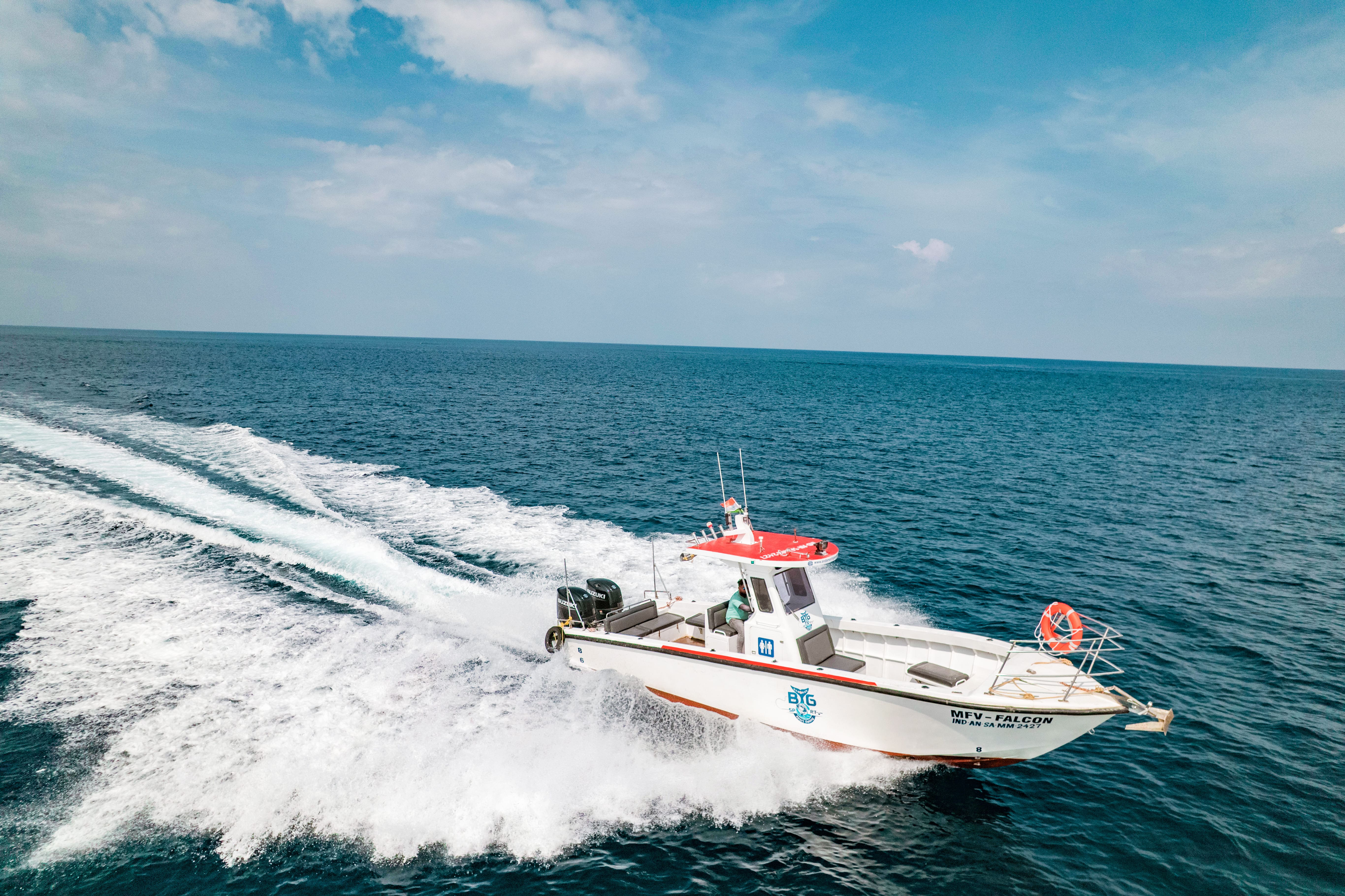
Reserving a private boat charter means you are hiring the entire vessel, along with its professional captain and crew, exclusively for your party. This eliminates unrelated passengers and allows your group to move at a private pace.
However, "private" does not mean unregulated; the captain retains absolute operational and legal authority regarding navigation, safety protocols, and when weather conditions require turning back. The operator handles the necessary vessel paperwork, safety gear, and onboard provisions, ensuring a secure and structured sea voyage.
Pricing for a private boat charter to Barren Island varies considerably based on the vessel size, power, fuel consumption, and seasonal demand. While there is no single fixed tariff, current private-charter market listings for a full-day voyage typically range around ₹1,25,000 to ₹1,50,000 (plus applicable GST) for the entire boat.
These figures represent indicative current market examples rather than a permanent government tariff. The final cost is determined by factors such as your departure port, the number of passengers within the vessel's licensed capacity, fuel pricing, onboard catering inclusions, and whether fishing or snorkelling gear is bundled into the charter package.
Deciding between a private charter and a shared excursion depends on your travel group and budget. A private charter is ideal for families, small groups, or couples who want privacy, flexibility, and a dedicated crew focused entirely on their party.
A shared trip, where available through specific marine operators, sells individual seats on a larger vessel, making it a more economical choice for solo travellers or couples who do not require an exclusive boat. However, shared departures depend heavily on filling minimum passenger quotas, whereas a private charter confirms your sail date as long as weather permits.
Inclusions vary depending on the specific marine operator and the tier of the charter. A standard comprehensive private charter typically covers the exclusive hire of the vessel, experienced captain and crew, safety equipment like life jackets, drinking water, packed breakfast and lunch meals, and basic permissions handling.
Some operators may also include snorkelling equipment or light fishing gear if the itinerary permits stops in permitted outer waters. Always request a clear written breakdown of what is included in your charter fee before confirming payment.
Navigating administrative permissions for an offshore voyage requires attention to detail. While the official tourism cruise operates under streamlined public frameworks, private charters require operators to secure valid vessel clearances, Port Control permissions, and Coast Guard notifications.
Furthermore, official Restricted Area Permit guidelines dictate specific rules for foreign nationals visiting Barren Island on watercraft. When booking a commercial charter, ensure your operator explicitly clarifies which permissions are managed by them and what personal identification documents passengers must submit prior to departure.
It is essential to maintain realistic expectations regarding volcanic activity. Barren Island is an active geological system, meaning it can emit steam, gas plumes, or ash minorly from time to time. However, a dramatic, fiery eruption cannot be predicted or guaranteed on any given tourist excursion.
When you arrive at the island, you will witness the imposing dark cinder cone, hardened lava streams cascading toward the sea, and occasional wisps of steam. Treat the trip as an extraordinary marine and geological sightseeing expedition rather than a guarantee of witnessing active lava flows.
Approaching Barren Island from the deck of a boat offers a dramatic, cinematic perspective. As the vessel draws closer, the sheer scale of the dark volcanic cone rising steeply out of deep indigo water becomes apparent.
The coastline features jagged, black rock formations where ancient lava met the ocean, contrasting sharply against the white foam of crashing waves. The shifting natural light across the dark ash slopes creates exceptional landscape photography opportunities from the safety of the rolling vessel deck.
Capturing sharp images from a moving boat requires specific techniques. Because ocean swells keep the vessel in motion, use a fast shutter speed to avoid motion blur. Protect your camera gear from saltwater spray and high humidity by storing equipment inside a dry bag or waterproof pouch when not actively shooting.
A polarizing filter can help cut through water glare and enhance the rich tones of the dark volcanic rock against the blue sea. Always maintain a secure stance on deck and never lean over unsafe barriers for a photograph.
Because a Barren Island trip is an open-ocean journey extending far beyond protected coastal bays, sea conditions play the ultimate role in whether the voyage can proceed. Strong winds, choppy surface swells, or sudden squalls can prompt captains or maritime authorities to cancel or postpone trips for safety reasons.
Official tourism guidelines generally highlight the calmer dry months from October through May as the most favourable operational window, though even during these months, daily marine forecasts dictate sailing safety.
The optimal window for planning a Barren Island excursion aligns with the broader Andaman dry season, running from October to May. During these months, surface winds are generally more manageable, and underwater visibility in surrounding waters is clearer.
However, because weather patterns across the Bay of Bengal can shift without warning, flexibility in your holiday schedule is vital. Operators and port authorities maintain absolute authority to cancel departures if maritime safety thresholds are not met.
Preparing for an extended offshore boat trip involves packing lightweight essentials:
Government-issued photo identification documents for every passenger.
Booking confirmations and operator contact vouchers.
Motion-sickness remedies if you are sensitive to open-ocean swells.
Lightweight, breathable clothing and a windproof jacket for spray.
Broad-spectrum sunscreen, sunglasses, and a wide-brimmed sun hat.
A waterproof dry bag or pouch for phones and cameras.
Portable power bank and personal medications.
The open-ocean crossing to Barren Island involves longer exposure to rolling swells than standard inter-island ferry transits. If you or members of your family are prone to motion sickness, take preventive measures prior to boarding, such as consuming a light meal, staying well-hydrated, and consulting a healthcare professional regarding suitable motion-sickness remedies. Sitting near the mid-ship area where vessel motion is minimized can also enhance your comfort during the crossing.
Operating a private charter requires strict compliance with maritime safety rules. Passengers must wear life jackets whenever instructed by the crew, remain within designated safe zones on the deck, and follow all navigational guidance issued by the captain.
Attempting unauthorized approaches toward the shore or ignoring crew instructions is dangerous. The captain's decision regarding weather safety and return timing is final. For broader marine safety guidelines and passenger transit protocols, you can consult the Directorate of Shipping Services (DSS).
A long offshore boat excursion is generally not recommended for infants, toddlers, or very young children. The combination of an early morning departure, an 8-to-12-hour duration, open-ocean wave movement, and limited restroom facilities on smaller boats can create an exhausting environment for kids.
Families with older teenagers who enjoy boating and geology often find the trip fascinating, but parents should discuss child suitability and safety rules directly with the charter operator before booking.
Because a Barren Island charter consumes an entire day from dawn until late afternoon, it should be treated as the sole major activity for that calendar day. Avoid attempting to schedule scuba diving courses, long island transfers, or evening sightseeing tours immediately before or after your Barren Island excursion, as transit fatigue and potential schedule adjustments require a dedicated buffer.
Choosing your departure base involves weighing convenience and operator availability. Sri Vijaya Puram serves as the traditional departure port for official tourism cruises. Conversely, private charter operators frequently arrange departures from Swaraj Dweep (Havelock Island) depending on vessel positioning and client itineraries.
Reviewing departure logistics with your provider ensures your hotel location matches your boat's starting pier.
Before confirming your private Barren Island charter, clarify these operational details with your provider:
Is the quoted price inclusive of all applicable GST, port fees, and basic permit arrangements?
What is the exact maximum passenger capacity of the charter vessel?
What time does the boat depart, and what is the expected return time?
Are breakfast, lunch, drinking water, and snacks provided onboard?
What is the operator’s exact cancellation and weather-rescheduling policy?
What safety equipment and emergency navigation gear are maintained on the boat?
Coordinating an exclusive offshore excursion like a private Barren Island charter requires verified marine logistics, trusted vessel captains, and careful adherence to maritime regulations. Partnering with an experienced local specialist like Andaman Bliss helps ensure your private sea expedition is handled professionally from start to finish.
Whether you are looking to arrange a bespoke Andaman private boat charter, comprehensive Andaman tour packages, family getaways through verified Andaman family packages, or romantic getaways via our collection of Andaman honeymoon packages, our team manages the complex arrangements so you can focus entirely on your journey. Explore our destination guides via the best places to visit in Andaman to start planning your extraordinary island holiday.
Planning a Dussehra or Diwali family holiday? Explore this 6-day Andaman itinerary covering beaches, island hopping, family activities, sightseeing, and practical travel tips.
Looking beyond the usual tourist spots? Explore Andaman's best offbeat destinations, hidden beaches, and scenic natural escapes.
Discover night kayaking in Port Blair with practical information on bioluminescence, mangrove routes, safety rules, best season, equipment, and what to expect after sunset.

