


Diwali & Dussehra Vacation in Andaman: Ideal 6-Day Family Tour Plan
Planning a Dussehra or Diwali family holiday? Explore this 6-day Andaman itinerary covering beaches, island hopping, family activities, sightseeing, and practical travel tips.
Planning a night dive in Andaman? Discover what to expect at Lighthouse Reef, including marine life, safety tips, and diving requirements.

When the sun dips below the horizon in the Andaman and Nicobar Islands, the vibrant coastal energy transitions into a quiet, nocturnal calm. Most travellers conclude their day with a seaside dinner or a walk along the shore, watching the fading light over the Bay of Bengal. Beneath the surface of the water, however, an entirely parallel world awakens. Scuba diving during daylight hours offers sweeping views of colourful coral gardens, sunlit reef slopes, and schooling fish moving through bright water. Descending into the same waters after dark transforms scuba diving into a completely different sensory experience. Among the region's prominent dive locations, night diving at Lighthouse Reef off Havelock Island—officially Swaraj Dweep—stands out as a specialized adventure for certified divers eager to witness how marine behaviour changes when day turns to night. Exploring Andaman's marine life after dark requires careful preparation, respect for shifting underwater conditions, and an understanding of how darkness alters navigation, perception, and reef ecology.
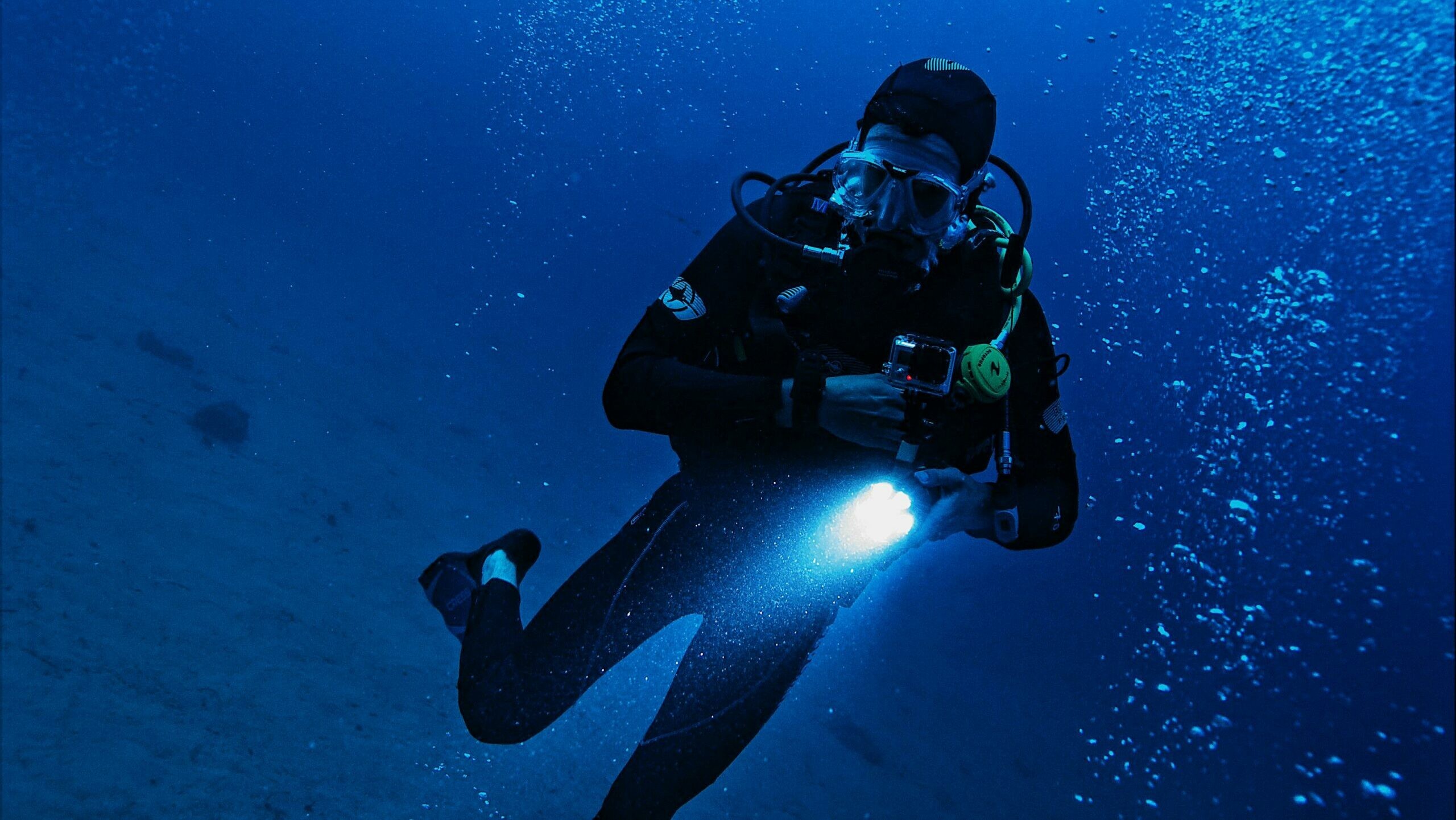
Lighthouse Reef is one of the most recognized and accessible marine locations in the Andaman archipelago. Situated off the western coast of Swaraj Dweep near the channel leading toward the main jetty, the site takes its name from the navigational light marker positioned near its shore. Geographically, the reef features an along-shore sloping formation that runs parallel to the coastline, descending gently from shallow coral sections down to a sandy bottom. During daylight hours, the site attracts divers of varying experience levels due to its sheltered topography, manageable currents, and rich density of hard and soft corals. Because of its protected layout and relatively calm baseline conditions, the reef is frequently selected by professional dive operators for evening and night excursions. Accessibility to the site depends heavily on boat transport from the main beach or jetty, as well as real-time sea conditions. While the reef is regularly visited during peak tourism months, weather shifts, tidal movements, and seasonal monsoons can influence when night dives can be safely scheduled and conducted.
The fundamental transformation of a night dive lies in the absence of natural sunlight and the introduction of a primary artificial light source. During a daytime dive, light penetrates from the surface, illuminating a wide field of view and allowing divers to take in distant reef formations, deep drop-offs, and expansive blue water. Once night falls, that ambient light disappears entirely, narrowing the diver's universe to the illuminated beam of a primary dive torch. This focused circle of light changes how space and distance are perceived underwater. Peripheral vision contracts into deep shadow, making every feature within the torch beam appear sharper and more isolated. Sounds become more noticeable, movements must be slower and more deliberate, and the reliance on close coordination with a dive buddy and guide becomes paramount. Navigational reference points shift from natural landmarks to compass headings, depth gauges, and the reassuring glow of team lights moving across the dark water column.
As daylight fades, the daytime inhabitants of Lighthouse Reef retreat into protective crevices and coral heads to rest, while a completely different community of nocturnal organisms emerges to feed and hunt. Divers sweeping their torch beams across the reef structure after dark often witness behaviours that remain hidden during the day. Parrotfish can occasionally be spotted settling into protective mucus cocoons secreted to mask their scent from predators. Crustaceans such as spiny lobsters step out from deep ledges to forage across the open reef. Cephalopods, including octopuses and cuttlefish, become active hunters, moving across the sandy slopes and coral heads in search of prey. Eels emerge from their burrows to hunt, and various nocturnal fish species patrol the water column. While these encounters highlight the dynamic nature of the nocturnal reef, wildlife sightings can never be guaranteed. Natural marine behaviour is organic and unpredictable, meaning each night dive offers a unique glimpse into the shifting rhythms of the ocean rather than a scripted wildlife show.
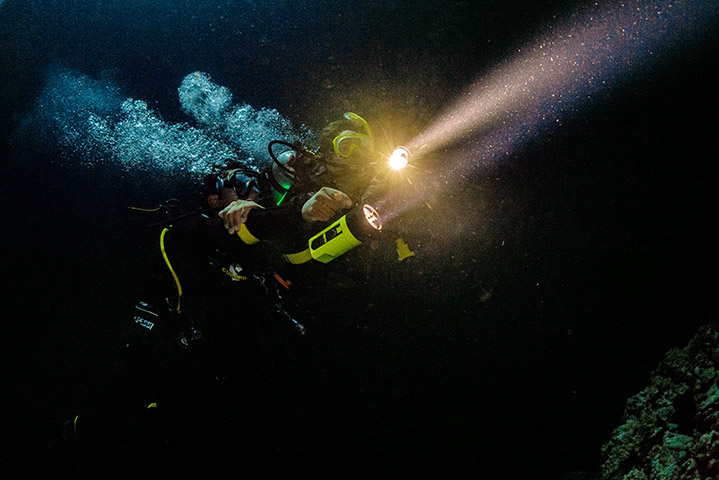
Observing coral structures under the concentrated beam of a dive torch reveals details that are easily overlooked in ambient daylight. Artificial light brings out the intricate textures of plate coral, staghorn formations, and barrel sponges, casting deep shadows that emphasize the three-dimensional topography of the reef. Coral polyps, which often remain retracted during the day, may extend their delicate tentacles into the water column at night to feed on passing plankton, giving certain coral colonies a soft, fuzzy appearance. This close-up observation requires high standards of environmental mindfulness. Because a diver's attention is focused tightly within a small illuminated circle, maintaining neutral buoyancy is critical. Accidental contact with the reef can damage slow-growing coral colonies and stir up bottom sediment, instantly reducing visibility within the torch beam. Responsible divers maintain strict buoyancy discipline, secure all loose gear, and keep a respectful distance from every surface of the marine habitat.
Night diving introduces operational variables that require rigorous adherence to scuba safety protocols. Because visibility is restricted to torch range, pre-dive briefings led by qualified instructors are exceptionally thorough, covering descent procedures, underwater hand signals using dive lights, emergency separation protocols, and pre-arranged turn-around pressures. Every diver is typically required to carry a primary dive light and a reliable backup light mounted in an accessible position. Maintaining visual contact with the dive group and keeping close proximity to a designated buddy is non-negotiable. Underwater communication relies on light signals—such as circling a torch beam to attract attention or pointing at marine life. Divers must remain calm, monitor their air consumption regularly, and trust their professional guides to manage navigation across the darkened reef. This activity is designed for certified divers comfortable in low-light environments and is not an appropriate setting for absolute beginners attempting their first underwater breath.
Conducting marine operations after sunset demands careful evaluation of prevailing meteorological and sea-state conditions. While the broader Andaman diving season generally spans from October through May when surface conditions are calmer and underwater visibility is favorable, localized weather can still shift with little warning. Wind speeds, surface chop, tidal currents, and sudden tropical rain squalls can alter the safety profile of a night excursion. Professional dive operators continuously monitor these environmental factors and retain the absolute authority to postpone, relocate, or cancel a scheduled night dive if conditions do not meet strict safety thresholds. Travellers planning their itineraries around marine activities should maintain flexible schedules, avoiding the pitfall of packing tight, time-sensitive commitments immediately following a weather-dependent evening dive.
Selecting the right dive center is the most important decision a certified diver can make when planning an evening excursion at Lighthouse Reef. Safe and responsible operators adhere to established professional standards, maintaining up-to-date equipment maintenance logs, enforcing conservative depth and time profiles, and employing certified dive professionals with specific experience in night navigation. A trustworthy operator will conduct a comprehensive safety review, verify your certification credentials and recent diving history, check your personal comfort level, and maintain sensible diver-to-guide ratios. Prioritizing safety, professional competence, and environmental protection over commercial convenience ensures your night dive remains secure, controlled, and deeply rewarding.
Integrating a specialized activity like night diving into a wider Andaman itinerary requires thoughtful pacing. Because night dives typically take place after regular evening briefings and dinner hours, travellers should avoid scheduling strenuous daytime excursions immediately before an evening dive to prevent cumulative fatigue. Pairing a night dive with relaxed daytime activities—such as exploring local beaches on Swaraj Dweep, enjoying island cafes, or undertaking lighter daytime reef dives—creates a balanced holiday rhythm. Always verify current site availability, operator schedules, and certification prerequisites directly with authorized local dive centers before finalising your travel arrangements, ensuring that your exploration of Andaman's nocturnal marine life unfolds safely and memorably.
Planning a Dussehra or Diwali family holiday? Explore this 6-day Andaman itinerary covering beaches, island hopping, family activities, sightseeing, and practical travel tips.
Looking beyond the usual tourist spots? Explore Andaman's best offbeat destinations, hidden beaches, and scenic natural escapes.
Discover night kayaking in Port Blair with practical information on bioluminescence, mangrove routes, safety rules, best season, equipment, and what to expect after sunset.

