


Diwali & Dussehra Vacation in Andaman: Ideal 6-Day Family Tour Plan
Planning a Dussehra or Diwali family holiday? Explore this 6-day Andaman itinerary covering beaches, island hopping, family activities, sightseeing, and practical travel tips.
Experience Andaman's most pristine marine parks at Jolly Buoy and Red Skin Islands, where coral reefs, tropical fish, and conservation come together.

When planning an itinerary through the Andaman and Nicobar Islands, attention often gravitates immediately toward the bustling beach hubs and high-energy water sports of the outer islands. Yet, a short journey away from the capital city of Sri Vijaya Puram lies a completely different type of coastal destination. Here, the goal of travel shifts away from commercial entertainment and moves directly into environmental observation. Visiting Jolly Buoy Island and Red Skin Island requires understanding that you are not simply heading out for a casual day on the sand. You are entering a protected marine ecosystem where nature conservation, strict visitor rules, and delicate coral habitats take absolute priority over mass tourism. Protected beneath the administrative umbrella of the Mahatma Gandhi Marine National Park near Wandoor, these uninhabited islands serve as crucial sanctuaries for marine biodiversity. By maintaining strict visitor caps, rotating access between the two islands, and enforcing rigorous waste management protocols including a comprehensive ban on single-use plastics, the local authorities have created an environment where marine conservation and responsible travel work hand in hand.
To understand the geographical and administrative framework of these destinations, it helps to trace the route from the urban center of Sri Vijaya Puram down to the coastal settlement of Wandoor. Located roughly thirty kilometres southwest of the capital, Wandoor functions as the primary departure jetty for accessing the Mahatma Gandhi Marine National Park. Established to protect surrounding coral reefs, mangrove creeks, and marine fauna, the park encompasses several uninhabited islands, among which Jolly Buoy and Red Skin are the most prominent visitor-accessible locations.
The official information published by the Andaman & Nicobar Tourism Department explains that these islands are entirely uninhabited by permanent human residents. They function strictly as daytime eco-tourism zones. Because the terrestrial and marine environments are exceptionally fragile, access is tightly controlled. Rather than operating as open public beaches where visitors can come and go without restriction, trips to Jolly Buoy and Red Skin are managed through formal entry permits, scheduled boat transfers, and designated visitor pathways. This controlled approach ensures that the surrounding coral reefs remain shielded from the degradation that often accompanies unchecked tourism development.
One of the most defining characteristics of a trip to these marine parks is the strict enforcement of plastic-free tourism practices. For a traveller, this means stepping away from convenience-oriented packaging and adopting a disciplined approach to waste management. Official regulations across the Andaman Islands enforce a strict ban on single-use plastics, and this policy is maintained with particular vigilance within the sensitive confines of the Marine National Park.
To understand why these restrictions matter, one must look at how discarded packaging interacts with marine habitats. Plastic materials do not biodegrades; instead, they break down over decades into microscopic fragments that linger in the water column and settle across the ocean floor. In a marine park teeming with fish, sea turtles, and filter-feeding organisms, floating or submerged plastic debris poses a severe hazard. Animals frequently mistake plastic waste for food, leading to internal blockages, while discarded bags and wrappers can drift over delicate coral colonies, cutting off sunlight and suffocating living polyps. Being plastic-free does not mean that every synthetic material vanishes entirely from the face of the earth; rather, it reflects a strict regulatory and behavioural standard where visitors are prohibited from bringing disposable water bottles, plastic bags, food wrappers, and single-use containers into the park. Travellers must carry reusable metal or durable water bottles and ensure that zero waste is left behind on the boats, beaches, or walking trails.

Among the two park destinations, Jolly Buoy Island is frequently open to tourists during specific seasonal windows and stands out for its exceptional coral gardens and clear marine visibility. Because the island is completely uninhabited, stepping onto its shore reveals a landscape defined by untouched coastal forest, fine white sand, and shallow water that shimmers in shades of blue and green. The primary attraction here rests entirely beneath the surface of the sea.
Visitors come to Jolly Buoy primarily to observe the vibrant underwater ecosystem. For those who prefer staying dry while still appreciating the marine life, glass-bottom boat rides serve as the cornerstone of the visitor experience. As the small vessel glides slowly over shallow coral patches, passengers can look straight down through transparent viewing panels to see branching staghorn corals, massive brain corals, and schools of colourful reef fish moving through the water column. While marine visibility and wildlife sightings fluctuate naturally based on daily weather, sea currents, and seasonal patterns, the opportunity to witness a thriving reef ecosystem up close makes Jolly Buoy a favourite for nature-focused travellers and conservation-minded visitors.

Serving as the rotational counterpart to Jolly Buoy, Red Skin Island offers a similarly rich marine environment characterized by healthy coral reefs, calm coastal waters, and diverse marine biodiversity. Operating under the conservation management of the Forest Department, Red Skin and Jolly Buoy are often opened to tourism on an alternating seasonal schedule. This rotational management strategy is a deliberate ecological tool, allowing one island's coral reefs to rest, recover, and regenerate while visitors explore the other.
When Red Skin Island is open for visitation, it provides a quiet, nature-oriented escape for travellers seeking to explore the marine park from a different perspective. Like its counterpart, Red Skin features transparent glass-bottom boat experiences that showcase the underwater topography without disturbing the delicate balance of the reef. The natural landscape surrounding the beach is peaceful, framed by dense tropical vegetation and undisturbed shorelines. Because operating permissions and seasonal openings can shift depending on ecological assessments and weather conditions, travellers must always verify which of the two islands is currently open for public access before finalising their daily holiday schedules.
Comparing Jolly Buoy and Red Skin reveals two destinations that share the same overarching mission: protecting marine biodiversity while offering controlled eco-tourism. However, because the local administration rotates access between the two islands to protect the health of the coral reefs, travellers rarely get to choose freely between them on any given day.
If both islands happen to be under review during your travel period, your choice will likely be decided entirely by current Forest Department notifications and seasonal openings rather than personal preference. Both locations deliver remarkable views of coral formations, pristine shorelines, and glass-bottom boat tours. Rather than worrying about which island is superior, travellers should focus on respecting whichever destination is currently open, appreciating the privilege of stepping inside a legally protected marine park where conservation efforts take precedence over commercial convenience.
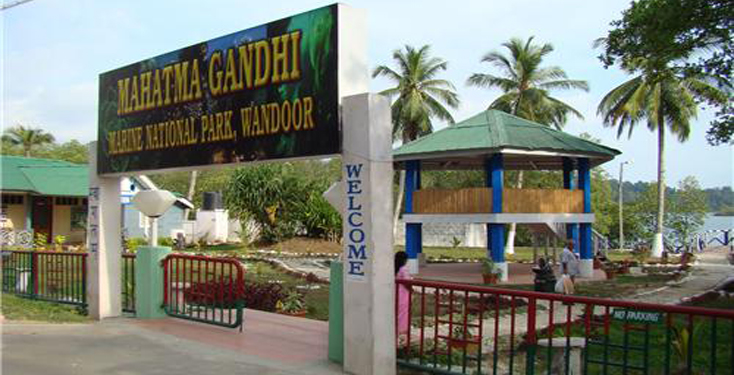
To fully appreciate the rules and restrictions governing your day trip, it helps to understand the purpose behind the Mahatma Gandhi Marine National Park. Established to safeguard the rich marine life found off the coast of Wandoor, the park encompasses a collection of islands, open sea channels, mangrove swamps, and extensive fringing coral reefs.
The park was created in response to historical threats facing island coral systems, including over-fishing, destructive practices, and unmanaged coastal development. By drawing a legal boundary around these waters, the government created a sanctuary where marine species can breed and coral colonies can thrive away from heavy industrial and urban disruption. Tourism within the park is permitted only because it is strictly regulated; the revenues generated help fund conservation management, while the educational exposure encourages visitors to become advocates for marine protection worldwide.
Coral reefs are often called the rainforests of the sea, and for good reason. Despite covering a tiny fraction of the ocean floor, they provide permanent or temporary habitat for a quarter of all marine species on earth. These living structures are built by millions of tiny invertebrate animals called polyps, which secrete hard calcium carbonate skeletons that accumulate over thousands of years.
Understanding how easily these structures can be damaged is crucial for every visitor. Coral polyps are extremely sensitive to physical touch, changes in water temperature, and chemical pollution. When a tourist stands on a coral head, brushes against a colony with a fin, or accidentally breaks a branch, they destroy decades of slow biological growth in a single second. Furthermore, human oils, sunscreens, and skin bacteria can introduce infections to the delicate coral tissue. This is why official regulations mandate an absolute rule: you may look at the coral through the water or a glass-bottom boat, but you must never touch, step on, break, or collect any piece of coral or seashell.
The strict plastic-free policies enforced across Jolly Buoy and Red Skin are a direct response to the global crisis of marine plastic pollution. When single-use plastics escape into the environment, they eventually make their way into coastal drainage systems and out into the open sea. Once adrift, these materials persist for centuries.
Marine animals frequently suffer from entanglement in discarded plastic rings and bags, while smaller fragments are ingested by fish and seabirds, introducing toxic chemicals into the marine food web. By eliminating disposable plastic packaging at the entry point of the Wandoor jetty, the local administration prevents tons of potential waste from ever reaching the park's shores. Embracing this plastic-free ethos is one of the easiest and most meaningful ways a traveller can support the preservation of Andaman’s marine heritage.
A day trip to these marine parks differs significantly from a standard beach holiday. Upon arriving at the Wandoor jetty and completing your park entry formalities, you board a registered passenger boat for the scenic crossing across the blue waters of the national park.
Once you arrive at the island, the experience revolves around quiet observation and appreciation of the natural environment. You can take a guided glass-bottom boat ride to inspect the subsurface coral gardens, walk along designated sandy paths while observing coastal vegetation, and spend time relaxing within permitted beach zones. There are no loud commercial beach shacks, motorized jet skis, or bustling market stalls here. The entire excursion is designed to be calm, educational, and respectful of the surrounding wildlife, offering a peaceful respite from the busier tourist hubs.
Reaching these protected marine destinations requires organizing your transit from the capital city of Sri Vijaya Puram. The journey begins with an overland road trip heading southwest from the capital toward the coastal village of Wandoor, a drive that typically takes around forty-five minutes to an hour depending on traffic and transport choices.
Upon reaching the Wandoor jetty, visitors complete mandatory check-in procedures, verify their park permits, and board authorized boats operated under the supervision of local tourism and forest authorities. Because departure schedules, daily boat allocations, and visitor capacities are strictly regulated, planning your trip ahead of time through authorised channels like Andaman tour packages ensures a smooth and well-coordinated outing.
Planning a visit to Jolly Buoy or Red Skin demands careful attention to administrative requirements. Because visitor numbers are capped each day to prevent ecological overcrowding, you cannot simply show up at the Wandoor jetty and expect guaranteed entry.
Entry permits must be secured through authorized channels, often requiring advance coordination with the Forest Department or registered travel partners. Additionally, visitors must pass through security checkpoints where bags are inspected to ensure no single-use plastics are being brought into the park. Embracing these administrative steps as a necessary part of conservation rather than a bureaucratic inconvenience helps set the right tone for your eco-tourism adventure.
It is essential to approach these destinations with a clear shift in mindset. If you visit expecting a lively public beach lined with cafes, sun loungers, and unrestricted swimming lanes, you will find yourself surprised by the rules.
These islands are legally protected marine parks. Your access is restricted to designated areas, your movements are guided by park authorities, and your time on the island is limited by scheduled boat rotations. These controls are not designed to make your holiday difficult; they are the exact mechanisms that keep the beaches clean, the water clear, and the coral reefs alive. Recognizing that the rules are part of the experience transforms your visit from a standard sightseeing trip into a meaningful encounter with professional conservation.
Timing your excursion to align with favourable weather seasons ensures you experience the marine park under optimal conditions. Official guidance from the Andaman & Nicobar Tourism Department indicates that the dry months spanning from November through May offer the most reliable weather for boat transfers, calm sea states, and clear underwater visibility.
During the monsoon season, heavy rainfall, strong winds, and turbulent sea swells make boat operations to uninhabited islands unsafe, prompting temporary park closures. Furthermore, because island openings rotate based on ecological management reviews, travellers should always verify the active operating schedule with official tourism authorities or their travel planner just before finalising travel dates.
Preparing your day pack for a trip to a plastic-free marine park requires mindful packing. Leave behind all single-use water bottles, plastic snack wrappers, and disposable shopping bags. Instead, pack your essentials in a durable, reusable day bag.
Bring a refillable metal or durable water bottle to stay hydrated under the tropical sun, effective sun protection like a hat and sunglasses, a light cotton towel, personal medications, and a camera or smartphone to capture the scenic coastline. If you plan to bring electronic devices, consider using a certified waterproof pouch to protect them from sea spray during the boat transfer. Keeping your load light and completely free of disposable plastic ensures you breeze through the Wandoor check-in security without any delays.
Being a guest in a protected marine national park carries a clear set of ethical responsibilities. First and foremost, never litter; if you bring an item onto the island, it must leave with you. Strictly adhere to the zero-plastic rule by refusing disposable packaging.
Never touch, step on, or break any piece of living or dead coral, and never collect seashells or marine specimens as souvenirs from the shore. Feeding wild animals or birds disrupts natural food chains and is strictly prohibited. Stay within the designated visitor pathways and always follow the instructions given by your boat captains, guides, and forest officials. By respecting these boundaries, you ensure that the marine park remains untouched for the future.
Evaluating whether a day trip to Jolly Buoy or Red Skin deserves a spot on your itinerary depends entirely on what you value in a holiday. If you are looking for high-energy nightlife, motorized water sports, and crowded commercial beach clubs, these quiet, regulated marine parks will not fit your style.
However, if you have a genuine appreciation for coral reefs, marine biodiversity, eco-tourism, and quiet natural landscapes, a trip into the Mahatma Gandhi Marine National Park is exceptionally rewarding. It offers a rare chance to see how responsible tourism can protect fragile island ecosystems while still allowing travellers to witness their beauty. To explore fully coordinated travel options that incorporate protected marine parks alongside cultural sightseeing and beach stays, you can review our complete collection of Andaman Activities to let us help you design your ideal island getaway.
Planning a Dussehra or Diwali family holiday? Explore this 6-day Andaman itinerary covering beaches, island hopping, family activities, sightseeing, and practical travel tips.
Looking beyond the usual tourist spots? Explore Andaman's best offbeat destinations, hidden beaches, and scenic natural escapes.
Discover night kayaking in Port Blair with practical information on bioluminescence, mangrove routes, safety rules, best season, equipment, and what to expect after sunset.

